India’s Healing Forests

Explore some fascinating forests across India and find out the many ways in which forests can heal our body, mind and spirit.
Film Duration: 50 minutes | Language: English

FILM

REVIEWS

Review-festival-eagle

India’s Healing Forests is a remarkable and enlightening exploration of the many ways that the well-being of people is deeply interwoven with forests. The film demonstrates that at all times on our life’s journey — from childhood to death — our relationships with trees and other forest creatures are vital parts of our lives. This is a reciprocal relationship: in our modern world we need forests and forests need our care.” ~ David George Haskell, author of The Songs of Trees and Pulitzer finalist, The Forest Unseen. Professor, University of the South.”

*If you have seen the film, please leave your thoughts in the comments section of Youtube or this post.

fern-web

DIRECTOR’S NOTE

All our knowledge comes from nature and yet nature is a source of many mysteries.

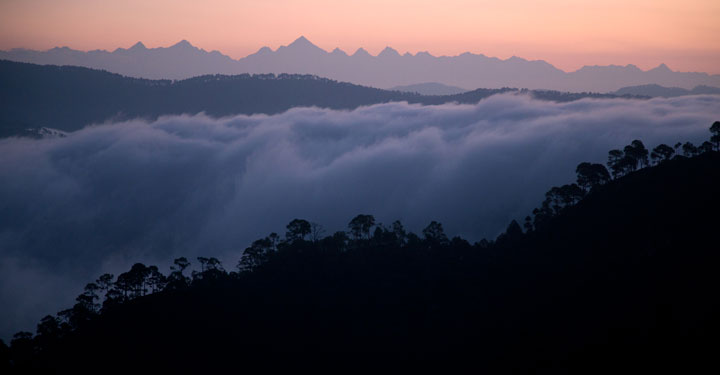
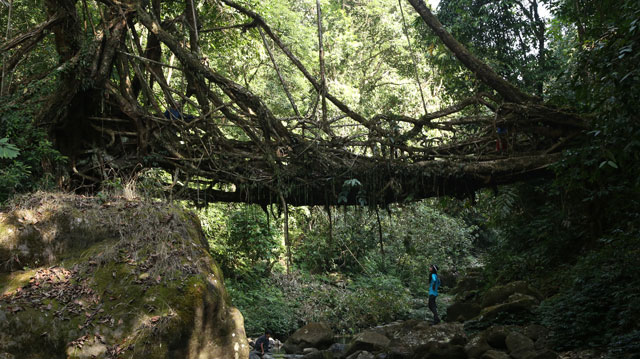
Travel with us on a journey through lush rainforests, sacred groves, cloud forests, city forests, food forests and deep valleys of the Himalayas to unravel some of these mysteries.

India is a country of breathtaking natural beauty. What is less known is India’s wealth of ancient knowledge about connecting with nature to create a more meaningful life. New science as well as ancient wisdom is telling us something of great importance. The environment we live in is linked to our health. It affects us. It alters us. It is not separate from us.

The film unfolds through inspiring stories of people whose lives are intricately woven with forests. Through their insights as well as scientific findings we explore the remarkable healing powers of nature.

We hope to leave you with a feeling of calm and clarity, and some important clues to help you solve one of the greatest mysteries of your life – How to create a healthier, happier life for yourself and your loved ones.

The forests are waiting.
Come home.

Cone-web

ACKNOWLEDGEMENTS

Here’s a link to some of the groups and initiatives featured in the film:

Chirag School, Kumaon | Prakriya Green Wisdom School, Bangalore | Pravah, New Delhi | New Delhi Nature Society | Sadhana Forest, Auroville | Green Hub | Hindustan Kalarisangam, Kerala | Journeys with Meaning | Mawphlang Sacred Forest, Meghalaya | Foundation for Contemplation of Nature | Aranyaani Natural Food Forest | Sehat Van | Lung Care Foundation | I am Gurgaon | Anita Rajah, Clinical Psychologist | Alaap, Kumaon | Navdarshanam, Tamil Nadu | Institute of Palliative Medicine, Kerala | Aranyaka Upanishad, Uttarakhand || Healing Forest Walks

Film Credits:
Film: Nitin Das | Producer & Commissioning Editor: Rajiv Mehrotra | Executive Producers: Tulika Srivastava and Ridhima Mehra | Music: Borrtex | Voice: Mina Lepps | Assistant: Arghadeep Barua | Advice on Sound: Asheesh Pandya | Constructive feedback: Sudhir Tandon, Sunil Chauhan, Neelam Ahluwalia

Leaf-web.png

FORESTS AND YOU

In a world that is becoming increasingly complex, we are spending lesser time in nature. Signs of this rapid change are showing up not just in our own health but also the health of our society and our planet.

This film is a great tool to reconnect people with nature because it shows the multiple benefits of nature across different age groups. Perhaps you may see a little bit of your own life reflected in parts of this film. What you may also find are some simple ideas to overcome challenges that appear at different stages of our life.

We hope you will join us to hear what the forests have to tell you.

animal-rabbit-small

Beyond the film, the idea is also to introduce the concept of healing forest walks to you. Along with the film details, we’ll send you an excellent collection of forest games and activities. For more information on healing forests, you can visit our resources page.

Bridge

In this month’s guest post Monique from USA shares an excellent collection of nature activities that help in building and shaping the inner nature of children.

Monique is a mother of three children and was an Early Childhood Educator and an Early Intervention Specialist. She has an educational background in Psychology and currently runs a blog called Green Acorns.

Let’s take a look at some ways we can spark children’s curiosity, ignite their enthusiasm, and guide their interests into meaningful experiences…

animal-rabbit

Start Small

It can be hard to know where to begin when introducing nature activities. Try starting small right in your own yard (or schoolyard, closest park, etc.) In fact, all it takes is one square foot of space.

Create a 12-inch square frame out of string or cardboard or any other available material and lay it on the ground. Have your child get right down on his belly and observe. At first it may seem like there’s not much to notice but be patient… things will come into view. Perhaps he’ll notice insect activity or different types of plants or different colors of dirt. Try it again in a different spot. Did he notice any similarities? Anything different? Do it with him, side by side. Share what you notice and then switch places. Did either of you notice anything that the other hadn’t? Notice even more details using a magnifying glass.

animal-Eagle

Listen Closely

This activity comes from Joseph Cornell’s ‘Sharing Nature with Children’.

You will need a sheet of paper, a clipboard or other firm surface, and a pencil. Have your child mark an ‘X’ in the center of the paper to indicate her location. Your child then sits quietly and whenever she hears a sound, marks the approximate location with a simple representative symbol or word. She can listen with her eyes closed to help focus better on just the sounds.

When she is done review the map with her. Ask some questions. Were there more sounds from nature than man-made noise? Were there any sounds she hadn’t noticed before? Did she find some pleasant? Some not pleasant? Could she identify all the sounds?

You may be surprised at how long a child can sit quietly for this activity and may find that she wants to do it again. My children enjoy this activity and like to compare their sound maps with each other. They often find that one noticed a sound that the other didn’t or noticed more nuances about a certain sound. It’s quite an engaging activity that really heightens one’s awareness.

Taking it further: This can be expanded into the practice of “sit spots” and I highly recommend it. It’s a wonderful way for anyone to develop an intimate relationship with nearby nature. Check out Coyote’s Guide to Connecting with Nature to learn more.

Leaf-02

Wonder Together

“If a child is to keep alive his inborn sense of wonder, he needs the companionship of at least one adult who can share it, rediscovering with him the joy, excitement, and mystery of the world we live in.” – Rachel carson

When you are out in nature with your child, role model curiosity. Point out what you are noticing, from the smallest flower to the tallest tree. Wonder aloud. Ask your child what they hear, see, smell, feel and notice. Be intentional about it doing it regularly. Soon it

will become habit for you and your child whenever you are outside, wherever that may be.

Record It

Create a personal record of the nature around you by keeping a nature journal. What is a nature journal? Simply put, it is “the regular recording of observation, perceptions, and feelings about the natural world”. (Clare Walker Leslie, Keeping a Nature Journal)

animal-Lizard

The act of nature journaling encourages us to become keen observers of details and seasonal rhythms and deepens our understanding of the natural world. It reinforces our nature connections and it stimulates reflection on experiences, thoughts and emotions. It helps us remember what has been observed and learned, cultivates on-going curiosity and contributes to establishing a sense of place.

Developing the habit of nature journal can be tricky. Make it inviting. Keep it simple. Encourage it but let it be optional. Let your child record in whatever way he would like (sketches, poems, photos, brief descriptions, pressed plant samples, etc.). Do it together. Review and reflect on past entries occasionally.

Check out these resources for inspiration and how-to’s:

animal-Donkey

Invite Nature Inside

“Children become interested in natural history because they are natural collectors.” -Sir David Attenborough

This suggestion may be controversial as many people firmly believe that the “leave what you find” principle is always best practice. I agree with Sir David Attenborough and here’s why…

While collecting, your child is gathering information about the natural world through his senses. He is looking, touching, smelling, listening, maybe even tasting. He may also be utilizing his vestibular (movement and balance) and proprioception (body awareness) systems as he navigates the landscape. Combining the use of one’s various senses leads to more connections made within the brain and the result is a more thorough, meaningful learning experience. Just as importantly, allowing your child to collect the nature that excites him is an affirmation of his interest. It nurtures his natural sense of curiosity and sparks further exploration and inquiry.

animal-Deer-small

If you don’t already have a designated area in your home for displaying nature finds, this is the perfect time to create one. A low table or shelf will do. Display appropriate items within your child’s reach so that he may explore them at any time. Add magnifying glasses, reference books or materials for play to the area. Change the items seasonally.

You may find some inspiration here and here.

Note: never collect from private land, parks or preserves. Only collect what is found on the ground or in abundance. Know the relevant laws in your state/ country on what is considered protected. Minimize your impact and always respect nature.

BENEFITS OF NATURE ACTIVITIES

I had a childhood like many of my generation and before – long stretches of time spent outside engaged in unstructured play, free to roam and interact with nature, no gadgets or tools except my imagination and ingenuity. My husband and I were intentional in providing similar opportunities for our children. Making personal nature connections and having the freedom to explore and discover one’s own place in it is not just nostalgia of a bygone time. Nor is it a privilege of a select group. It should be considered a basic right of childhood and is a necessity for a healthy life.

Increasing science-based evidence tells us that time spent in nature is good for us. A quick online search will lead you to some of the studies in a promising, growing collection. Benefits being reported include:

  • reduced stress and anxiety and lower risk of depression
  • improved blood pressure and cholesterol
  • better able to direct attention / focus
  • feeling more positive emotions and outlook on life
  • an increase in compassion, generosity and other prosocial behaviors.

For children who play in nature, some additional benefits have been noted including:

  • reduced risk of obesity and diabetes
  • decreased risk of developing near-sightedness and requiring glasses
  • reduced symptoms of attention deficit disorder
  • increased likeliness of engaging in imaginative / creative play & improvedcollaborative skills
  • enhancement of motor skills (balance & stability, coordination, agility)
  • improved awareness, reasoning and observational skills
  • increased autonomy and decision-making skills.
Leaf-12

Why all the research? Because unstructured time in nature has become rarer and the natural places which children can claim for their own to become intimate with, to create new worlds in, to observe the ways of nature and just be are harder to find. Because we have become disconnected humans and our children are following suit. With a few basic tools, however, we can set children on the path to life-long nature connections. In the words of Richard Louv, it is up to us “to restore the broken bond between children and nature” and in the process we may just restore our own.

Leaf-15

END NOTE

I hope these activities will set you well on your way to nurturing your child’s nature connections.

You can find additional activity ideas, monthly nature prompts and more on my blog, Green Acorns. I also host Noticing Nature on Facebook – a free, private, family-friendly group where you will find inspiration for deeper personal connections with nature throughout the year.

Fondly, Monique

Leaf-13

Let us know your experience when you get a chance to try out these wonderful games and activities.  If you have more recommendations for some fun nature based activities, please add them in the comments below to grow our collective knowledge.

You can subscribe to our monthly blog posts here. We are a small group of friends trying to find new ways to reconnect people with nature. Our aim is simple. Helping people heal. Helping forests heal.