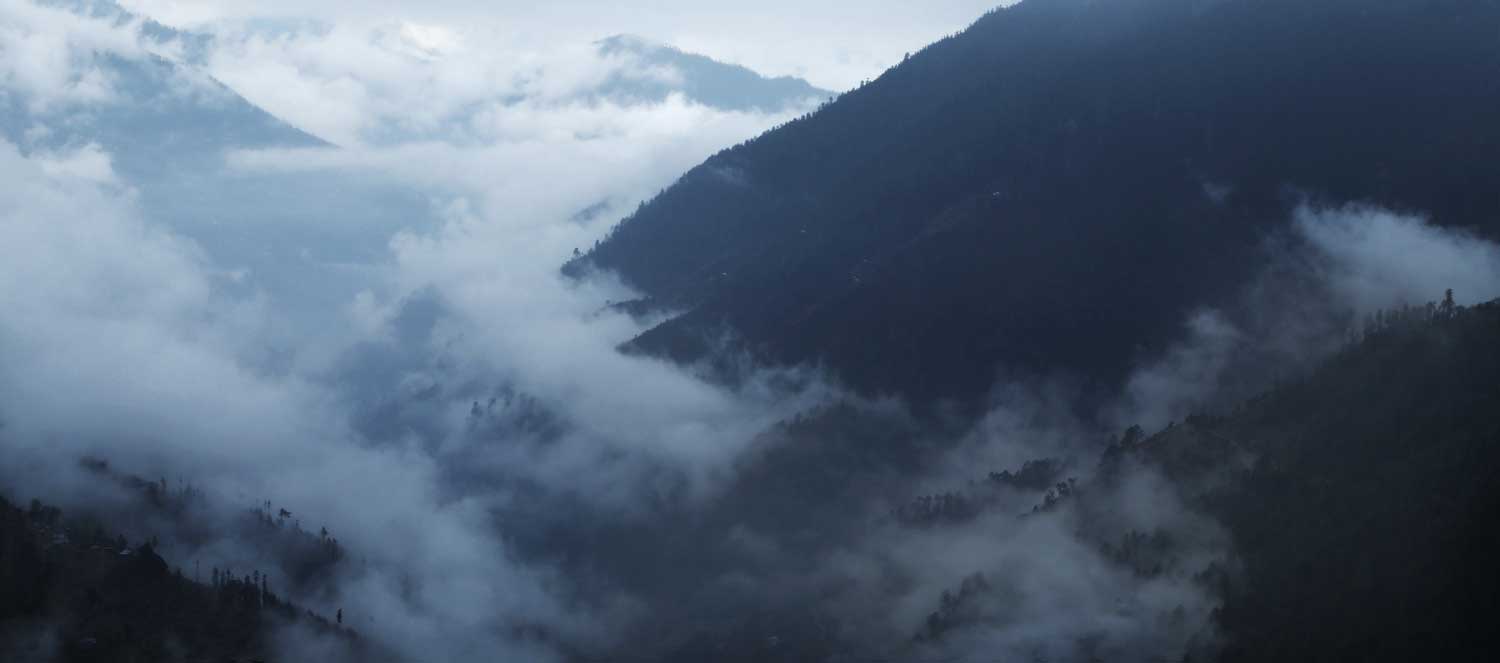
Travel with us into the delightful healing forests of Japan. Discover the magical moss covered forests of Yakushima island and know about the volcano museum. Breathe in the deep greens of dense forests and soak in the crystal streams, waterfalls and hot springs scattered around.

During the 1980’s Japanese researchers and scientists started discovering multiple benefits of being in forests and reconnecting with nature. With the development of medical equipment related to natural and life sciences, this field has advanced even more. They have given us scientific proof on our intuitive understanding that nature heals. Japan as a country has established many healing forests in their country over the years. Designated nature reserves where people can go to experience the healing powers of forests.
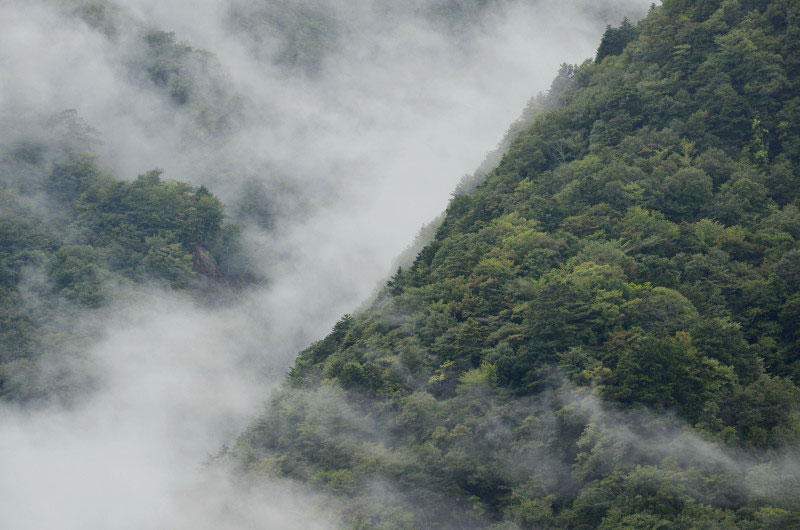
Image Source

SHINRIN YOKU

Japan is a technologically advanced world. Cities have become mazes of steel, concrete and silicon, swimming in a sea of electromagnetic waves. In this electronic age, some part of us still yearns for the freedom and comfort of nature. For many people, the answer lies in reaching out to the forests.

Shinrin-yoku is a term the Japanese use to describe this practise of immersing oneself in the forest. Literally translated it means ‘forest bathing’. Allowing nature to cleanse the mind and spirit of negative thoughts and emotions. Reawakening your senses, rejuvenating your energy and adding strength to your healing ability.

Given below is a hand picked list of some of the best healing forests of Japan.

Shiratani Unsuikyo, Yakushima Japan
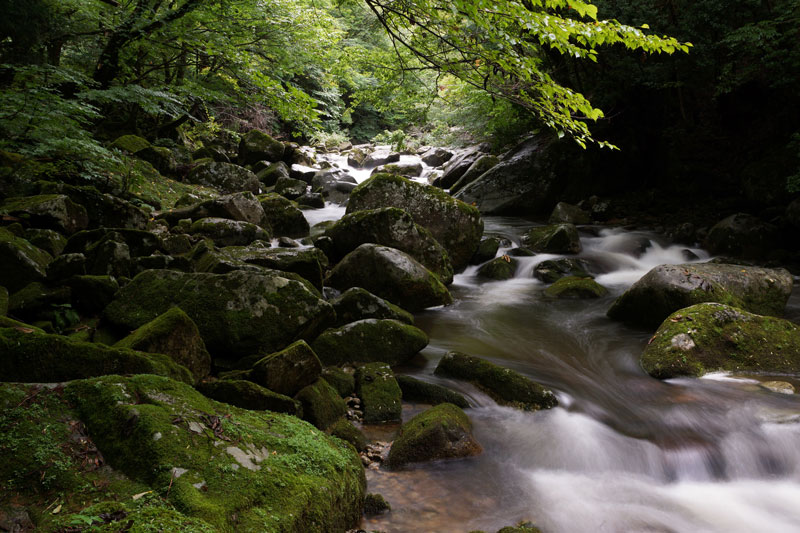
One of Japan’s natural wonders, Shiratani Unsuikyo Gorge on Yakushima Island is home to a mystical, primeval forest with yakusugi cedar trees between 1,000 – 7,200 years old. Covered in 600 types of moss, the forest glows green and radiates an otherworldly beauty that is legendary in Japanese culture. Shiratani Unsuikyo is best explored on the longer trail, Taiko-Iwa, that passes through the most luscious landscapes on the island and leads to the top of the mountain with stunning panoramic views. Yakushima Island is a registered UNESCO World Natural Heritage Site for its rare and diverse ecosystem, unlike any other on earth. Indigenous deer and monkeys roam freely. There are many places along the trail to stop and enjoy the scenery. Bring your rain gear and lunch, walk carefully and enjoy! Information contributed by: Julie Hall, www.shinrin-yoku-walks.com
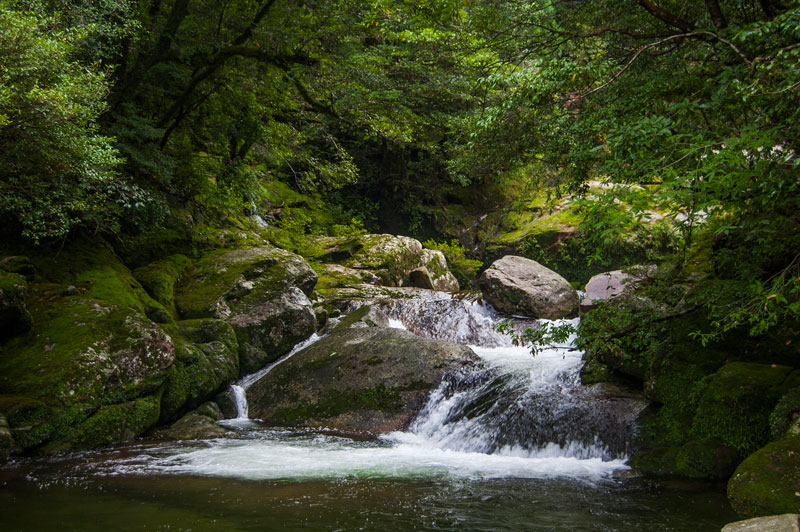
Yakushima | Image Source
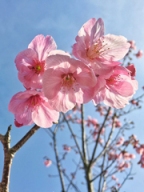
Kitago, Miyazaki
“A town of great natural beauty, clean streams and hot springs”, Kitago Town in Nichinan City is located in the southern part of Miyazaki Prefecture. The natural hot springs of 51 degreesC welling up from 800 meters below the ground are popular with visitors from both within and outside Miyazaki who refer to it as the “The Beauty Hot Spring”. Hanatate Park is famous for its 10,000 cherry trees and in spring, visitors flock from all over to gaze at the clouds of soft pink blossoms.


Ukiha City, Fukuoka
Located in the southeastern part of Fukuoka Prefecture with the Minou Mountains ranging to the south and the Chikugo River flowing in the north, Ukiha City has a rich natural environment.
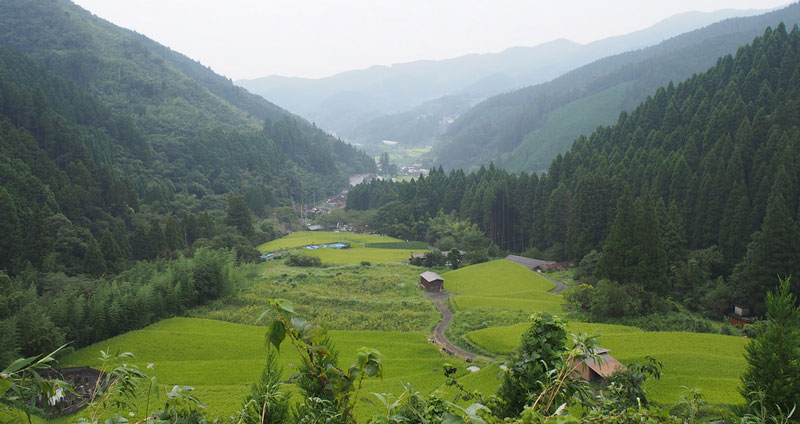
Ukiha |Image Source

Iinan, Shimane
The Town of Iinan nestles in the highlands at an elevation of 450 meters. The sources of both the Hii and Kando Rivers are to be found in this region made famous by its long history of rice and vegetable production. With easy access to such a rich natural environment, the town of Iinan’s Forest Therapy programs offer a combination of nature, history and culture.
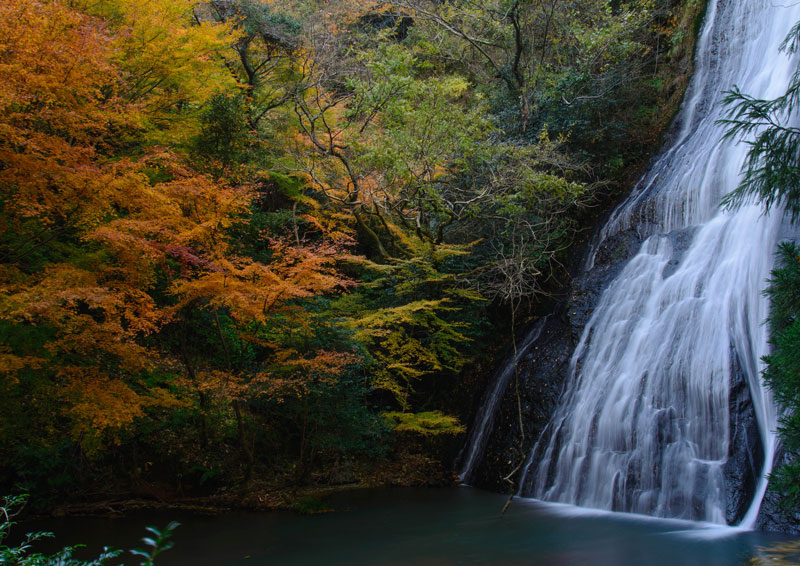
Linan |Image Source

Ashizu, Chizu Town, Yazu-Gun
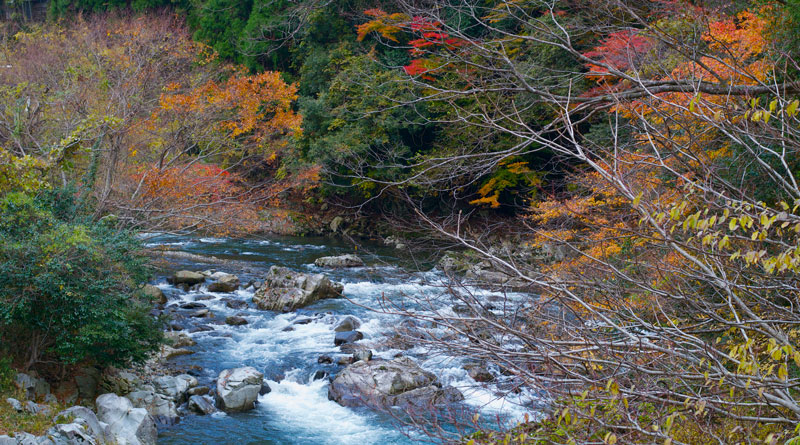
Along the forest therapy road in Chizu, in the Ashizu valley, flows one of the best streams in western Japan. It is situated in a forest of cedar and hardwoods. The valley is magnificent in all the four seasons and has something new to offer every time you visit. The valley stretches to the Chugoku Nature Trail, encircles the Mitaki Dam and continues on to the upstream river valley.
Ashizu |Image Source

Shiso, Hyogo
Surrounded by towering mountains with an elevation of over 1000 meters, such as Hyonsen, the highest peak in Hyogo Prefecture, the City is full of lush greenery as it is part of the Hyonosen-Ushiroyama-Nagisan Semi-National Park and the Onzui-Chikusa Prefectural Natural Park.
Shiso Hyogo |Image Source
Yamanouchi, Nagano
With towering mountains, primeval forests and clean sparkling lakes, it has an undulating terrain surrounded by high 2,000 meter mountain ranges rich in volcanic rocks such as green tuff, andesite, diorite and basalt, indicating the intensity of past volcanic activity. It is known as a “volcano museum”. The therapy roads often take you to vantage points where you may find a sea of clouds under your feet. The primeval forest of Shiga Kogen also has circular loops around emerald lakes reflecting the forest green.

We hope this article inspired you to go out and spend some time in nature. As part of our project we are identifying and marking healing forests around the world. Quiet spaces in nature that one can visit without feeling unsafe. You can check out the map so far and even recommend a nature trail to be added to this map.

If you haven’t already, you can subscribe to our monthly blog posts here. We are a small group of friends trying to help people reconnect with nature. Our aim is simple. Helping people heal. Helping forests heal. To know more about us and join us as a fellow volunteer visit this link.

May the forests be with you.

KUMANO – 熊野 from Mathieu Le Lay on Vimeo.
We are all victims of our own addictions. Our bad habits control our lives in varying amounts. Detrimental habits can range from simple things like laziness or obsession with the cell phone, to more serious addictions of alcohol, tobacco or hard drugs. Here is an interesting story from the forests of New Zealand that offers tips from nature on overcoming addictions and bad habits.

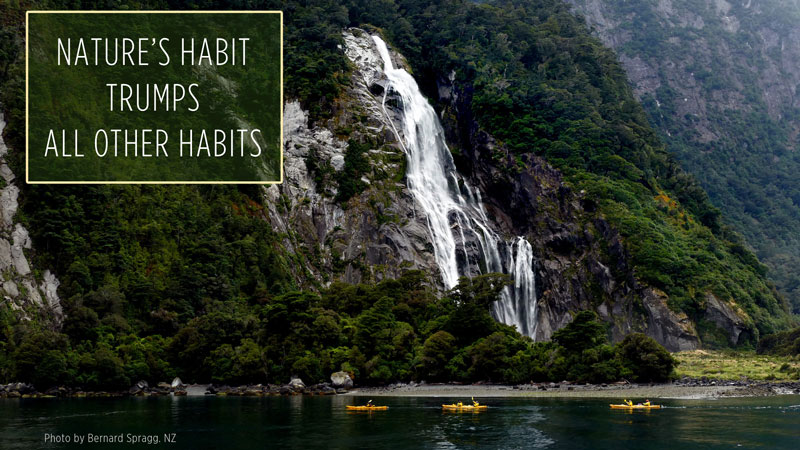
new-zeland-quote

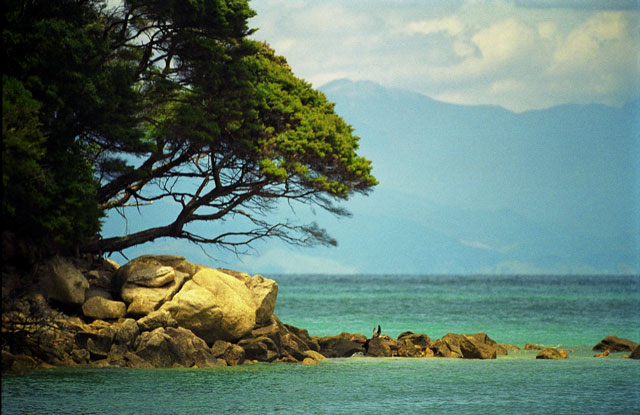
Photo by Bernard Spragg.

NEW ZEALAND

New Zealand has an estimated 80,000 species of native plants and animals, of which less than half have been named and many are found nowhere else in the world.

It is also home to indigenous people named the Māori who arrived in New Zealand in several waves of canoe voyages at some time between 1250 and 1300 CE (AD). Early Māori formed tribal groups, based on eastern Polynesian social customs and organisation. Horticulture flourished using plants they introduced, and later a prominent warrior culture emerged.

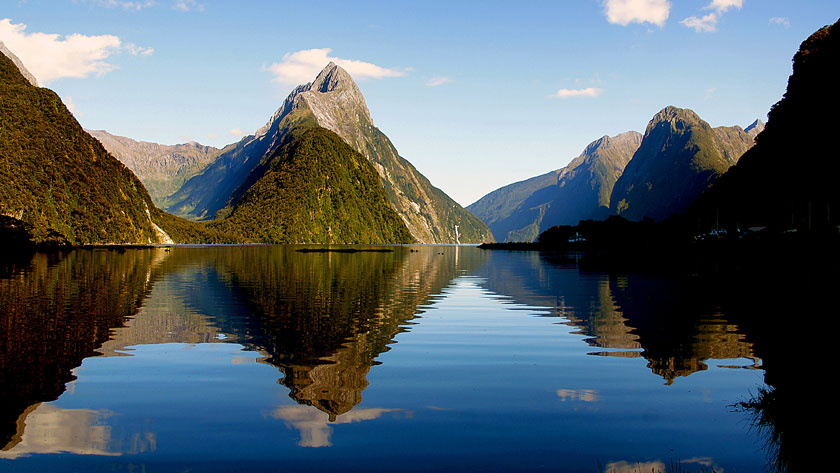
new-zealand-lake2

Photo by: Bernard Spragg. https://www.flickr.com/photos/volvob12b

GATHERING OF SUSTENANCE FOR LIFE

Brendon Pirihi from Whakatohea Social and Health Services shares some insights from his work.

“I work with mental health and addictions in young people for my Iwi (Maori tribe in New Zealand). One thing that I always do with every participant is get them out into nature as I believe that our world has an abundance of natural healing resources i.e our forests, lakes, rivers and oceans. A lot of the time I don’t even need to say anything to the people I take as you can see in their faces that the world around them has an immediate affect on what we call their Wairua(spirit).”

The program is called ‘Te hahao o te oranga’, which is a Maori name. When loosely translated it means the gathering of sustenance for life. We take the youth to gather seafood on the first day and then they stay in a traditional marae for the first night. (marae = Maori village). Then on day two we take them to the native bush/forest and they will build a shelter for the second night and we hunt for rabbits, wild pigs and deer and return home on day three and the youth will share what meat was caught with their elders.

By frances schmechel

Black Robin pic by Frances Schmechel

*Note: Pigs, rabbits and deer are not native to our country. They are a threat to the local species of plants, birds and animals which are found nowhere else in the world.

During our time in the bush we also teach them rongoa (traditional medicine from plants) which is knowledge that needs to be passed on before it is lost. That is just part of what we try to do here in New Zealand. The more we use our wilderness the less likely we are to lose it. Here in whakatohea we are lucky to have the native bush on our back doorstep protected by the government as they declared it a national park many years ago.

3 WAYS NATURE HELPS

Replacing negative with positive: Nature is addictive too, but in a good way. Half of one’s in energy is spent in fighting the urge to give in, to the negative habit. Will-power can vary with time. It may be strong to begin with but the more you resist, the stronger your urge becomes. Instead of trying to fight your way through, nature provides a much better way. Replace your negative habit with the habit of spending time outdoors. It’s a healthier option for your body and your mind.

Make life challenging: One of the challenges of being in nature can be the lack of access to distractions, diversions and addictions. No wifi, no signal, no pizza joints, no bars. Well it’s not a fail-safe option, but worth a shot if you are serious about overcoming your addictions. Simply putting our habit out of reach gives us time to explore living without it. One can experience the difference that makes. It gives us mental strength and a stronger resolve.

Understand yourself: Spending time in nature helps you to have a clear conversation with yourself. Most of our addictions stem from a void in our life that we try to fill with our addiction. Every time the feeling of emptiness returns, one tries to take the support of an external substance – it could be a cigarette or a drink or even Whatsapp or Facebook. Nature helps us in knowing ourselves better. It can help us find the source of our addictions and give creative insights to break out of patterns and detrimental habits.

When you know how to connect with nature, there is no going back. It is a unique experience. A feeling of coming home. Of finding a true friend. Of knowing yourself.

We recognize that an essential element for a person’s holistic well being is the concept of Oranga, the state of well being that exists simultaneously in the spiritual, physical and psychological dimensions.

To know more about their work visit their website at this link.

Watch this short film by Nathan Kaso to get a glimpse of New Zealand’s addictive landscapes.

W90-Spiral-gradient-clean-

END NOTE: We know breaking bad habits is easier said than done. However a lot of people have successfully overcome their fixations. Do add your thoughts, reflections and stories in the comment box. It will help us learn from each other. Please share this article with those who may find it of use.

If you haven’t already, you can subscribe to our monthly blog posts here. We are a small group of friends trying to help people reconnect with nature. To know more about us and join us as a fellow volunteer visit this link.

Finding Answers In Life

As the year turns, here’s a story from the deep Amazon forest that brings us some old wisdom to create a new vision. This post is for the seeker in all of us.

B-Leaf-3

We live in an age of information, mis-information and information overload. There are times when this can lead to confusion and lack of clarity. One may often find the mind caught in a whirlpool of troubled thoughts and unable to create a vision for our lives.

Can the forests show us a way out and help us in finding answers to important questions in life?

amazon-1-web

Lessons from the Amazon

The Achuar are a group of indigenous people of the Amazon Basin, currently numbering around 6,000. Their ancestral lands – nearly 2 million acres in all – straddle the modern borders of Ecuador and Peru, a remote area that has allowed them to preserve their way of life with little outside influence or colonization.

The wise elders and shamans of the Achuar have always relied on their ability to engage with nature to create a vision for their lives. This interaction with their environment plays a mysterious role in guiding their actions and influencing their decisions.

Here’s a short film on the uncommon wisdom of this enchanted world.

The shamans know that being in nature can give us a larger perspective of life. To solve our problems we must begin by asking the right questions rather than simply seeking answers.

Connecting with nature helps us get our priorities right. It makes us focus on things which are important and those who really matter. This results in a better way to evaluate our choices and leads to better decision making.

On a more practical note spending time in nature can help in calming us. The act of interacting with the outdoors, brings our awareness to the present moment. Our mind gets a much deserved rest so that it can apply itself with renewed energy and come up with surprisingly creative solutions.

The vision always comes from soul, and soul is an aspect of nature. If the vision is true and we embody it well, we embody our place in the more-than-human world. Doing so always serves the greater web of life. ~Bill Plotkin

amazon-2-web

A vision from the Achuar

Here’s an interesting example of how the Achuar have developed a new vision for their forests.

Since the early 20th century, individuals and corporations from the so-called “modern” world have sought to exploit Achuar land for its oil, disregarding its irreplaceable ecological and cultural wealth.

By the early 1990s, Achuar shamans and elders were having dreams of an imminent threat to their land and traditional way of life. From contact with neighbouring tribes, the Achuar knew that oil companies were poisoning the rainforest and steadily moving closer and closer to their areas.

The Achuar have found a bold solution to this threat. They have sought alliances with the world outside their forest. Partnering with environmentally conscious organisations, they have fought a long battle to protect the forests they call home. These initiatives have been successful in creating delay and in many cases holding back the damaging actions of the oil companies.

The Achuars and their alliances are finding new answers to these difficult challenges. By choosing to guard their precious forests instead of giving in, they are inspiring us with their wisdom and courage. The future is always uncertain but if our vision is strong, our path becomes clear.

To know more about their story and become a part of it visit.
https://www.pachamama.org/about/origin

Kaleido-circle

END NOTE:
Healing forest is a journey to explore fascinating forests and discover the healing powers of nature. Our aim is simple. Helping people heal. Helping forests heal.

If you haven’t already, you can subscribe to our monthly blog posts here. We are a small group of friends trying to help people reconnect with nature. To know more about us and join us as a fellow volunteer visit this link.