In today’s fast-paced world, it’s easy to feel disconnected and alone. Our society is becoming more individualistic, and the strong community bonds that once held us together are weakening. This shift makes it crucial to find ways to reconnect, support each other, and build a sense of belonging. With so much negative news and overwhelming challenges, it’s also easy to feel demotivated. Now, more than ever, we need to find ways to inspire ourselves and those around us.

Engaging people and especially the youth in community projects and activities that promote collective well-being is essential. By doing so, we not only help them develop important life skills but also foster a sense of purpose and resilience.

The Circle of Courage offers a powerful framework to achieve this. Rooted in the values of Belonging, Mastery, Independence, and Generosity, it provides a path to strengthen both individuals and communities. This article will guide you through an activity-based learning experience using a nature walk, where each value is explored through reflection and shared experiences.

Circle of Courage: The Story

In a land rich with traditions and community spirit, the elders of Native American tribes gathered to discuss the wisdom of raising strong and resilient children. They believed that the strength of their people lay in the hearts of their youth. The wise elders noticed that children thrived when they felt connected, skilled, independent, and generous. They passed down these insights through stories and practices that wove together the 4 key values.

Years later, three dedicated researchers—Dr. Larry Brendtro, Dr. Steve Van Bockern, and Dr. Martin Brokenleg— rediscovered these ancient teachings. They saw how these timeless values could help modern youth who were struggling in a fast-changing world. Inspired, they created the Circle of Courage model, which blends these traditional insights with contemporary research on child development.

Circle of Courage Walks

We’ll start by meeting in a beautiful natural space. Before we begin our walks, it’s important to set our intentions: we are here to learn, grow, and support each other. During the session all participants will go on 4 solo walks of 10 minutes each. The idea is to spend time alone to think deeply about one of the four values and what it means to you. After each solo walk, we’ll come together in a circle to share what we learned and felt. By sharing we are able to transform individual learning into a collective learning. (Note: the sharing circle is most effective when done is small groups of 7 or less. Give 10 minutes for each sharing circle)

Walk 1: Belonging

In Native American and First Nations cultures, being part of a community was really important. Ella Deloria, a Lakota anthropologist, said it best: “Find a way to connect with everyone you know.” By treating others like family, they built strong bonds based on respect. Historians like Marty noticed that throughout history, tribes—not just individual families—kept their cultures alive. Even if parents weren’t around, the tribe always stepped in to help raise the next generation.

Instructions for the Solo Walk Focused on Belonging: Belonging is about feeling connected to others. It’s knowing that you are part of a group and that you matter. When we feel like we belong, we are happier and more confident.

As you walk, think about the times when you felt like you truly belonged. What made you feel that way? How did others show you that you were important to them? Look around and see how nature creates a sense of belonging—how trees, plants, and animals are all part of a larger system.

Reflection Questions for Group Sharing

  1. When have you felt a strong sense of belonging?
  2. What can you do to help others feel they belong?
  3. How does nature show us the importance of belonging?

“We are all different, which is great because we are all unique. Without diversity, life would be very boring.” — Catherine Pulsifer

Walk 2: Mastery

In traditional cultures, becoming skilled was guaranteed through opportunities to learn and practice. Children learned by watching and listening to those who were more experienced. Skilled individuals were respected as teachers rather than competitors. Everyone aimed to improve themselves, not to outdo others. It’s natural for people to want to be capable and solve problems. Overcoming challenges fuels this desire to succeed. Leading by example and taking responsibility are important values upheld in these cultures.

Instructions for the Solo Walk Focused on Mastery: Mastery is about learning and improving. It’s the satisfaction of getting better at something and knowing you’ve done your best.

Think about a skill or activity you enjoy and have worked hard to improve. How did you feel as you got better? As you walk, notice the effort nature puts into growth and improvement—how a small seed becomes a strong tree through time and effort.

Reflection Questions for Group Sharing

  1. What is something you are proud of mastering or would like to master?
  2. What steps are important for you to achieve mastery?
  3. How can you help others on their journey to mastery?

“Excellence is not a skill. It is an attitude.” — Ralph Marston

Walk 3: Embracing Independence

In Western culture, power often meant dominance, but in tribal traditions, it meant honoring everyone’s right to be independent. Unlike strict obedience, Native teachings focused on fostering respect and inner discipline. From a young age, children were encouraged to make decisions, solve problems, and take responsibility for their actions. Adults guided, supported, taught values, and provided feedback, yet children had plenty of chances to choose freely without pressure. This approach ensures that others can always rely on and trust you.

Instructions for the Solo Walk Focused on Independence: Independence is about being able to take care of yourself and make your own decisions. It’s about having the confidence to stand on your own and trust your abilities.

During your walk, think about a time when you made an important decision on your own. How did it feel to take control? Notice how nature shows independence—how each plant and animal plays a role in its environment while still standing on its own.

Reflection Questions for Group Sharing

  1. When have you felt most independent?
  2. How can you balance independence with being part of a community?
  3. What can you do to build more confidence in your independence?

“Independence is happiness.” — Susan B. Anthony

Walk 4: Practicing Generosity

In Native American cultures, the highest virtue was generosity. The main focus in raising Native American children was to teach them the importance of being generous and selfless. As a Lakota Elder put it, “You should be willing to give away your most prized possession without feeling anxious.” By helping others, young people demonstrate their own value: they make a positive impact on someone else’s life.

Instructions for the Solo Walk Focused on Generosity: Generosity is about giving to others without expecting anything in return. It’s about kindness and helping to make the world a better place.

Think about times when you’ve been generous or when others have been generous to you. How did those moments make you feel? Look for examples of generosity in nature—how the sun gives light, or how trees provide shade and shelter. Can you perform one act of generosity for nature during the walk? It could be as simple as clearing some litter, or perhaps watering a plant.

Reflection Questions for Group Sharing

  1. When have you experienced or shown generosity?
  2. How can you practice generosity in your daily life?
  3. What impact does generosity have on your community?

“No one has ever become poor by giving.” — Anne Frank

Circle of Courage: Conclusion

This model has since been used around the world, in schools, youth programs, and communities, to help young people find their place, develop their talents, stand strong, and share with others. The Circle of Courage not only nurtures individual growth but also strengthens the bonds that hold communities together, making it a beacon of hope and resilience in our increasingly fragmented society.

A nature walk is a great way to reflect on, learn and integrate these principles into our daily lives. By embracing Belonging, Mastery, Independence, and Generosity, we can build a better future for ourselves and those around us.

Further Reading and Resources

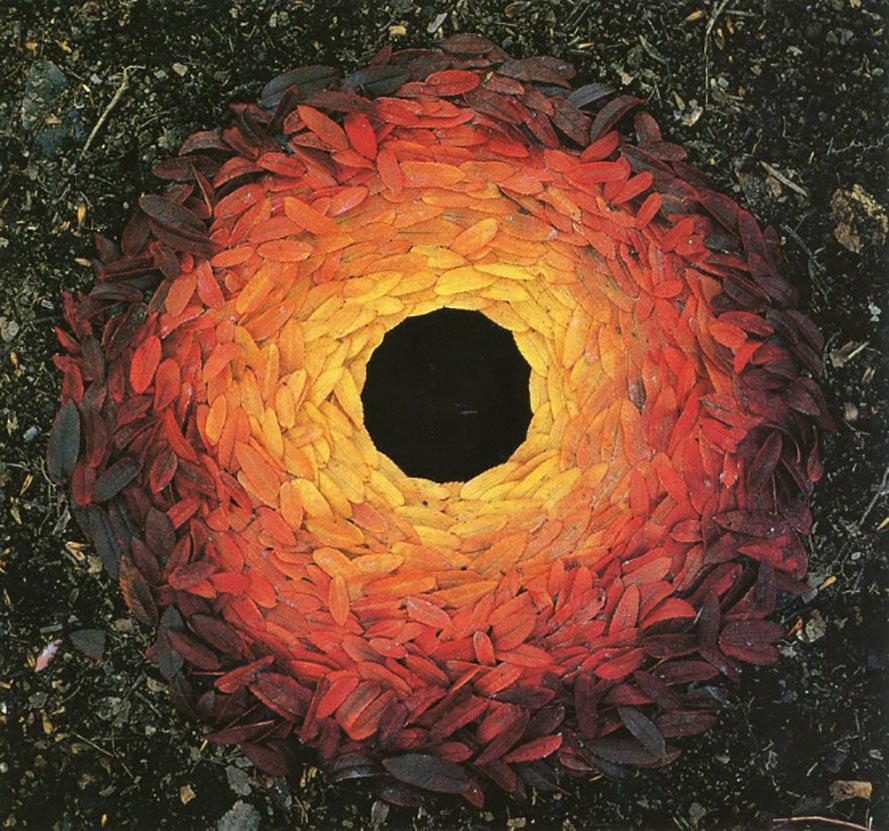
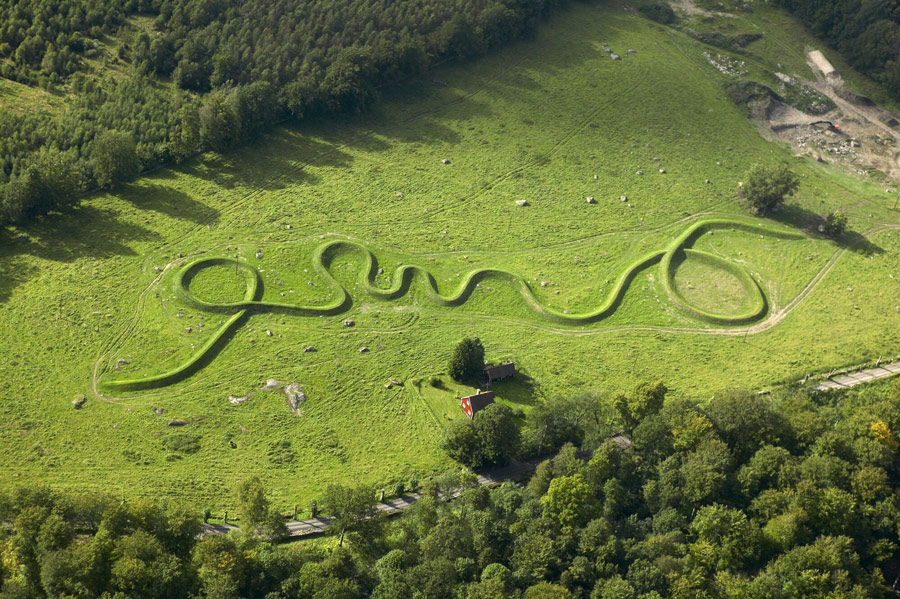
Art from nature is created with the brush of time. To meditate on it is to experience a state of timelessness. This month we cover some brilliant nature artists from different corners of the planet. We hope their work helps you stop time, even if it is for a few moments.

Great nature artists have the ability to gift us a unique perspective of our world, creating works that provoke thought, evoke emotion, and inspire awe. As you experience their art, put yourself in the mind of the nature artist and spend a little thought to imagine the creation process. Creating beautiful art that evolves and disintegrates with time is perhaps a metaphor for our own journey through life.

Andy Goldsworthy is a British artist known for his site-specific sculptures and land art. Goldsworthy often uses natural materials like rocks, leaves, ice, and branches to create his works, which are often ephemeral and subject to the forces of nature. His pieces explore themes of impermanence, the relationship between humans and nature, and the passage of time. His work can be quite stunning, and it often invites viewers to contemplate the beauty and transience of the natural world. Explore Andy Goldsworthy’s work.

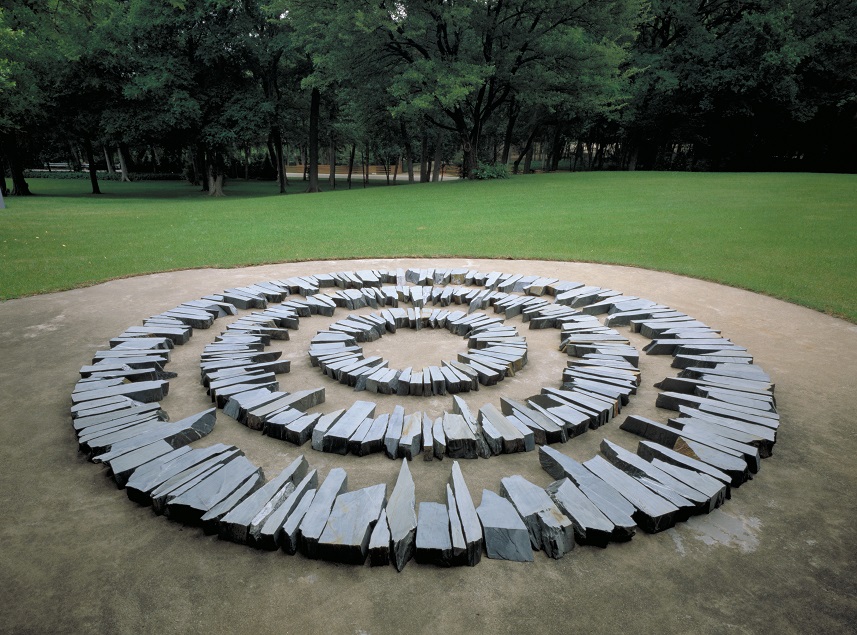
Midsummer Circles, 1993, Richard Long

Richard Long: Long is a British artist known for his minimalist sculptures, often created by arranging natural materials like stones, sticks, and mud into geometric shapes or lines. He’s also renowned for his landscape interventions and walks, during which he documents his journeys through photographs and text. His work explores themes of time, distance, and the relationship between humans and the natural world. Learn more about Richard Long.

Maya Lin: Lin is an American artist and architect famous for her environmental artworks and memorials. She’s best known for designing the Vietnam Veterans Memorial in Washington, D.C., but she’s also created numerous other works that engage with nature and landscape in innovative ways. Lin’s installations often incorporate natural elements to evoke contemplation and reflection on the environment and our place within it. Explore Maya Lin’s work.

Nils-Udo: Nils-Udo is a German environmental artist known for his large-scale, site-specific installations made from natural materials. His works often blend seamlessly with their surroundings, emphasizing the beauty and fragility of the natural world. Nils-Udo’s pieces range from ephemeral sculptures to intricate earthworks, all of which celebrate the interconnectedness of humanity and nature. Discover more about Nils-Udo.

Desert Breath by Robert Smithson

Robert Smithson: Smithson was an American artist famous for his pioneering land art and earthworks. He’s best known for creating “Spiral Jetty,” a massive earthwork sculpture built into the Great Salt Lake in Utah. Smithson’s work often dealt with themes of entropy, transformation, and the relationship between art and the environment. Discover more about Robert Smithson.

Tree Mountain by Agnes Denes

Agnes Denes: Denes, a Hungarian-American artist, weaves intricate tapestries of thought and land. Her work, often colossal in scale, talks of the symbiosis between human intellect and the natural world. She paints with fields of wheat, etches with the sharp edge of geometry, and sculpts with the undulating curves of topography. Denes’ creations are sung in the language of soil and sky. Explore Agnes Denes’ work.

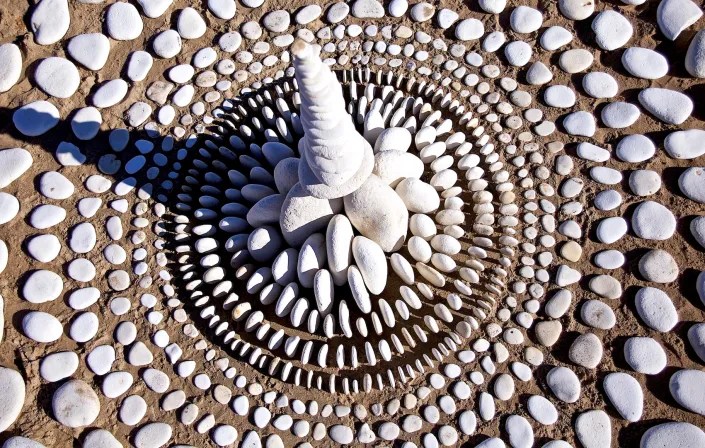
James Brunt: Brunt, a modern-day wanderer and artist, roams the land seeking inspiration from the earth. With nimble fingers he sculpts masterpieces from pebbles, leaves, and branches. Each creation is a testament to the beauty hidden in the mundane, a delicate dance between chaos and order. Brunt invites us to pause, to see the world anew through the kaleidoscope of his vision, and to rediscover the magic woven into the fabric of existence. Discover more by James Brunt.

Nature artists and their art serves as a gentle reminder of our connection to the earth and the fleeting wonders it holds. We hope you enjoyed this post. Leave a comment to let us know of other amazing nature artists that have touched your mind.

Every month we share uplifting new ideas from nature. You can join our free newsletter to see older posts and get the latest one.

Also, try our collection of best nature activities from around the world and create your own meditative art. >> Nature Calm

REQUEST: Please share this post, so it reaches where it’s needed.

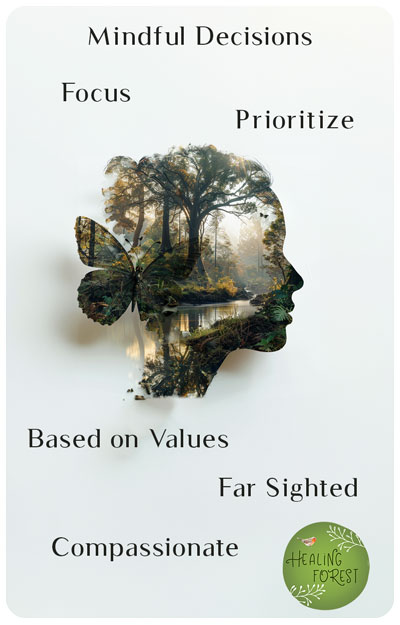
How good are you at making decisions? One of life’s indispensable skills, the art of decision-making is seldom given the importance it is due. In the labyrinth of our minds, making big decisions can feel like navigating through an ocean without a map. But what if we could learn a mindful approach to decision-making, drawing inspiration from nature around us? Welcome to the world of Mind Craft – an artful blend of mindfulness practices and nature’s wisdom, guiding us towards making wiser choices in life.

In this article we share simple but effective tools for better decision making. These tools and ideas are suitable for a wide range of age-groups. The learning happens through a short mindful walk in nature, filled with creative and reflective activities. Activities that craft your mind for unraveling life’s complexities, helping you find answers to difficult questions.

This article is part of our collection of amazing nature walks to learn life’s most useful skills. See the full list here: 10 Uplifting Walks

FOCUS WALK:
Take a slow walk through a serene space in your city. Let go of the clamour of the outside world and tune into the symphony of nature surrounding you. Choose any one sense to immerse yourself in – perhaps the delicate fragrance of wildflowers carried by a gentle breeze or the soothing melody of birdsong echoing through the woods.

By honing in on a single sense, you invite a profound sense of calm into your being, anchoring your awareness in the present moment. With each mindful step, you cultivate a deep sense of focus and attention, laying the groundwork for clearer and more intentional decision-making.

PRIORITIES MANDALA:
Now that we’ve grounded ourselves in the tranquility of nature, let’s explore a powerful tool for prioritising and organizing the decisions we face. We create a nature mandala, a symbol of our mind and the world, to map out our decisions. The mandala is made up of a circle with 4 sections. Pick up objects that you find lying around to create your mandala. These objects represent all the pending decisions you need to make.

To create the mandala, sort out the ‘decision objects’ based on their urgency and importance.

  • Urgent and Important
  • Not urgent but important
  • Urgent but not important
  • Not urgent and not important

By assigning our decisions to different corners of the mandala, discerning which ones demand immediate attention and which can wait, we are able to declutter our mind. It frees up a lot of energy so that we can focus on things which are most important.

DECISION TREE:
Let’s delve deeper into the art of decision-making by creating a decision tree, a visual representation of the choices before us and the values that guide our path. Select any one of the tasks or problems you’ve identified in the previous activity to work on.

On a piece of paper draw a tree, starting with the roots. Each of the roots represent values that are important to you – love, health, money, time, and whatever else holds the greatest significance in your life. Label the roots with your core values. These roots anchor your decision-making process, grounding it in what truly matters to you.

As the branches extend outward, each represents a potential path or alternative course of action. Take the time to evaluate each branch, considering how it aligns with your core values. The mind craft of being able to visualise different choices and their possible outcomes is a remarkable tool for making important decisions. Just as a tree grows and flourishes with careful attention, nurturing, and pruning, so too can our decisions flourish when rooted in mindfulness and guided by our deepest values.

FUTURE VISION:
The next mind craft is the ability to look into the future. To be able to see the impact of your choices in the short, medium and long window of time. To train your mind, resume your gentle, mindful nature walk.

Notice five intriguing details in your immediate vicinity – the delicate intricacies of a flower petal, the rhythmic rustle of leaves in the breeze, the playful dance of sunlight on the forest floor. Then, shift your gaze to the horizon and identify five sights in the distance – the majestic silhouette of a mountain range, the meandering path of a winding river, the boundless expanse of the sky above. Finally, attune your awareness to the unseen but felt presence of five things beyond the scope of your vision – the subtle pulse of life coursing through the earth, the timeless rhythm of the seasons unfolding, the interconnected web of existence enveloping us all.

In this moment of quiet contemplation, consider the impact of your decisions and choices across different timeframes – the short-term, medium-term, and long-term consequences. You can take time to imagine how your choice may pan out 5weeks, 5 months and 5 years from now. Would you like to change or modify your choice based on the consequences you can imagine? By considering the long-range consequences, we gain clarity to make wiser choices, shaping our path with mindful intention.

PERSPECTIVES LETTER:
As your mindful walk draws to a close, find a serene spot in nature to engage in a reflective exercise – writing a letter from our future selves to our present selves. This practice holds profound significance as it allows us to gain perspective from a detached vantage point. Often, it’s easier for us to offer advice to others than to ourselves, but by envisioning our future selves as wise mentors, we can tap into fresh insights.

From this distant viewpoint, we can unravel the knots of confusion that may cloud our minds, offering clarity and guidance to navigate life’s complexities with renewed wisdom and insight. So, write a letter to yourself and pen these words of counsel with compassion and empathy, bridging the gap between past, present, and future selves.

GRATITUDE CIRCLE:
If you are in a group, you can end the mind craft walk by sharing any insights or breakthroughs you might have had. Reflect on how your decisions are shaping not only your immediate reality but also influencing the unfolding tapestry of our world. As a group take a few minutes to stand in silence and gratitude for yourself, for each other and for nature.

The ability to connect with nature in a mindful way helps us access our subconscious as well as creative sides. These mind craft activities give us essential skills to refine our decision-making abilities so that we can navigate the forest of existence with grace and clarity.

* If you liked this article, do check out our post on 7 amazing mindfulness exercises for groups.

Every month we share uplifting new ideas from nature. You can join our free monthly newsletter to see older posts and get the latest one.

Also, try our collection of best nature activities from around the world to create remarkable changes in your life.
>> Nature Calm

REQUEST: Can you please share this post, so it reaches where it’s needed.