Across the world in space and time, indigenous communities have lived in harmony with their natural surroundings. Their daily sustenance on the resources of the landscape – be it the forests or grasslands, the mountains or the valleys, the lakes or the oceans – are intricately intertwined with their traditional practices, religious beliefs, oral as well as cultural histories. This dependence on their surrounding natural environment has led almost all indigenous cultures to form an intangible bond with Gaia, Mother Earth, which moves beyond a solely materialistic interaction towards a deeper spiritual connection.

bird_2

In this post we catch a glimpse into some examples of the wisdom of indigenous people from the continent of North America.

border_9

CANADA

People of the Moose Cree First Nation & Tla-o-qui-aht people of Clayoquot Sound

“Listening to the wind and to the river, it brings some calmness and serenity into your being. When I need healing, I go to the land.” Sophia Rabliauskas, Poplar River First Nation on the eastern shores of Lake Winnipeg

In the boreal forest ecosystems of Canada have lived and thrived hundreds of distinct Aboriginal and Metis communities (also referred to as the First Nations peoples) over many millennia. It is estimated that at least 600 indigenous communities are located in Canada’s forests today, communities whose culture and traditional practices are intimately twined with that of the land, the water and the forest creatures. Even as they engage in activities like hunting, gathering and fishing for themselves and their community, the relationship of the indigenous peoples is based upon their profound spiritual connection to Mother Earth that guides them to practice reverence, humility and reciprocity.

“Keeping our cultural alive is all about being part of the land, being part of the wildlife, the fish and the birds.” Stephen Kakfwi, Dene Nation

One of the interesting events for the people of Cree First Nation on James Bay is the annual spring goose hunt that corresponds to the migration of these birds. This is an important time for the community whereby the excitement of the hunt also corresponds to the passing down of cultural values.

Geese are a main staple food for the people of James Bay…This is one of the peoples’ most important seasonal cultural events. It’s a time for gathering, sharing, learning, and reconnecting ourselves to the land. Knowledge of values and morals are passed on and the traditional teachings associated with the hunt are shared. These include respect, patience, honour and gratefulness to name a few… The goose hunt is not just a goose hunt. There is so much more as it is a lifestyle from our ancestors and for future generations as well.” – Lilian Trapper, Land Use Planning Coordinator for the Moose Cree First Nation on James Bay

For the Tla-o-qui-aht peoples, who are the original inhabitants of Clayoquot Sound, usage of the forest resources were always based on certain laws and teachings, and this included the protection of intact rainforest and waters. In their system of tribal governance, the Hereditary Chiefs (known collectively as Ha`wiih) would be responsible for their Ha`huulthii (traditional territory), the people of their community and all matters pertaining to the forests, rivers, food, medicines, songs, dances, and ceremonies. In recent times, due to the threats of logging and modern developmental activities, the Tla-o-qui-aht have incorporated a watershed-by-watershed management system with the intent of conserving the resources within these areas for future generations. They have categorized the areas broadly as qwa siin hap (which loosely translates to “leave as it is”) and uuya thluk nish (which means “we take care of”). The latter category of land is meant to integrate human activities into the ecosystem while also taking care of its well-being.

In fact, the Tla-o-qui-aht declared Meares Island (Wah-nah-jus – Hilth-hoo-is) as a Tribal Park in 1984 – thus becoming the first indigenous community in Canada that actively took control over management of their tribal lands. Till date they have declared three additional Tribal Parks as a means to protect their forests, waters, and resources.

USA

Karuk people of California

The Karuk people live in the north-western corner of the state of California. ‘Karuk‘ means ‘upriver people’ referring to their proximity to the Klamath river, one of the important river ecosystems of North America. Like many other indigenous cultures around the world, the Karuks have used fire as an essential tool for land- and forest-management in order to convert the organic matter into fertilizers, cleanse the soil of pathogens, and increase the species richness of an area. Therefore, an essential link has been forged between the element of fire, the health of the land and the well-being of the Karuk community.

By way of prescribed burning i.e. using fire at the right time for the right reasons, the Karuks could grow traditional foods like huckleberries, acorns, salmon and elk, medicinal herbs like wormwood, willow, bear grass, and encourage hazel trees to produce straight shoots needed for basket-making. In riverine ecosystems, fire reduced invasive weeds and brush along the sides of the stream and improved water quality, thus boosting salmon population.

Before it was deemed an illegal practice in 1911 by the federal government, the traditional fire-management system of the Karuks protected the communities scattered in the hills along the Klamath river from wildfires. Now decades later there is a growing consensus among forest ecologists to incorporate the fire management practices of the Karuks into the modern framework so as to aid in the prevention of California’s notorious wildfires.

“If we’re going to restore fish, we have to use fire. If we’re going to restore acorns and huckleberries, we have to use fire. It’s not just waiting for lightning to strike.” – Frank Lake, the Forest Service ecologist
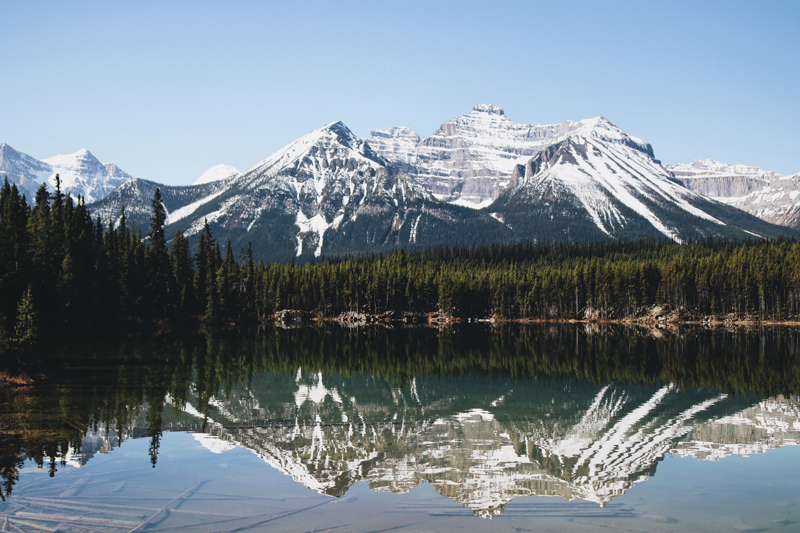
Pic by: Isabella Juskova


END Note: The healing of our society is intricately linked to the healing of our land. It’s because the environment we live in is not separate from us. What we learn from the wisdom of the land, helps us create a deeper understanding of our own interlinked lives.

This article was contributed by Romila Sil, a wandering soul who is on a journey to study the role of forests in the fostering of traditional and cultural ties in communities. Please add your insights in the comments section to grow our collective knowledge.

You can subscribe to our monthly blog posts here. We are a small group of friends trying to find new ways to reconnect people with nature. Our aim is simple. Helping people heal. Helping forests heal.

border_12

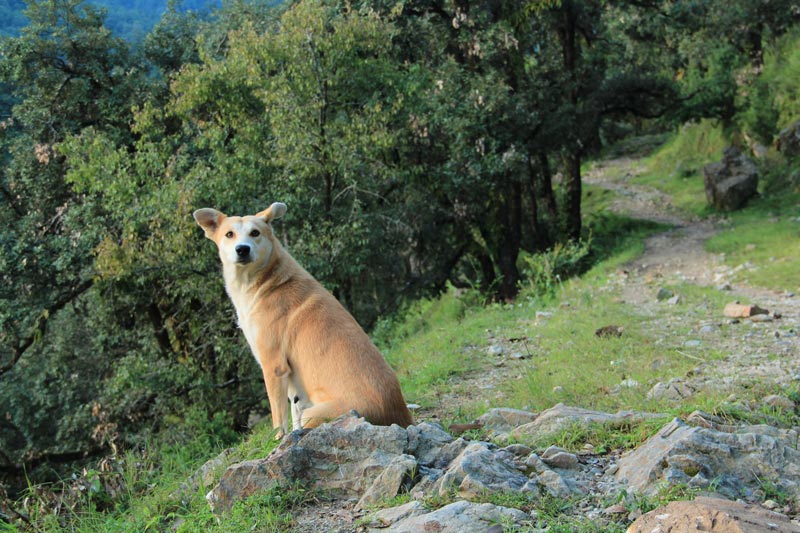
All the birds have flown away. The dogs in the village are showing signs of distress. The beach is eerily quiet.

Flower-1

This scene was taking place on Dec. 26, 2004 in many coastal habitats across the Indian ocean. Some time later the 3rd largest earthquake on record broke out in Indonesia. Following the earthquake, killer waves radiating from the epicentre slammed into the coastlines of 11 countries, causing massive damages from east Africa to Thailand.

The world communicates with us through our senses.

Our perception of life is based on what we see, hear, smell, taste or touch. These senses help us navigate through life and create experiences which shape who we are, forming our concept of Self.

Other than the traditional five senses, humans have multiple other senses which are less talked about. Some of these additional senses include: ability to sense pain; sense of balance and orientation; sense of time; Ability to sense changes in temperature; and a sense of direction.

Is there something beyond these known sense perceptions? A hidden part of ourselves which can help us grow as individuals.

SENSE AND SENSITIVITY

All across time, humans have relied on their senses to survive and thrive in the natural world. Trackers and indigenous tribes still use techniques that have been honed over centuries. For example, a small group of native American Indians known as ‘Shadow Wolves’ work on the US-Mexico border and use their skills to catch illegal drug traffickers.

In the modern age, our connection with the natural world has reduced drastically. Majority of our time is spent indoors and increasingly in front of screens. It is changing how we use and develop our senses. The two major outcomes are underutilisation of certain senses and a sensory overload of others.

Sensory overload occurs due to multiple reasons like city noise, overuse of electronic media, unhealthy diet and habits, etc. It impacts our mind and body and has a big effect on how we react to life or learn from it. Aggression, addiction, impulsivity, loneliness, stress are all linked intricately to our sense stimulation or lack of it.

Reconnecting with nature is a great antidote for restoring our wavering attention and rebalancing our emotions. Ample research findings now point to the various health benefits of spending time outdoors. However, at the edge of science lies one of the greatest gifts that nature has bestowed upon all living creatures in varying degrees.

THE SIXTH SENSE

Science is interested in the diversity of life. And intuition is much more aware of the unity of life.

~ Joseph Bharat Cornell. Author of Sharing Nature.

The sixth sense is generally used as a metaphor for sensing something beyond our known physical senses. In the dictionary – ‘intuition’ is defined as a thing that one knows or considers likely from instinctive feeling rather than conscious reasoning.

However a simpler and more relevant understanding of this term is linked to heightened awareness. Awareness of the self, of others around us and of the environment we live in.

A classic example comes from the many reports of certain animals and birds behaving radically, much before a natural disaster like an earthquake or a tsunami strikes. This reaction is attributed to the greater development of their senses which allows them to perceive subtle changes in nature.

People may have different interpretations for the sixth sense, but ultimately it is the ability to feel rather than think. So it is more about sensitivity rather than some special sense. By working on our own senses we can sharpen our awareness levels to be conscious of our own feelings in the present moment and make wiser choices for our future.

Dog

SENSE EXERCISES

Here are some exercises to sharpen your sense experiences. Try them out in a natural setting, in pairs or small groups.

Sensing the forest: Before you start the walk, stand in silence and pay attention to your senses individually for a minute each. Observe your surroundings with intention and take in the various sights colours and patterns. Move on to hearing attentively. Close your eyes and listen to all the sounds around you for a minute. Then focus on your breath and try to notice the smell of the forest. Finally, feel the earth beneath your feet and be aware of the sun and wind on your skin.

During the walk, move slowly and in silence. Find an appropriate place in nature to pause and try out one of the exercises given below. Share your insights with each other before resuming the walk and then repeat the process with another sense.

Eyes: Take time to identify at-least 5 different colours present in your surrounding. Pay attention to each colour separately and as you spend some time with a particular colour notice how it makes you feel.

Ears: Keep your eyes closed and gradually rotate yourself in a circle to capture sounds coming from different parts of the environment. Feel the mood of the forest, from the sounds you hear. Try making fox ears: By cupping your hands behind your ears you can capture more of the sound waves. Notice the difference in sound with and without the fox ears.

Touch: Find a unique tree and feel it with your hands to memorise it’s shape, texture and contours. Then have your partner blindfold you and lead you to different trees to see whether you can recognise your tree with just the memory of your touch.

Nose: The sense of smell is our oldest sense. For this exercise, collect leaves or flowers from different plants around you. Choose any one and memorise it’s smell by keeping it close to your nose for a few seconds. Place it back in a disordered pile with other leaves and flowers. With your eyes closed, use your nose to pick out your chosen object.

Flower-5

Taste: Carry a fruit with you on your walk. Find a scenic spot to sit quietly and eat the fruit slowly. The aim is to create a memory of the experience. Notice the affect of the ambience on the taste of the fruit.

Working on our senses opens the doors to having a richer experience of life and more importantly fosters a feeling of being alive.

Some More Sense Exercises

Sense Multiplier: Each person experiences the forest differently. By sharing our senses with others, we have the ability to enhance our perception of the forest. The group stands in a circle and each person pays attention to one thing in nature that is bringing them calm. After a minute of silence, any one person shares what they became aware of. The rest of the members spend the next minute noticing and sensing what is mentioned. The exercise continues till each member of the group has shared their sense experience.

As A Leaf: Notice the movement of air around you. Even when we are not in the forest, there is always the presence of some wind, which serves as a gentle reminder of nature around us. For this exercise, imagine you are a tiny leaf. Notice the smallest sensation of wind on your skin, especially your hands. Gently sway your body to the rhythm of the air around you. *Exercise contributed by Nilanjana, a psychology student and a trained outdoor educator.

Walking With Your Ears: Find a safe path or trail in the forest. Divide into pairs. One person in the pair becomes the leader and the other the follower. The follower will keep their eyes closed and simply follow the directions given by their partner. The leader can hold the hands of the follower to make this a little easier. Leaders can also describe the surroundings to their followers, to create a mental image for them. Switch roles within the pairs after 5 minutes. Share the experiences you had – as a leader and as a follower. *Exercise contributed by Mav Rebhl, a wandering do-gooder from Bali, Indonesia

My Nature Home: Every person has a nature place that is special to them. Find a quiet spot to sit. Breathe gently and keep your spine straight and relaxed. Close your eyes and remember your special place in nature. Slowly strengthen you memory by adding in details. In your mind, what do you see, hear, smell, and feel? Stay with the emotions that come up. You can return to this memory anytime you feel.

Barefoot Walking: Walking barefoot in nature is known as grounding or earthing. It is becoming very popular because of the surprisingly large number of reports of multiple health benefits. While researchers and scientist study the phenomenon, we can simply enjoy the touch of mother earth under our feet. Walk slowly and mindfully. Different textures of grass, mud, pebbles, sand will send different sensations to your brain. This is one of the most popular and calming experiences on most healing forest walks. So do try it out whenever the place and weather allows it.

Island

We hope this article has given you some interesting ideas to think about. Our intuition says that the next time you are in nature and pay attention to your senses, you will discover something new about yourself.

48-acorn

*This page is part of our nature healing program. You can find the next section of our course at this link.

Bonus: Here’s a link to download a set of 5 waterfall gifs. You can use them to attract more people to your walks, or simply meditate on them. http://bit.ly/hfl-falls


END NOTE: If you have any other sense exercises to share, please add them in the comments section to grow our collective learning. The Earth needs more sensitivity from humans so that we can hear what it is saying and take actions to shape where we are going.

You can subscribe to our monthly blog posts here. We are a small group of friends trying to find new ways to reconnect people with nature. Our aim is simple. Helping people heal. Helping forests heal.
Depression Vs Nature

This week we explore how nature affects our mental health and some interesting ways to restore our mental balance.  More than 7% of adults are diagnosed with depression, but people aged 12-25 have the highest rates of depression. Depression is a prolonged state of sadness which severely affects how one feels, thinks and acts. It can strike anyone, anytime and leads to a variety of physical and emotional problems that can affect one’s ability to function at work and home. In today’s stressful world it is important to become aware of how the environment we live in affects us and actively seek out ways to take care of our mental health. Let us take a journey into our mind, through nature.

Clouds

Note: This article covers tips to take care of our mental well being through nature. It is meant as a preventive plan of action and is beneficial for most people . Nature therapy is not a substitute for medical or psychiatric treatment. People with serious psychiatric disorders should consult qualified medical practitioners and seek a balanced approach to treatment.

wreath

ADVICE FROM A PSYCHOLOGIST

By 2020, mental health disorders, depression in particular, are projected to be overwhelming health-care concerns, and cities are far from a panacea for depression. Indeed, rates of depression, anxiety, and schizophrenia are consistently reported to be much higher among urban residents. Here’s some good advice from Anita R., a clinical psychologist.

“Mental health remains one of the most problematic areas because it is least understood and yet the most stigmatised. People are still hesitant to ask for help. Having said that, it doesn’t mean that everybody needs to go for help. There are a lot of things that we can do to prevent at least some of the seriousness of suffering.  I personally believe that it’s a balance that we are not able to bring about in our lives.

Things like looking after your wellness which includes physical fitness, eating the right kind of diet, avoiding certain kinds of unhealthy habits, getting on your nature walks, just spending time outside and, definitely working on your own self, your interests, your hobbies because that kind of all-around wellness gives you a much better safety net to manage mental health issues.

When we reconnect with nature I think the most important part for me is that you start reconnecting with yourself and for me that is a huge, huge way to improve your mental health because even if nobody else in the world tells you that you are a good person or a person of some worth, just reconnecting with yourself and helping yourself to see what you truly are can make you a much happier person.”

wild-flower-1.png

WALK IN THE WOODS

Here’s a list of some simple forest meditations to try out in nature.

Sense walk – Walk or sit silently in the forest. Focus on any one sense at a time for a short period of 5 to 10 minutes. Make a note of all the unique things you can observe and sense. Repeat the exercise with another of your senses. Notice how each sense reveals something new about the nature around us. The aim of this exercise is to bring us into the present moment and stop our thoughts from leaping into the past or future.

Gratitude tree – The aim of this exercise is to create a picture of a tree on the ground with things you find fallen around you. Every branch of the tree you create should be decorated with something you are grateful for. Find things to be grateful for in nature, in people around you and in your self.

Soaking in the forest – Find a place in the woods that calls out to you. Sit silently and observe the peace in nature around you. Imagine every pore in your skin is soaking in this tranquility and absorbing the calm of the forest like a sponge. Carry the calm of the forest back with you and return to it anytime you need it.

wildflower-2.png

SCIENCE

A group of researchers from Stanford University thought the nature effect might have something to do with reducing rumination. Rumination is what happens when you get really sad, and you can’t stop thinking about your glumness and what’s causing it: the breakup, the layoff, that biting remark. Rumination shows up as increased activity in a brain region called the subgenual prefrontal cortex, a narrow band in the lower part of the brain that regulates negative emotions. If rumination continues for too long unabated, depression can set it.

In general, decreases in rumination are linked to so-called “positive distractions,” like taking part in a hobby or enjoying a long chat with a friend. You’d think that walking in uninterrupted nature wouldn’t provide many diversions from a whorl of dark thoughts. Surprisingly, the opposite seemed to be true: Natural environments are more restorative, the authors write, and thus confer greater psychological benefits. (article link)

wildflower-4.png

Almost all antidepressant medications are thought to work by enhancing the availability of serotonin. Serotonin is a hormone used in nerve cell communication hence it is also called “the happy chemical.”

There are many ways we can enhance the production of serotonin in our brain, naturally. Exercise is one of them, so is sunlight and spending time in nature. After a nature session, brain scans showed a sizeable reduction of blood flow to the region of our brain linked to sadness, withdrawal and general grumpiness.

Using nature to bring back awe, wonder and fascination in our lives can help short-circuit the spiralling cycle of depressive thoughts.

wildflower-6.png

END NOTE: Ultimately each one of us has to take the responsibility for our own mental health and well being. Reconnecting with nature is a simple and effective way. If you have any personal stories of healing to share, please add them in the comments section to inspire others.

You can subscribe to our monthly blog posts here. We are a small group of friends trying to find new ways to reconnect people with nature. Our aim is simple. Helping people heal. Helping forests heal.