Peace walk introduces you to a novel concept that creates calm through nature and images. Learn how to add a few mindful activities to your walk, creating moments of tranquility and peace. It also offers a simple way to grow harmony and understanding between friends and family.

Peace is a strange bird. The more you look for it, the harder it is to find.

As a species we have evolved in nature. Therefore, returning to nature affects our mind, body and mood in many positive ways. For our peace walk, we will utilise the cameras in our smart phone to train our mind as well as create a highly memorable experience.

Our phones are usually the reason for our fragmented attention spans and many people are hooked to their screens. Let’s see if we can turn our device of  distraction into a mode of meditation, and in the process break our screen addictions.

This walk is part of our Nature Play programme of 10 magical walks. A collection of delightful activities to learn highly useful life skills from nature.
How to create walks that create change.
Nature Play >>

Peace Walk Rules

  • You can only take 1 picture per exercise. It’s not about taking the perfect picture. It’s about capturing the emotion you feel in that moment. Try and carry out the exercise in silence – allowing space for each person to find their special moment.
  • At the end of each exercise, there is a circle of sharing in small groups of 5 or less. Participants share the pictures they have taken as well as any insights or learning that might occur.

How does the mindful photography work? This walk works by engaging the creative side of our mind. Photography helps us bring our attention to the present moment. By restricting the number of photos one can take, we become more mindful of our thoughts and emotions. The different activity themes have been carefully chosen. They help us observe the wonders of nature and find wonderful insights that we can apply to our lives. Finally, the act of sharing after each activity turns individual experience into a collective experience.

Peace Walk Activities

Up Close
In the first round, participants are asked to take a close-up shot of something beautiful in nature. Close-ups help us observe and appreciate the tiny wonders that are often overlooked. They fill our mind with wonder and awe and make us more open to experiencing the many gifts of nature.

Peace-walk-close-up

Slow
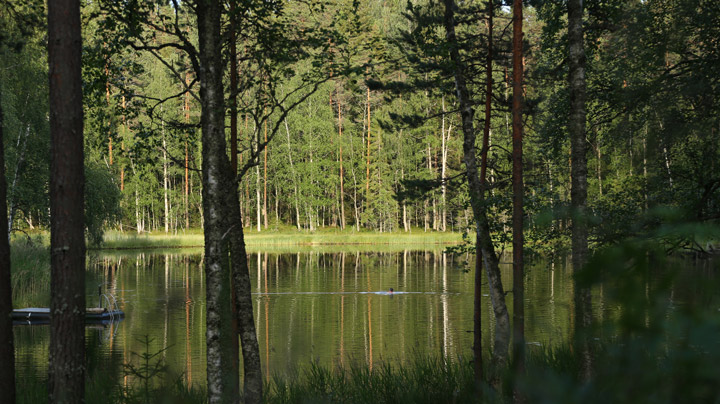
In the next section ask people to take a picture that captures the essence of the word ‘Slow’.  The aim is not just to take a picture but also slow down your own pace. Slow down your thoughts. Open your senses so that you can be in sync with the rhythm of nature.
Contrast
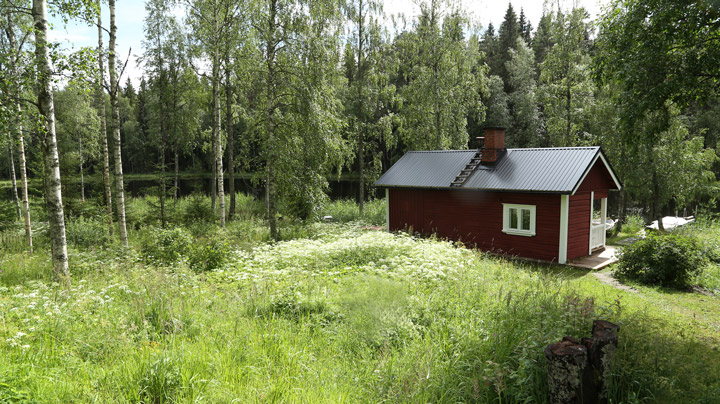
In the next round we capture one image that represents ‘Contrast’ in nature. Try to avoid cliche of ‘Life and Death’. Look for an unusual example of contrasts as you will find that nature abounds in contrasts – so does our mind.
Patterns
Look for interesting patterns in nature. Capture a beautiful pattern that calls out to you. Reflect on the patterns in our own life, as we are part of nature too. In the sharing session at the end of this section, participants can also share something about their personal patterns.
The Invisible Photograph
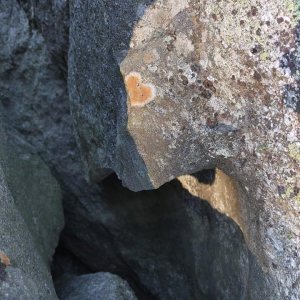
Participants are asked to capture something invisible. It is an open-ended prompt and all interpretations are welcome. This activity lays importance on the idea behind the image and noticing the emotion captured in the photograph. The art of making the invisible visible, is also an unusual way of observing how our mind works.

The Mind Camera
End  your walk by asking participants to put away their phones. Simply walk in silence and create a mental snapshot of the forest in your head. A memorable image that you would like to carry back with you. Participants end the walk with a closing circle and talk about the image in their head. This simple activity will expand your calm to a whole new level.

Peace Walk Take-aways

Some of the key take aways from this walk are that we get to learn the stories behind the images. Through the stories we are able to get a glimpse into our own minds as well as the minds of others.

The peace walk creates a wonderful connection with others when it is done in groups. The peaceful ambience of nature combined with the creative activity brings people closer to each other.

Finally, we understand that the best image one can take is not with a camera, but with the mind. The ability to carry a peaceful image in our mind is a priceless gift. It’s because we can turn to it whenever we need it the most.

Each walk is unique. There are many other interesting insights that your walks will generate. Feel free to share them with us in the comments.

A Curious Way To Break Bad Habits

In this TED Talk, Psychiatrist Judson Brewer explains a simple way of using curiosity to break bad habits.

He says, “Mindfulness is about being really interested in getting close and personal with what’s actually happening in our bodies and minds from moment to moment. And this willingness to turn toward our experience rather than trying to make unpleasant cravings go away, is supported by curiosity, which is naturally rewarding.

What does curiosity feel like? It feels good. And what happens when we get curious? We start to notice that cravings are simply made up of body sensations — oh, there’s tightness, there’s tension, there’s restlessness — and that these body sensations come and go. In other words, when we get curious, we step out of our old, fear-based, reactive habit patterns, and we step into being.

One current hypothesis is that a region of the brain, called the posterior cingulate cortex, is activated not necessarily by craving itself but when we get caught up in it, when we get sucked in, and it takes us for a ride. In contrast, when we let go – step out of the process just by being curiously aware of what’s happening – this same brain region quiets down. This makes it easier for us to take a step back and not indulge in our habit leading to another nice brain reward.

Now, this might sound too simplistic to affect behaviour. But in one study, we found that mindfulness training was twice as good as gold standard therapy at helping people quit smoking. So it actually works. The next time you get a notification, instead of choosing to see the message and compulsively send a reply , — notice the urge, get curious, feel the joy of letting go and repeat.”

Peace Walk Experiment

Let’s try a learning experiment. Please share this page with friends who might enjoy the exercise but may not be in the same city as you. Ask them to send you 5 pictures from the activities above. As a group you can then create a whatsapp / zoom call for sharing the stories behind your images and theirs.

It’s a great way to see pictures of nature from different parts of the planet, and to create a unique sharing experience where we learn and grow with each other.

You can also post pictures and insights from your Peace Walk on our Facebook group. Use the hash tag #peacewalk and #healingforest.
END NOTE:
If you haven’t already, do join our Nature Play Walks to get ideas for new walks. The next walk focuses on how to grow your creativity and lateral thinking.

Healing Forest is run by volunteers. We bring people and forests closer to each other through creativity and mindfulness. Our aim is simple. Helping people heal. Helping forests heal.
Story Walk – Creativity Through Nature

Let us learn how to weave stories in nature and grow our creative side. Discover some beautiful ideas to create a story walk in your neighbourhood and make use of those stories to create new connections – with each other as well as with nature.

The Story Walk is part of our Nature Play initiative: a unique program for parents, teachers, and their young storytellers.

In a thought provoking talk by Sir Ken Robinson, he talks about the role of creativity in our lives. He says, “Nobody has a clue despite all the expertise, what the world will look like in the future. And yet, we’re meant to be educating for it. So the unpredictability, I think, is extraordinary. My contention is that creativity now is as important in education as literacy, and we should treat it with the same status.”

This article has a collection of creative prompts that introduce you to the basic principles of story-telling and show you a simple format for inventing engaging short stories. Tap into your imagination with these ideas and see what stories find their way into your mind.

“Seeds of stories, can create a forest of friends”

~ healingforest.org

Story Walk – Activities

A story walk session typically takes about 60~90 minutes. It is suitable for all age groups and creates more delightful results when people of different ages participate together.

Give around 15 minutes for each activity – 10 minutes for exploring, walking, writing and 5 minutes for sharing the stories. If there are a large number of participants, create smaller groups of 5 or less for sharing. Smaller groups create more meaningful engagements.

Any safe space in nature works for a story walk. Make pairs to create responsibility and manage the group better. At the end of each activity, have pre-decided meeting points for sharing stories from that section. These ideas are mere suggestions. Feel free to make your own. Stay creative.

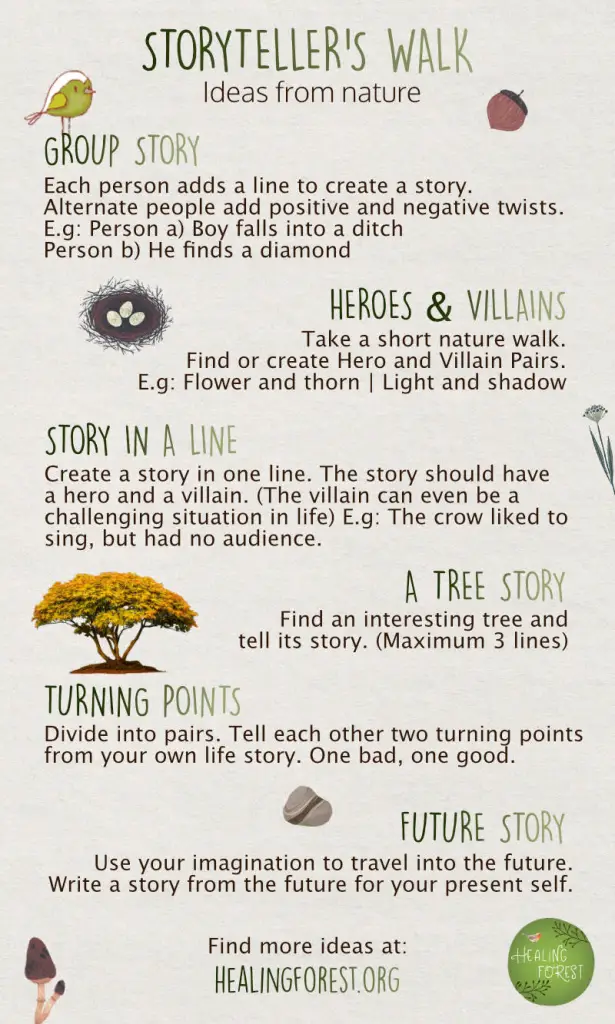
GROUP STORY: Each person adds a line to create a story. Alternate people add positive and negative twists. E.g: Person a> Boy falls into a ditch  Person b> He finds a diamond… Person c> But a magpie steal it from his hand…..and so on.
* One of the simplest principles of creating good stories is to add twists and turns. A good story is seldom predictable – just like nature.

NATURE BEINGS: Take a short nature walk. Find an unusual object, creature, or being in nature. Observe deeply and you will begin to see a network of relationships. You may find struggle and conflict but also co-operation and companionship. Share the story of your being and its network of relationships with your circle.

ONE LINE STORY: Create a story in one line. The story should have a hero and a villain. (The villain can even be a challenging situation in life) E.g: The crow liked to sing, but had no audience.
* Sometimes one can feel creatively challenged or stuck. One line stories are like tiny seeds that can grow into a huge tree over time. Learning to create one line stories gives you the ability to understand the heart of a story.

TREE STORY: Find an interesting tree and tell its life story. (Maximum 3 lines)
* There is a story hidden in every object of nature. By observing nature through all our senses, we can learn how to bring these invisible stories to life. And telling stories from nature is a wonderful way of deepening our relationship with it.

TURNING POINTS: Divide into pairs. Tell each other two turning points from your own life-story. One bad, one good. 
* Humans are part of nature too. And like everything else, each one of us carries our own unique story. Sharing the turning points of life helps us give a brief window to others about our journey through time.

FUTURE STORY: Use your imagination to travel into the future. Write a story from the future for your present self.
* This closing exercise allows participants to spend some solo time in nature. Reflecting on Time in nature is a humbling and meditative experience. The gift of storytelling helps us connect with our present self and imagine new possibilities for the future.

Here’s a short summary of the story activities in a handy poster that you can save for use later. Feel free to add more ideas for the ‘Story Walk’ in the comments section, so that others can learn and experiment with them later. Do add stories from your walks to our Facebook group and check out some amazing forest stories from around the world.

Story Walk
*Poster download link at the end of the article.

Bonus Story Ideas

The Secret Life of Clouds: Look up at the sky. Imagine the cloud as a storyteller. What adventures has it witnessed on its journey from the sea? What secrets does it carry, and what lessons does it share with you?

The Meeting of the Trees: Picture a council of trees gathering under the moonlight. What do they discuss? Are they planning for the next season, sharing wisdom from their roots, or telling tales of the animals they shelter?

The Feather’s Journey: Find a feather and imagine its story. Where did it come from? Was it part of a bird soaring above the mountains or gliding over the ocean? What messages or memories does it carry as it drifts through the world?

How Story Walks Enhance Creativity

Sitting beneath the open sky, storytelling becomes a bridge between imagination and the natural world. When parents and children weave tales of how the wind carries whispers of the trees or how stars guide the dreams of animals, creativity blossoms. Nature offers endless prompts—patterns on leaves, the flight of birds, or the murmur of a stream—each sparking new ideas and unexpected connections. By imagining how a fox might solve a riddle or how a flower greets the sun, we engage lateral thinking, finding fresh perspectives in familiar surroundings. Through storytelling in nature, we learn to see the world not just as it is, but as it could be, expanding our minds while grounding our hearts.

“We know two things about intelligence. One, it’s diverse. We think about the world in all the ways that we experience it. We think visually, we think in sound, we think kinaesthetically. We think in abstract terms, we think in movement. Secondly, intelligence is dynamic. If you look at the interactions of a human brain, intelligence is wonderfully interactive. The brain isn’t divided into compartments. In fact, creativity more often than not comes about through the interaction of different disciplinary ways of seeing things.”
~Sir Ken Robinson

Nature provides space for imaginative play. The focus is on learning through experience. Because all our senses are engaged, learning in nature is more long lasting.The brain gets a boost from the elements of nature, and interactions with others. It leads to increased confidence and creativity, resulting in enhanced problem solving skills. However, the biggest benefit that comes from Story walks is the unhindered flow of ideas. The stories you write are seeds that can create a forest of friends.

Story Walk: Closure

Our minds have extraordinary capacities, and creativity enables us to face the many challenges of an uncertain future. In fact it is the creative people who will be responsible for shaping the future we step into. 

Earth needs more storytellers and stories from nature, so that we can raise awareness about the unprecedented changes that are facing our planet. We hope you will get a chance to try out the story walk. Download the Story Walk poster here.

Please share this post so it reaches those who will find it useful.

How can we grow our mind with nature? Let us introduce you to Mind Play walks, with activities that boost your attention span, observation, imagination, and emotional intelligence.

Just like we nourish our body with food, we can develop our mind through the play of our senses. It’s because the things we sense affects the things we think, feel, and learn. With the help of nature outside, we get a chance to understand our own inner nature and expand our mind.

This post is part of our Nature Play Walks, where we share some unique ideas each month to grow your mind with nature.

Here’s a wonderful Native American story about an Indian chief and his grandson. The Chief says, “A fight is going on inside my mind. It is a terrible fight and it is between two wolves. One wolf is evil – he is anger, envy, greed, arrogance, false pride, and ego. The other is good – he is joy, peace, love, hope, kindness, humility, and compassion. This same fight is going on inside of you, and inside every other person too.”

The grandson thinks about it for a minute and asks his grandfather, “Which wolf will win?” The old chief replies, “The one you feed.”


Mind Play Walk

UNITS: These activities have the greatest effect when done in pairs or small groups. As you head out into nature, it’s best to create pairs and give them responsibility for each other. For larger groups, create small units of 6~8 people (3 or 4 pairs in a unit). This will not only make the walk more manageable, but also create better sharing and bonding between the smaller units.

Start with a short 10 minute walk in nature. Go slow. Talk less. Feel more.

Mind Play: One Thing

Stand in a circle. Ask participants to pay attention to their senses, especially sight, sound, smell, and touch. The group leader shares 1 thing in nature which is bringing them calm. All participants try and sense that 1 thing in silence for 30 seconds. Repeat the process with the next participant, until the circle is complete.

Insight: This exercise helps us calm down,  and be present to nature. Sharing our sense with each other grows our awareness and enriches our experience of nature. 

Mind Play: Who Am I

Participants take a short 10 minute walk in nature. Each person finds something in nature which represents them as a person. Regroup after the walk to share your object and why you chose it.

Insight: This activity helps us get to know each other better and the values we hold dear. It is also a good way of seeing yourself reflected in nature.

Mind Play: Game of Imagination

Place all the objects collected in the last round in the center of a circle. Pick up any object from the pile and ask group members to use their imagination to turn this object into something else. For e.g: A long stick can become a flying broom, or a microphone stand or a paddle for a boat. Participants can’t name the new object but have to enact it out. The others try and guess what the object is being turned into. See how many different things one object can become, before moving on to the next one.

Mind Play: I Spy

This is a game to sharpen your observation, focus, and attention. As the group walks in nature, the leader finds something unique or interesting and calls out its name by saying “I spy a …(name of object – e.g mushroom / owl / blue flower). The first member in the group to spot the object, becomes the lead and gets to call out the next interesting object.

Mind Play: Connections

This is the last activity for the group and is linked to the ‘Who Am I‘ activity. Everyone stands in a circle, with members who chose object that are most similar standing next to each other in a cluster. So people who chose to be some kind of tree or plant will stand next to each other as a small group. In the second stage, those who don’t have any partner will try and find a connection with another person or group that is related to their nature object. For example – birds can join the trees. The clouds can join the rivers. Participants declare their connection before merging into a larger group. The cycle repeats until there is only one big group left. End the activity with a group hug.

Insight: To grow in life, one has to form connections with others. Those who are similar to us as well as those who are different. This activity teaches us about the interconnectedness of life and we learn how to create meaningful connections with others.

All of us are different. But we share the same home – our Earth. And all life is deeply connected to each other. That is the secret. We are all part of Nature’s Play.

Mindful Play invites us to reflect: What can we learn about our inner nature from the nature outside? Through this practice, we nurture self-growth, not by striving, but by simply being. Mindfulness in nature shows us that self-discipline and growth arise naturally when we embrace the present moment to know ourselves.

These mind play ideas not only help us create meaningful walks, but when the insights gained from the walk are applied to our lives they help us create a meaningful world.

Mind Play Walks: Closure

Keep a small note book or journal where you can pen down your thoughts and insights after the walk. Journaling is a very important part of the learning process. It helps us preserve the experience and strengthens our growth. The notebook allows us to revisit the reflections, so that one can relive the experience of the nature walk. It also gives us a source of ideas and insights that we can turn to, in our time of need. Do share your insights in the comments or on our Facebook group. It will transform your individual learning into our collective learning.

Self-discipline via Self-awareness

Many people struggle with self-discipline, feeling it must be forced or rigid. But the softer, more sustainable path begins with self-awareness. By gently observing our thoughts and actions without judgment, we start to understand our patterns and triggers. Like noticing how the sun rises at its own pace, we learn that growth doesn’t have to be hurried. Self-awareness creates space for intentional choices, guiding us to align our actions with our values naturally. When we are present and mindful, discipline becomes less about control and more about care—choosing what nourishes us, moment by moment.

Self awareness is the starting point for growing self-discipline. It is also a gentler approach. Through this practice, we nurture self-growth, not by striving, but by simply being. Mindfulness in nature shows us that discipline and growth arise naturally when we embrace the present with kindness and care.

If you haven’t already, do join our Nature Play Walks to go on the next adventure. Please post pictures and stories from your mind play walk on our  Facebook group.

Healing Forest is a volunteer driven project that aims to bring people and forests closer to each other through creativity and mindfulness. Our aim is simple. Helping people heal. Helping forests heal. Please share this post so it reaches those who will find it useful.