How do you create joy out of nothing? Take a Joy Walk in nature to unlock the happiness hidden within your body. Joy Walk is a unique experience filled with fun activities that show you how to tap nature and movement to make the invisible, visible.

Our modern lifestyles often fix our body posture into set routines. You follow a daily and weekly schedule with a limited range of activities. As a result, a lot of our actions and emotions become restricted and brittle. The negative effects reveal themselves over time.

The Joy walk releases trapped emotions and hidden stress within the body. Through the creative ideas, you bring fluidity and flexibility not just to your body, but also to your mind.

Joy Walk Guidelines

Here are the simple principles of Joy walk, captured in 3 lines.

When you move, create harmony

When you are still, create awareness

Being in rhythm with nature, create joy

Do not force you body to perform. Let the movements happen naturally. Create a flow and go with it. There is no need to carry any props or music for the walk. The sounds and gifts of nature are enough.
Joy Walk Activities

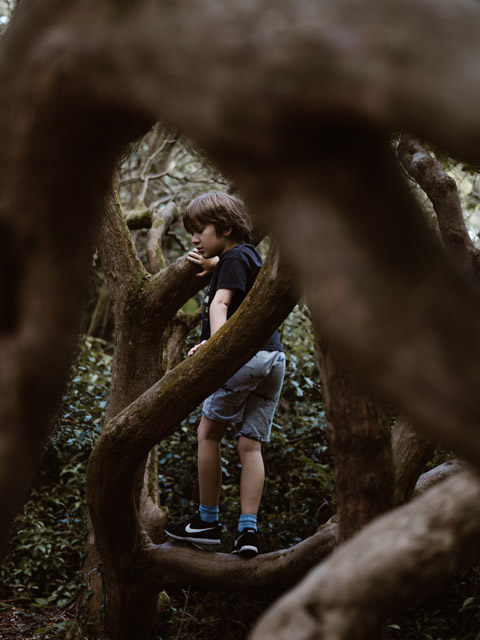
Typically the duration of the Joy Walk ranges from 60~120 minutes. Take a slow walk through nature and pause at regular intervals to carry out the different activities mentioned below. The design of Joy Walk moves from group engagements to pairs and ends with solo time in nature. Feel free to experiment, modify, and adapt.

Leaf Dance
The group forms a circle and raise their hands up in the air. Pretend the hands are leaves on a tree. A gentle breeze blows, creating a wave that moves along the circle. Slowly the wind starts picking up speed swaying the leaves with increasing gust. And then a storm comes and blows all the leaves away. The leaves dance away in the wind and finally come to rest on the ground.

Who am I dance
Each person introduces themselves as an object from nature. Instead of stating the name, the participant has to depict the nature object through movement or a dance. 

After each introduction the entire group copies the move. (Similar to follow the leader)

Weather In Your Heart
A variation of the introduction exercise: Participants are asked to introduce themselves through a movement that depicts the weather in their heart. It’s an interesting way to connect with our inner state of being. Also to observe that just like the weather, it keeps changing.

Tiger and Deer (Optional)
In this fun activity, we mimic a play from nature. The group forms a circle. A moderator takes a round outside the circle and secretly taps any one participant on the back. The chosen member is the tiger, while the rest of the group are deer. When the moderator gives the signal, all members start walking around inside the circle.

The deer have to try and guess who the tiger is. If anyone makes a wrong guess they will have to move out. Meanwhile the tiger can kill any deer by looking into their eyes and blinking. Any deer who gets blinked at, has to quietly fall to the ground.

In the next round, moderator can choose more than one tiger without telling the others. Sit back and enjoy the confusion that ensues.

Nature Vistas 
Form small groups. The moderator calls out any landscape or creature from nature. All groups have to arrange themselves in a form that depicts the landscape or creature. The moderator does a reverse countdown: 10, 9, 8,…1

On the count of 1 all groups have to freeze and hold still.

When the moderator points at any group, they add movement to the formation that has been created. For example: If they made a cow, then the cow has to move when the moderator points to them. If they created a rainforest, then the group brings the rainforest to life.

Lake Dance
Form pairs. One person from each pair becomes a silent still lake, and mirrors the actions of the partner. Reflect not just the actions but also the emotions.

Switch roles between the partners after a few minutes.

Dance of Nature
This activity is also done in pairs. Each pair chooses a set of prey and predator from nature. E.g: Frog and fly.

Each pair has to create a one minute performance – revealing the prey first, then the predator and finally the confrontation between the prey and predator.

Life’s Journey
Create small groups of 4-5 people. One person in each group becomes the sound for the team. Together the group has to pick up any species in nature and depict its entire life-journey in 2 minutes. The performers can move but not speak. The voice person can narrate the story or add sound effects.
Dance of Stillness
End the walk by giving each participant 5 minutes of quiet time in nature. Ask them to observe the dance of nature. Notice not just the things which are moving but also the movement within stillness. Imagine the flow of water pulsing within trees. Imagine the blood coursing in our body. Imagine the Earth moving through space. And imagine the river of time carrying us all. Every atom in the universe is in motion.

At the end of the quiet time, there can be a closing circle for participants to share any insights or experiences from the Joy Walk.

Joy Walk: Movement, Mind, Nature

53 years ago Marian Chace began using dance to help severely disturbed psychiatric patients in a Washington hospital. Her pioneering work and teaching lay the groundwork for the field of movement therapy, which its practitioners define as the guided use of movement to bring about changes in feeling, cognition, physical functioning and behaviour.

“There is a misconception that movement therapists work just with the body. In fact, they work through the body to make the unconscious available.”

~ Jean Seibel

By combining Movement and Nature we are able to amplify the benefits of both. The latest research has shown that connecting with Nature has a wide variety of benefits for our mind, body, and relationship skills. You can learn more about it through the charming Japanese practice of Forest Bathing.

Given the limited time we get to spend outdoors, this Joy walk can help you bring about a range of positive changes. It allows people of different age groups to come together for a joyful experience – creating happiness, wisdom, and growth.

Let us know what you think of the Joy Walk. We rely on you to helps us spread the joy. Please share this page with friends who might find it useful.

END NOTE:
If you haven’t already, you can join our Inspiration Newsletter to get new ideas and inspiration each month. To collect more walks and many other tools, try our Nature Calm course.

Healing Forest is a volunteer driven project that aims to bring people and forests closer to each other through creativity and mindfulness. Our aim is simple. Helping people heal. Helping forests heal.

Peace walk introduces you to a novel concept that creates calm through nature and images. Learn how to add a few mindful activities to your walk, creating moments of tranquility and peace. It also offers a simple way to grow harmony and understanding between friends and family.

Peace is a strange bird. The more you look for it, the harder it is to find.

As a species we have evolved in nature. Therefore, returning to nature affects our mind, body and mood in many positive ways. For our peace walk, we will utilise the cameras in our smart phone to train our mind as well as create a highly memorable experience.

Our phones are usually the reason for our fragmented attention spans and many people are hooked to their screens. Let’s see if we can turn our device of  distraction into a mode of meditation, and in the process break our screen addictions.

This walk is part of our Nature Play programme of 10 magical walks. A collection of delightful activities to learn highly useful life skills from nature.

How to create walks that create change.
Nature Play >>

Peace Walk Rules

  • You can only take 1 picture per exercise. It’s not about taking the perfect picture. It’s about capturing the emotion you feel in that moment. Try and carry out the exercise in silence – allowing space for each person to find their special moment.
  • At the end of each exercise, there is a circle of sharing in small groups of 5 or less. Participants share the pictures they have taken as well as any insights or learning that might occur.

How does the mindful photography work? This walk works by engaging the creative side of our mind. Photography helps us bring our attention to the present moment. By restricting the number of photos one can take, we become more mindful of our thoughts and emotions. The different activity themes have been carefully chosen. They help us observe the wonders of nature and find wonderful insights that we can apply to our lives. Finally, the act of sharing after each activity turns individual experience into a collective experience.

Peace Walk Activities

Up Close
In the first round, participants are asked to take a close-up shot of something beautiful in nature. Close-ups help us observe and appreciate the tiny wonders that are often overlooked. They fill our mind with wonder and awe and make us more open to experiencing the many gifts of nature.

Peace-walk-close-up

Slow
In the next section ask people to take a picture that captures the essence of the word ‘Slow’.  The aim is not just to take a picture but also slow down your own pace. Slow down your thoughts. Open your senses so that you can be in sync with the rhythm of nature.

Contrast
In the next round we capture one image that represents ‘Contrast’ in nature. Try to avoid cliche of ‘Life and Death’. Look for an unusual example of contrasts as you will find that nature abounds in contrasts – so does our mind.

Patterns
Look for interesting patterns in nature. Capture a beautiful pattern that calls out to you. Reflect on the patterns in our own life, as we are part of nature too. In the sharing session at the end of this section, participants can also share something about their personal patterns.

The Invisible Photograph
Participants are asked to capture something invisible. It is an open-ended prompt and all interpretations are welcome. This activity lays importance on the idea behind the image and noticing the emotion captured in the photograph. The art of making the invisible visible, is also an unusual way of observing how our mind works.

The Mind Camera
End  your walk by asking participants to put away their phones. Simply walk in silence and create a mental snapshot of the forest in your head. A memorable image that you would like to carry back with you. Participants end the walk with a closing circle and talk about the image in their head. This simple activity will expand your calm to a whole new level.

Peace Walk Take-aways

Some of the key take aways from this walk are that we get to learn the stories behind the images. Through the stories we are able to get a glimpse into our own minds as well as the minds of others.

The peace walk creates a wonderful connection with others when it is done in groups. The peaceful ambience of nature combined with the creative activity brings people closer to each other.

Finally, we understand that the best image one can take is not with a camera, but with the mind. The ability to carry a peaceful image in our mind is a priceless gift. It’s because we can turn to it whenever we need it the most.

Each walk is unique. There are many other interesting insights that your walks will generate. Feel free to share them with us in the comments.

A Curious Way To Break Bad Habits

In this TED Talk, Psychiatrist Judson Brewer explains a simple way of using curiosity to break bad habits.

He says, “Mindfulness is about being really interested in getting close and personal with what’s actually happening in our bodies and minds from moment to moment. And this willingness to turn toward our experience rather than trying to make unpleasant cravings go away, is supported by curiosity, which is naturally rewarding.

What does curiosity feel like? It feels good. And what happens when we get curious? We start to notice that cravings are simply made up of body sensations — oh, there’s tightness, there’s tension, there’s restlessness — and that these body sensations come and go. In other words, when we get curious, we step out of our old, fear-based, reactive habit patterns, and we step into being.

One current hypothesis is that a region of the brain, called the posterior cingulate cortex, is activated not necessarily by craving itself but when we get caught up in it, when we get sucked in, and it takes us for a ride. In contrast, when we let go – step out of the process just by being curiously aware of what’s happening – this same brain region quiets down. This makes it easier for us to take a step back and not indulge in our habit leading to another nice brain reward.

Now, this might sound too simplistic to affect behaviour. But in one study, we found that mindfulness training was twice as good as gold standard therapy at helping people quit smoking. So it actually works. The next time you get a notification, instead of choosing to see the message and compulsively send a reply , — notice the urge, get curious, feel the joy of letting go and repeat.”

Peace Walk Experiment

Let’s try a learning experiment. Please share this page with friends who might enjoy the exercise but may not be in the same city as you. Ask them to send you 5 pictures from the activities above. As a group you can then create a whatsapp / zoom call for sharing the stories behind your images and theirs.

It’s a great way to see pictures of nature from different parts of the planet, and to create a unique sharing experience where we learn and grow with each other.

You can also post pictures and insights from your Peace Walk on our Facebook group. Use the hash tag #peacewalk and #healingforest.

END NOTE:
If you haven’t already, do join our Nature Play Walks to get ideas for new walks. The next walk focuses on how to grow your creativity and lateral thinking.

Healing Forest is run by volunteers. We bring people and forests closer to each other through creativity and mindfulness. Our aim is simple. Helping people heal. Helping forests heal.

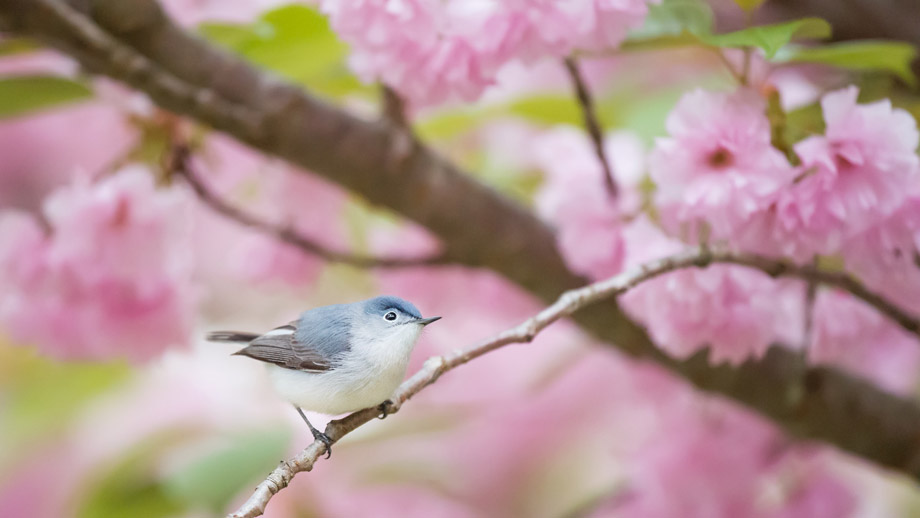
What can the wisdom of birds teach us about creating a life filled with joy, spontaneity, and song?

The latest research into bird intelligence leads to a fascinating conclusion: birds are thinkers. Not only are they capable of abstract thought, but they can also communicate with humans, solve problems, and experience complex emotions like grief.

In this post we explore remarkable insights from a variety of birds, through the voices of scientists, artists, seekers and bird lovers. You will also find helpful bird games that people of all age groups can enjoy and find enriching. And don’t miss the bird meditation as well as the wonderful forest gift at the very end.

Eat, Play, Nest: Wisdom of Birds

Lower your binoculars. See any bird or person in the full context of their being, feathers or skin. We all share the same air, same water, same earth, and same fate in the end.

~J. Drew Lanham
References for this blog post:

The Bird Way (2020) and The Genius of Birds (2016) by Jennifer Ackerman | Bird Meditation by Helen Macdonald, naturalist and author of H is for Hawk, and Vesper Flights | Bird Activities from Handbook of Bird educators by early-bird.in | Film by ND / healingforest

1. Bird Wisdom: Play is therapeutic

Ravens are highly playful birds. Birdwatchers around the world have seen them flying away with sticks, which they drop and then catch again. They also surf down pebbled river banks, and on roofs with loose tiles. Scientists struggle to explain such behavior. Play, after all, requires energy that could instead be used for growing or hunting. It’s also risky. If you’re surfing on pebbles down a river bank, you’re unlikely to spot predators like wolves or eagles. 

In the late nineteenth century, the German philosopher Karl Groos wrote a book called The Play of Animals. In it, he argued that play allows animals to hone vital life skills like hunting and fighting. Though this assertion is yet to be proven, Groos’s theory is still popular among scientists. 

There may be another explanation for why ravens play. Simply put: it’s pleasurable. When ravens play, their brains release dopamine – a chemical associated with sensations of pleasure. This suggests that, for them, play may well be a reward in itself. And that makes sense, considering the fact that ravens have been observed to forgo food if it means more playtime!

Activity: Bird Charades
Each participant picks a favourite bird or picks up a bird name from a bowl. They then come up one by one and enact the name without speaking, while others try to guess the name. Once guessed the bird name is appended to the participant’s name.
The advanced level of this game is done by trying to guess the bird just by enacting the mannerisms of the bird – the way it flies, eats, or moves on the ground.

2. Bird Wisdom: Learn the songs of life

The way birds learn to sing is similar to the way people learn languages. Just like human babies, birds are highly receptive to any sound and have the capacity to learn and imitate what they hear. But as a bird is exposed to the songs of its own species, it focuses on them and the songs of other species fade away. Well, except for mockingbirds, that is. Mockingbirds rather impressively hold on to this receptivity, which means they can absorb more and more songs over the course of their lives, which they in turn imitate.

As humans, we often limit our hearing to our own species. And even within that, many people tend to focus on words and opinions that match their own beliefs. How can we learn to expand our listening to include those whose voices are different from ours? Perhaps the birds can help.

Bird Activity: An exercise in listening
Different species of birds make different kinds of sounds. The sounds also vary based on the situation and what the birds are communicating. Try this activity to get an idea of how varied vocalisation from a single bird species can be.

Pick a bird and follow it for as long as you can. Listen carefully to the kinds of sounds it makes.Try to represent the sounds in writing (e.g., ‘caw’ and ‘krrr’ are two crow sounds). Describe the situation in which the bird is making this sound (is there a predator around, is it preening itself, is it nesting season, etc ).

Write down a library of sounds made by that species (scientists called this a ‘repertoire’). Remember that males and females (if you can distinguish them) may have different repertoires. From your observations, are different sounds made in different situations? What could they mean?

Why do birds sing most at dawn? It happens universally, but even after thousands of years of witnessing this phenomenon we don’t know why. We cannot ask other species to explain themselves, since it is not language we share with the birds. It is music. Music does not exist to be decoded. We and the birds exist to make it. Make it together and the whole world feels its power, its joy.

~ David Rothenberg, Musician and philosopher

3. Bird Wisdom: Add a little art to life

A 1995 study on pigeons, conducted by Shigeru Watanabe, found that the birds could pick out a Monet and a Picasso from a group of similar paintings.

If someone told you that birds are capable of making art, you’d probably laugh. But some male birds actually do create beautiful displays to attract mates. For instance, while all birds make nests, some of them make far more elaborate structures. Just take the satin bowerbird, which, rather than merely building a nest, makes a bower. He begins by building walls with twigs of the appropriate size, placed in the correct places. Then he decorates the newly constructed walls with a variety of objects and flowers.

 A female, when she arrives, examines the male’s bower and, if she’s interested, sticks around while the male dances to win her affection. This is a high-stakes situation because most males fail and only a small number of them mate with many different females. As a result, only the most impressive bower will do.

Bird Activity: Design a Nest
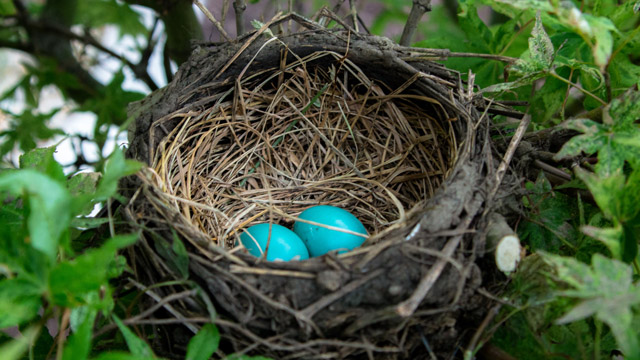
The nests of birds are vital to their persistence. Yet bird nests are sometimes directly targeted by people (e.g. through hunting) or are indirectly destroyed when tree branches are cut or entire trees brought down. This activity involves trying to build a bird nest on your own. You can start by noticing different kinds of nests, and begin to appreciate the hard work involved in nest building.

Collect natural materials like grass, twigs, and leaves that you think birds use to build nests. Then, using these materials in any way you choose, construct nests that could hold eggs. The resultant nests should be strong and intact. You can test it out by putting some pebbles in it.

4. Bird Wisdom: Wisdom grows when you work in groups

Lots of birds use found objects in a variety of useful ways. For instance, burrowing owls scatter dung around their nests to attract tasty dung beetles, while African gray parrots use sticks to scratch their backs. And if it wasn’t impressive enough that some birds use tools, the New Caledonian crow actually makes them. This species of crow trims the branches off twigs to make long, straight sticks that they use to access hard-to-reach places. They even make hooked tools to catch insect larvae. This is a big deal because humans are the only other species that makes hooked tools; even chimps don’t make such sophisticated implements. But their greatest intelligence comes from social interactions.

Birds have social intelligence showing signs of empathy. For example, geese often fly in v-shaped formations which helps the younger and weaker members of the flock in flight. Rooks console each other after a fight with what strongly resembles kissing. And western scrub jays often flock to the place where their group members die.

So, birds are socially aware as well as smart, and social interaction might actually be the reason for their intelligence. After all, living in and maintaining a society requires intelligence and effort, as a brief glance at our own social problems makes clear. Some scientists think that social interactions are a primary reason for intelligence among animals – birds included.

Activity: Bird Orchestra
The group is divided into 4 or 5 teams. Each team thinks of the call of a bird that they are able to sing themselves. One of the participants acts as the conductor of the orchestra. When the conductor points at a team, that team sings the bird call that they had chosen. The conductor can designate both start and stop gestures, and by gesturing at different groups in turn, can create a ‘symphony’ of bird songs. Participants take it in turn to act as the conductor.

5. Bird Wisdom: Every bird holds a message.

The beauty of the human mind lies in our ability to learn through observation. Mediation is the practice of fixing our attention on something that can help us grow our awareness and understanding of life.

Here is a beautiful meditative insight by Helen Macdonald on the vesper flight of swifts.

Swifts mate on the wing. And while young martins and swallows return to their nests after their first flights, young swifts do not. As soon as they tip themselves free of the nest hole, they start flying, and they will not stop flying for two or three years, bathing in rain, feeding on airborne insects, winnowing fast and low to scoop fat mouthfuls of water from lakes and rivers.

Swifts have, of late, become my fable of community, teaching us about how to make right decisions in the face of oncoming bad weather. They aren’t always cresting the atmospheric boundary layer at dizzying heights; most of the time they are living below it in thick and complicated air. That’s where they feed and mate and bathe and drink and are. But to find out about the important things that will affect their lives, they must go higher to survey the wider scene, and there communicate with others about the larger forces impinging on their realm.

Not all of us need to make that climb, just as many swifts eschew their vesper flights because they are occupied with eggs and young — but surely some of us are required, by dint of flourishing life and the well-being of us all, to look clearly at the things that are so easily obscured by the everyday. To take time to see the things we need to set our courses toward or against; the things we need to think about to know what we should do next. To trust in careful observation and expertise, in its sharing for the common good.

When I read the news and grieve, my mind has more than once turned to vesper flights, to the strength and purpose that can arise from the collaboration of numberless frail and multitudinous souls. If only we could have seen the clouds that sat like dark rubble on our own horizon for what they were; if only we could have worked together to communicate the urgency of what they would become.
(Source)

Activity: Bird Meditation
Which is your favourite bird? What life lesson have you learnt from them? Add your thoughts in the comments section, so that individual learning can turn into a collective one.

6. Bird Wisdom: Don’t forget to dance

To experience the power of dance try the our JOY WALK – a unique experience filled with fun activities that show you how to tap nature and movement to make the invisible, visible.

Don’t forget to join our free monthly mailer. Get uplifting new ideas that help you and your loved ones grow in life.

A Forest Gift

The wonderful folks at early-bird.in have just released a free handbook for bird enthusiasts and educators. It is a curation of multiple ideas, activities, projects, games and overall best practices that can be carried out by one or few educators, over short durations of time, and at little or no cost. It has been conceived especially for those who feel limited by their lack of knowledge, or do not know where to begin in connecting children with nature and the endlessly fascinating world of birds. You can download a pdf version of the book at this link.

Healing Forest is a volunteer driven project that aims to bring people and forests closer to each other through creativity and mindfulness. Our aim is simple. Helping people heal. Helping forests heal.

Request: Please share this post so it reaches those who might find it helpful.