In the midst of life’s turbulence, heavy rain serves as a powerful metaphor for the intensity of emotions, particularly anger. Just as rain can pour down relentlessly, so can anger surge within us. But instead of resisting or suppressing it, we can learn to embrace and transform anger through the practice of rain meditations.

In this article, we will explore four rain meditations that will help us deal with anger, finding calm and clarity amidst the storm. Meditations based on nature, are simple activities that can transform the state of your mind in a healthy way. These meditations allows us to understand, process, and express anger through metaphors. By learning to navigate our emotions, we prevent them from causing harm to ourselves and others.

*At the very end of the post are some forest gifts that celebrate the beauty of rain. Collect them before you flow away.

During heavy rain, the forest becomes a sanctuary that absorbs and slows down the downpour. The water trickles down through different layers before it hits the ground, thus reducing its force. Similarly, when anger threatens to overwhelm us, we can seek refuge within ourselves, allowing the layers of understanding and self-compassion to slow down the intensity of our emotions.

By learning to slow down our breath, we learn to be present with our anger without judgment, understanding that it, too, is a part of our human experience. Between anger and our reaction, there is a space. In that space is our power to choose our response. Listening to sounds from nature, is a great way to slow down your thoughts and find that space. As a practise, here is a rain and thunder sound clip. Close your eyes and listen. See if you can hear the silence within.

In the symphony of rain, the chorus of frogs adds another layer of melody. Their vibrant croaks symbolize the vocalization of our emotions, inviting us to express ourselves authentically. Just as the frogs transform rain into a melody, we can learn to channel our emotions into creativity. Through writing, painting, or any form of self-expression, we find liberation from the weight of unspoken emotions, transforming them into art that reflects the depth of our souls.

But before expressing our thoughts towards our source of anger, we must first have a conversation with our self. Writing is a great way to collect your thoughts and analyse the situation better.

Poem: “Raindrops” by Rabindranath Tagore

I long to shed my weariness, to cast my burdens,

And plunge my soul into the raindrops.

To dance and whirl,

In the rhythm of the falling rain,

To forget, to forget everything,

Except the joy of the moment,

The joy of being drenched,

In the sweet rain of life.

Link: Rabindranath Tagore Wiki

Rivers flow with grace, even during heavy rains, adapting to the changing circumstances. Similarly, we can learn to navigate our anger with mindfulness and acceptance. In this section, let us practice a short meditation inspired by the river’s flow. Close your eyes, take a deep breath, and envision yourself sitting by a river. Observe the water’s flow, acknowledging the presence of anger as a part of your current experience. Just as the river keeps moving, allow your breath to guide you through the waves of anger. As you breathe out, visualize anger leaving you with the current, gradually dissipating downstream.

As the rain finally reaches the ocean, it merges and becomes one with the vastness. The ocean embodies tranquility, reminding us that even amidst the storm of emotions, there is a place of deep calm within us. The ocean is the mother of rain, and meditating on its vastness helps us understand and embrace the source of our emotions. By connecting with this primordial source, we gain clarity and insight into the nature of our feelings.

Poem: “The Ocean” by Khalil Gibran

You are the ocean,

And I am a mere drop

Mingling with you

And losing myself

Like a tear in the sea.

Link: Khalil Gibran Wiki

In observing nature’s cycles, we discover valuable lessons. The rain’s ability to bring forth life from the earth’s womb teaches us that emotions can be transformative, leading to growth and renewal. However intense rain can cause immense havoc if we are not prepared for it.

Understanding our own inner nature through rain meditations can help us direct the flow of intense emotions within ourselves as well as others. Nature also reminds us of impermanence. Rainclouds disperse and make way for sunlight, symbolizing that our dark emotions, too, shall pass.

Recommended Resources

To deepen your understanding of rain meditations and emotional well-being, explore the following resources:

  1. Book: “The Art of Communicating” by Thich Nhat Hanh – This book offers valuable insights into mindful communication and understanding emotions. Link: Thich Nhat Hanh’s Official Website
  1. Article: “Rain: A Practice of Compassion” – This article provides another perspective to rain meditation and its benefits. Link: Rain meditations by Tara Bach

Heavy rain as a metaphor for anger, and the practice of rain meditations is a useful tool embrace and transform our emotions. By learning from the forest, frogs, river, and ocean, we discover the wisdom of accepting and expressing anger creatively, while finding calmness and understanding within ourselves.

The path of rain meditations teaches us to navigate our emotions like a skilled sailor, finding tranquility and growth amidst the storm of anger. We hope you embrace the transformative power of rain meditations and learn to dance with your emotions in the beautiful symphony of life.

As climate change advances we will see higher incidences of heavy rain across the planet. It’s because there will be more moisture in the air due to the warming oceans. As a society, the ecological stress is also going to result in higher incidences of anger.

Healing Forest project creates and curates useful ideas that bring people and nature closer to each other. We hope it will sow the seeds for a more peaceful planet. Please do share this article so it reaches those who may need it.


*For more amazing activities – try our Nature Calm course, or you can join our free mailer to get new inspiration in your inbox, once a month.
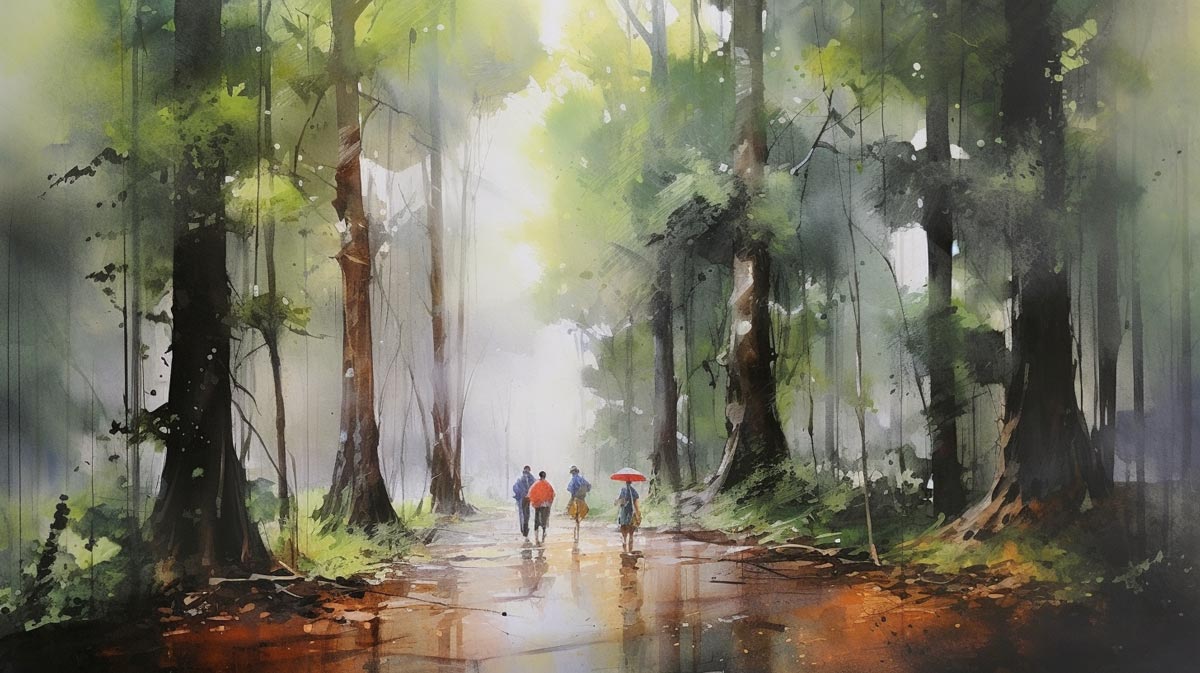
**Here are some watercolour and ink artworks to celebrate the beauty of rain. Feel free to use these forest gifts as you please.


From Chaos To Calm

As we sail the ocean of life, sometimes we can run into an island of trash. Chaos is an inevitable part of this journey – so how do you clear the mind in a natural, healthy way? In this post you’ll find a creative alternative for facing your confusions, and keeping your mind clear.

A Ploem walk is a unique way of clearing up inner as well as outer spaces. Just like plogging is a combination of picking up litter while jogging – a Ploem walk combines word games with picking up litter. The simple act of healing the outer can become the path for transforming the inner – one small act at a time. Adding stories and poems to the process taps into our deepest emotions, so that the chaos inside can turn into words which create a calm and clear mind.

Simplest Way To A Clear Mind?

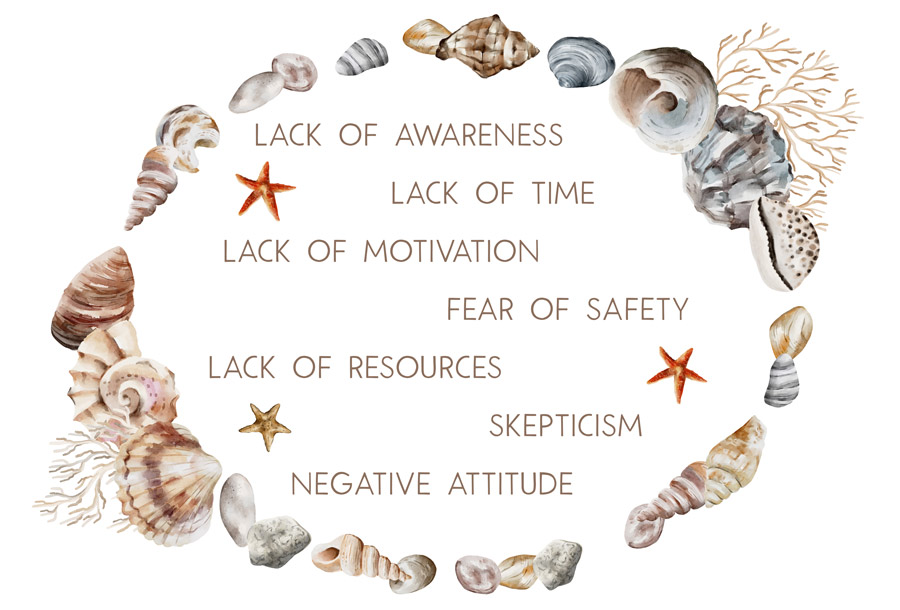
Do you know what are the biggest reasons for not addressing chaotic situations in one’s own life? Most people are not aware of how to handle the challenge, but also fail to gauge the negative impact of ignoring their mental health. There are many other reasons, some of which are listed below. If you look closely, these are the same reasons for people not participating in clean-up drives or other community initiatives. Is it a co-incidence?

Just like adding music to a celebration brings it alive, mixing a creative angle to any difficult task makes it more engaging. The Ploem walks allow us to let go of negative thoughts and replace them with a clean and clear mind. These simple but fun activities will aid you in clearing the clutter inside your head, and creating a calm space for something useful to grow in it.

This article is part of our 12 magical walks that gift you highly useful skills for life’s adventures: Nature Play>>

Clear Mind & Ploem Walks

To start off, determine the area that needs to be cleaned and get the necessary approvals if required. Fix a date and time for the cleanup. Weekends and 2 hour slots work best. Recruit volunteers through various means, and ask them to bring a trash bag, gloves, drinking water. Keep some first aid handy. (You can even try it in your own garden to start off.)

Before the actual cleanup, the group assembles in a circle and creates the repair story.

Repair Game: In a repair story alternate members add positive and negative twists to a story. The group leader starts the story with a sentence. Moving clockwise, the next person in the circle gives the story a negative turn. However, their neighbour has to lift the story up again by making something positive happen. So the story moves in twists and turns – between good and bad, until the circle is completed.

Example: Jim got lost in the forest. > But he stumbled upon a magical waterfall. > Unfortunately, he had never learned to swim. > So he sat down and composed a beautiful song instead. > A gang of ruffians heard him singing and came to rob him. > One of the gang members turned out to be his long lost love from high school…. and so on.

This ‘Repair’ game is a metaphor for the clean-up drive. Things may appear challenging when we start, but a few well intentioned people can turn things around and start the process of healing, no matter how daunting the task.

Divide the group into pairs and start the cleaning activity for 30 – 45 minutes. Also assign roles such as team leaders responsible for smaller groups and safety officers. At a pre-determined time and place the group assembles again to take a break and play the following games.

Reduce Game: Ask participants to imagine they are going on a camping trip and can only bring 5 items with them. They must choose wisely and think about how to reduce their waste and environmental impact. In the next round, they have to go hiking and can carry only 2 out of the 5 things. Then on the hike they get separated from the group and are left with only one thing. What is that one thing they will hold on to?

Recycle Game: Ask people to use the alphabets in their own name to create other words. This activity can also be done in pairs where each pair is asked to use some letters from their first names to come up with new words.

The first step in clearing our mind is to reduce the clutter inside. Setting priorities provides a sense of direction and focus. When we identify what’s most important, we can let go of non-essential things. Also learning to sort our thoughts and rearrange them teaches us to look at our problems in creative ways. These two simple games can be useful training to keep our mind clear. Prioritising and rearranging leads to reduced stress and anxiety, and increases our productivity and overall sense of accomplishment.

Before you restart the cleanup drive again do a short nature walk to appreciate the beauty around you and recharge your inner spirit. Go slow and move in silence. Open your senses to find things that bring you peace and clear your mind. On the short walk you can try out 2 more activities.

Refuse Game: Play a game of “I Spy” where players take turns spotting something beautiful and refusing to let it get spoilt. For example, “I spy a peaceful pond, and I refuse to let it get trashed.” Each participant find something new and unique to appreciate and protect. This activity also helps us observe nature through other people’s perspective.

Reuse Game: Have participants bring in any interesting item that has been thrown away. As a group brainstorm creative ways the item can be used to give it new life. For example, an old t-shirt could be turned into a reusable shopping bag, or an old book could be transformed into a lampshade.

Clearing the mind can be a very daunting task just like cleaning our surroundings. During the process the mind can be filled with negative emotions such as sadness, anger, despair. By focusing our attention on the positive things around us we are able to channelise our energies in the right direction. Adding creativity to the task helps us look at the problem with new eyes.

Resume the clean up drive in small groups or pairs. At a predetermined time and venue get everyone together for the closing activities and sharing insights with each other.

Recover Game:  Each participant finds a spot in nature that calls out to them. They sit in silence for 5 minutes to recenter themselves. Try to recover a memory of the space before your clean-up drive and compare it with the current state. Then reimagine the entire cycle repeating. The park gets dirty again, but a few people come and clean it up.

Regift Poem: Each person chooses a spontaneous word that comes to mind from their experience at the clean up activity. Use the word in a 2 line poem or a haiku, to gift it back to the friend who paired up with them during the clean up activity.

Cleaning up the nature outside can have a profound impact on growing a clear mind. When we engage in activities such as picking up litter, planting trees or flowers, or tending to a garden, we become more mindful and present in the moment. We connect the laws that govern nature outside with the nature that’s inside us. This can lead to a deeper understanding of our interconnectedness with all living beings. It will also fill you with a sense of gratitude and compassion.

Remember to follow safety guidelines and regulations throughout the cleanup drive. After the cleanup, dispose of the collected trash in an appropriate manner. Recycle as much as possible and dispose of the rest in a designated landfill or waste disposal site.

At the end don’t forget to celebrate the success of the cleanup drive with the volunteers. Thank everyone for their participation and encourage them to recreate this activity in their own circles. In case you do try this walk out, please post some pictures on our facebook group or leave a comment below.

In the next few weeks we’ll add photos and poems sent by our readers to this page.

Clear Mind and Health

There is a strong link between a clear mind and our health. When our mind is clear and focused, we are better able to manage stress and anxiety, which can have positive effects on our physical health. Stress is a major contributor to a variety of health problems, including heart disease, diabetes, and depression. By reducing stress through practices such as mindfulness and meditation or forest bathing, we can improve our overall health and well-being.

A clear mind also allows us to make better decisions and take more effective actions towards our goals, which can have positive impacts on our physical health. For example, when we have a clear mind, we are more likely to make healthier food choices, engage in regular exercise, and get enough sleep – all of which are crucial for maintaining good health.

Additionally, a clear mind can improve our mental health, reducing symptoms of anxiety and depression, and promoting feelings of happiness and contentment. This can have a positive ripple effect on our physical, mental, and emotional well-being.

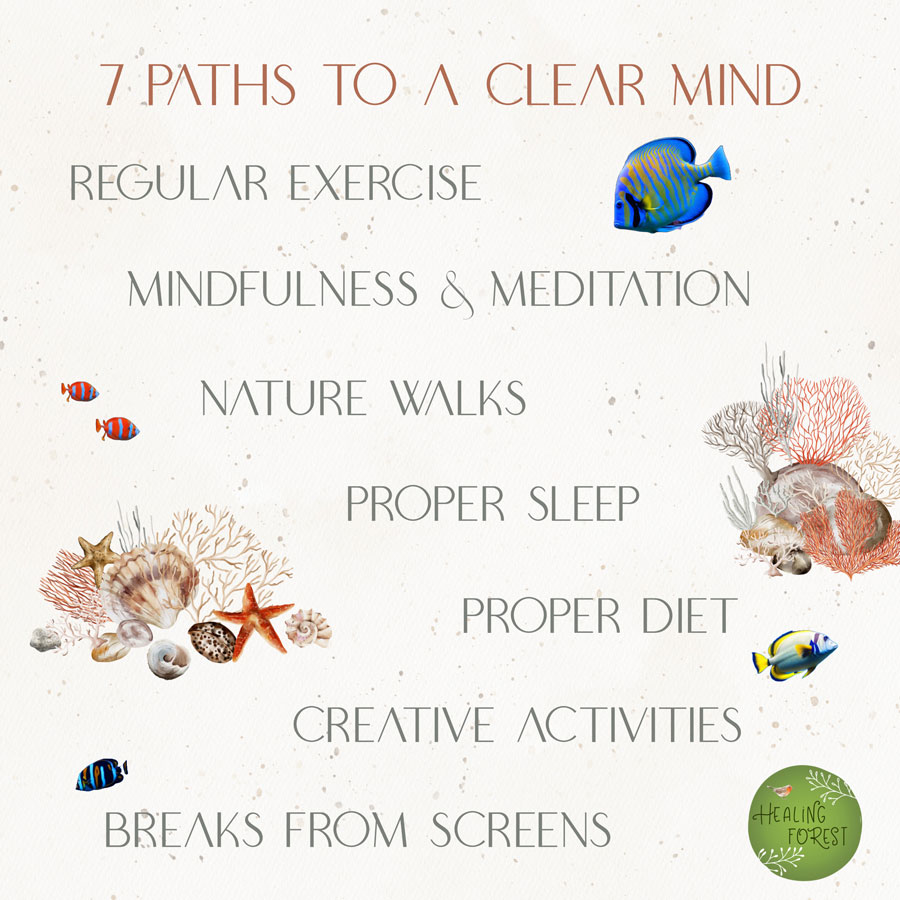
There are several effective ways to achieve a clear mind. Regular exercise, such as yoga or jogging, can help reduce stress and improve focus. Meditation and mindfulness can also be helpful, as they can quiet the mind and bring a sense of calm and clarity. Getting enough sleep, eating a balanced diet, and limiting caffeine and alcohol consumption also promotes mental clarity. It is also helpful to take breaks from technology and engage in activities that promote relaxation and creativity, such as reading, listening to music, or spending time in nature. Overall, a combination of physical activity, mindfulness practices, healthy habits, and relaxation techniques will lead you to a clear and focused mind.

Clear Mind. Earth Mind.

A clear mind is a journey, not a destination. It is the same with cleaning our planet. The Ploem walks show you how to achieve balance and harmony through play. They combine benefits from many of the activities mentioned above in a way that is also beneficial for our Earth. We hope they offer you a joyful path to a clearer mind and a cleaner environment.

To get useful new ideas once a month, join our free newsletter.

For more activities from around the world, see: Nature Calm

Healing Forest is a volunteer run project. Our goal is to bring people and forests closer to each other through creativity and mindfulness. The aim is simple. Helping people heal. Helping forests heal.

Do share this post, so it reaches where it’s needed.

Grief Is Love.

Grief is a way of holding on to love that we do not wish to renounce. The loss of something or someone we love can leave us feeling inconsolable. Even as we know that after the loss, the acute state of mourning will subside, something of the silent void will always remain. Akin to going on a pilgrimage, the journey of grieving is difficult and painful and what lies beyond cannot easily be fathomed 

In this article we explore stories and activities from nature that can help us transform our grief and loss into meaningful actions. You will find useful ideas to express your emotions, reflect on your experiences, regain a sense of control, and honour the memory of the loved one.

Knowing how to deal with loss is an essential ability. Each one of us will need it at some point. Loss is both a universal and a deeply personal experience. In its wake, it brings about emotional suffering that can leave us feeling overwhelmed with sadness, despair, guilt and even anger. The world, the self, time – all feel out of joint. So how does one heal?

This article is part of our 12 magical walks to learn highly useful life-skills from nature.
Nature Play>>

A Mushroom Story

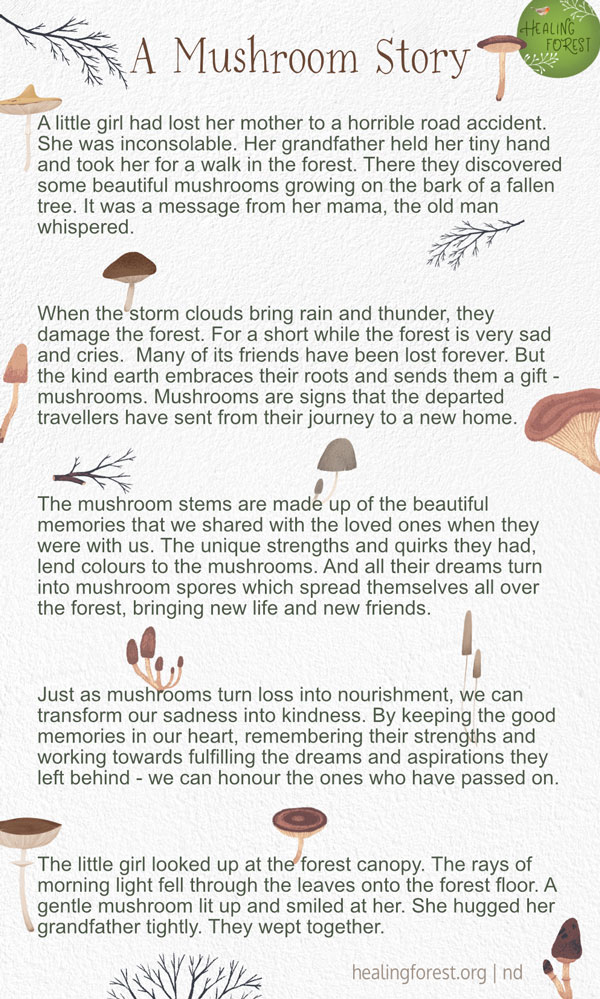
A little girl had lost her mother to a horrible road accident. She was inconsolable. Her grandfather held her tiny hand and took her for a walk in the forest. There they discovered some beautiful mushrooms growing on the bark of a fallen tree. It was a message from her mama, the old man whispered.

When the storm clouds bring rain and thunder, they damage the forest. For a short while the forest is very sad and cries.  Many of its friends have been lost forever. But the kind earth embraces their roots and sends the forest a gift – mushrooms. Mushrooms are signs that the departed travellers have sent from their journey to a new home.

The mushroom stems represent the beautiful memories that we shared with the loved ones when they were with us. The unique strengths and quirks they had, lend colours to the mushrooms. And their aspirations and dreams turn into mushroom spores which spread themselves all over the forest, bringing new life and new friends.

Just as mushrooms turn loss into nourishment, we can transform our sadness into kindness. By keeping the good memories in our heart, remembering their strengths and working towards fulfilling the dreams and aspirations they left behind – we can honour the ones who have passed on. 

The little girl looked up at the forest canopy. The rays of morning light fell through the leaves on to the forest floor. A gentle mushroom lit up and smiled at her. She hugged her grandfather tightly. They wept together.

* Download the mushroom story at the end of this article.

Turning Sadness Into Kindness

The stormy dark clouds of sadness can feel menacing. Yet, in nature we find that the advent of these clouds bears fresh showers that replenish the parched earth. When our sorrows threaten to wash over us, we can work towards making them into harbingers of kindness that brings the blossoms of life to others. 

Here are a few activities that help us transform grief and loss.

1. Mindful Mushroom Walk

When you enter the woods to search for mushrooms you have to be alert, silent, and calm.  By being mindful of your steps as you walk in the forest gently, you can turn this simple activity into an exercise in mindfulness.

While observing the breath is a very common mindfulness exercise, people who are going through a difficult phase in life find it very challenging because of troubling thoughts. Therefore, we should start with other senses first, especially when introducing mindfulness to beginners. Our visual sense is our strongest sense. Turning to nature to discover its many treasures fills us with deep calm.

NOTE: Be sure to buy a good field guide for mushrooms from your area or go with an expert. Some basic instructions for Mushroom Walks, as per the Modern Forager are given below.

1. Tread Lightly. Don’t trample all the little mushrooms and potential mushrooms in your hunting ground.
2. Make a positive identification using more than one source wherever possible. Do not eat mushrooms with any features that contradict the description. “When in doubt, just leave the mushroom.”
3. Mature mushrooms release spores into the air that are essentially mushroom seeds. You can respect the spores by leaving some of the mushrooms untouched.
4. Use a porous and an open-air container for your mushrooms as you walk through the woods. Don’t use plastic bags — which can ruin your harvest anyways; look for mesh bags, baskets, buckets with holes drilled in them,
5. Don’t over-pick. It is courteous and considerate to leave mushrooms behind for another picker.
6. Micro-trash is a big problem! Try to leave none and collect some if you see any.

While mushrooms are typically associated with death and decay, they are in fact an integral part of renewal in the universal cycle of life. We recommend closing the mindfulness walk with a short mushroom circle meditation. Sitting in a circle of silence, the participants meditate upon the impermanence that permeates all things in nature – including our thoughts.

We have curated some more outdoor mindfulness activities for groups that you might find useful.

To live in this world 
you must be able
to do three things:
to love what is mortal;
to hold it
against your bones knowing
your own life depends on it;
and, when the time comes to let it go,
to let it go.

~ Mary Oliver, Blackwater Woods

2. Creative Writing In Nature

Creative writing can be a helpful way to deal with grief for several reasons. Writing allows individuals to express their emotions and thoughts in a safe and private way. It can be challenging to find the right words to say when experiencing grief, but writing provides an outlet to put emotions into words and process them.

Here are some creative writing prompts to try on your nature walk. Choose the ones you feel comfortable with.

  • Write a letter to the person you lost, expressing everything you wish you could say to them.
  • Write about a specific memory you have of the person you lost, describing it in detail and how it makes you feel.
  • Write a story or poem about the stages of grief you have gone through and how you have coped with each one.
  • Write a tribute to the person you lost, highlighting their qualities and how they impacted your life.
  • Write about a place that brings back memories of the person you lost, describing it in detail and how it makes you feel.
  • Write about how your perspective on life and death has changed since experiencing loss.

Writing about grief allows us to reflect on our experiences and understand our emotions better. It can be a powerful tool for gaining insight into oneself and finding meaning in the loss. Grief can make individuals feel powerless and out of control. Writing provides a sense of control as it allows individuals to express their emotions and feelings in their own way and time. It is also a beautiful way to honour the memory of loved ones.

3. Acts Of Kindness

As night slowly paves the way for dawn, converting grief into acts of service can be a meaningful way to turn a difficult experience into something positive. These could involve checking in with friends or family members in need, performing random acts of kindness, volunteering our time, or making a donation to a charity.

Another great alternative for acts of kindness is to work with plants, trees, and gardens. Gardening and working with plants can be a calming and grounding experience that encourages mindfulness and relaxation. This can be particularly helpful for individuals dealing with the stress and anxiety that often comes with grief.

Plants and trees can become teachers and symbols for the grief process. For example, the act of pruning dead or dying branches can represent the process of letting go, while planting new seeds can represent the hope for new growth and new beginnings. A great project to undertake is creating your own meditation garden. A meditation garden is a place where you can retreat from the stress of daily life and find peace and tranquility through meditation or other contemplative practices. Here’s a useful note on how to create your own meditation garden.

Countries like Korea have taken the concept a step further with a unique ‘National Tree Burial Forest’. It is an eco-friendly way to send off the loved ones. Learn more about Korea and its Forest Bathing practice here.

Self-compassion is the heartbeat of all human understanding. Practising self-compassion entails giving ourselves permission to feel our emotions and attend to ourselves through self-care practices. When we reach outwards, it also helps restore our sense of connectedness in the web of life

Sharing Grief

We all grieve in our own ways and in our own time. And often we have to support others in their journey. Therefore it is important to understand the way our mind deals with loss and pain.

In order to explain the process, the Swiss psychiatrist, Elisabeth Kubler-Ross, introduced the model of the five stages of grief in her 1969 book ‘On Death and Dying.’ The stages of grief, popularly described with the acronym D.A.B.D.A., are as follows:

  1. Denial: This stage can look like an inability to admit to the truth of what happened. The shock of the news can be so overwhelming that one might feel nothing or go numb, refusing to discuss the loss and isolating oneself from others who have accepted it. Denial aids in coping by allowing you to pace your feelings of grief and staggering its full impact on us. Once the denial and shock start to fade, feelings that you were suppressing begin to come to the surface and the healing process begins. 
  1. Anger: In this phase, you might look to someone to blame others for the cause of your grief and may redirect your anger to close friends and family. Questions like “Why me?” or “Life is not fair!” keep coming up, as you find it incomprehensible how this could happen to you. If you are a person strong in faith, you might begin to question your belief in God : ‘Where is God? Why did he not protect me?”  Anger is a natural step in healing. It has more energy than depression and can propel us into action, bridging you back to reality and to others. 
  1. Bargaining: In bargaining, you try to convince yourself you can avoid the grief by negotiating with a higher power. You can find yourself wracked with guilt as a series of ‘What if’ scenarios pass through your mind. 
  1. Depression: This is the stage in which the emptiness of the void that the loss has left us with is felt most acutely. The rupture or loss of a deep bond feels like a loss of a part of oneself. You might withdraw from life, feeling hopeless and despondent as the weight of sadness feels unbearable. You might not want to be around others and might even experience suicidal thoughts.
  1. Acceptance: In the final stage, you are able to acknowledge the loss, and begin the process of adjusting to the new reality. As your emotions begin to stabilise, the pain feels more bearable and the world begins to seem inhabitable again. 

These steps are not linear, and we often cycle back and forth through the stages. Grief comes in waves, and coming to terms with loss requires self-compassion and understanding. Holding space for the difficult emotions that arise in oneself instead of escaping them is a vital part of healing. Accepting support and help from others can help us move forward towards recovery. 

Loss is an inevitable part of the journey of life. In this journey, grief can usher in several invaluable lessons. It can teach us about the fragility of life. 

Grief reminds us of the importance of our close relationships, urging us not to take them for granted. It takes us to a deeper appreciation for spending quality time with our loved ones and creating memories that can be cherished forever. It can teach us gratitude for what we have. Grief can bring home to us the realisation of our own resilience and inner strength to overcome challenges. It can prompt us to reflect on the meaning of our life, and strengthen our faith, thus becoming a catalyst for a transformation. 

References and Contributors for this article: Deepti Sachdev, Poet & Psychologist | https://rootrisetherapyla.com/blog/2022/5-stages-of-grief | https://www.psycom.net/stages-of-grief |

Create ripples of positive change in your life through nature.
Nature Calm>>

Healing Forest is a volunteer run project. Our goal is to bring people and forests closer to each other through creativity and mindfulness. The aim is simple. Helping people heal. Helping forests heal.

Do share this post, so it reaches where it’s needed. | Link to download the mushroom story.