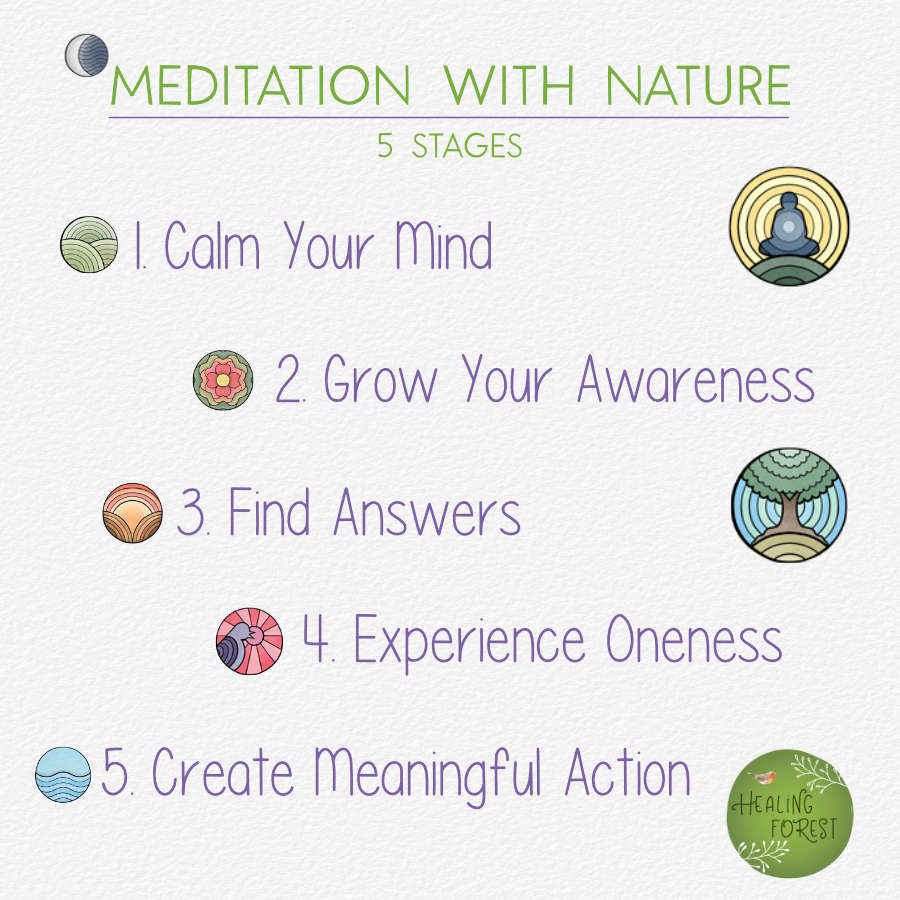
How can we learn meditation with nature? Most people have an incomplete picture of what meditation is. Many have tried and given up on meditation. In this post we present a unique approach to meditation through nature. We’ll use simple short nature films to guide your meditation, helping you reach deeper states of the mind as well as creating fresh new insights for your life.

The most common perception of meditation is that it is about sitting in one place with your eyes closed, spine straight and trying to observe your thoughts or your breath. A lot of people try to free their mind of all thoughts, which is extremely challenging so they give up. Many try to fix their thoughts using the breath or a chant, but for overactive minds sometimes the process gets tiring or boring. However, there are hundreds of fresh possibilities for meditation if we can understand the goal of meditation.

One of the most important goals of nature meditation is to be free of thoughts that limit you. The initial stages start with focus and attention. As you go deeper the practise yields new awareness and insights. And finally, we understand how to transform these insights into our way of being as well as our actions. So in simple terms, attention yields awareness and awareness leads to action.
In this article we will take you through 5 short films from amazing nature spaces around the world. The films will transport you to surreal landscapes that fix your attention. Each film also reveals an enquiry into our inner nature. Under each film are the nature meditation prompts for you to grow your awareness. For the best viewing experience watch on full screen mode with headphones.
Sit with a pen and notebook as you watch these films. After each film, take a few minutes to reflect on the nature meditation. Write down important thoughts that come to you and areas of your own life that you can apply them to. As an added bonus, share these nature meditations with someone close to you and then find time to discuss each other’s insights. This will create rich conversations and priceless treasures of learning from each other.

Forest Meditation
Imagine yourself in the vastness of nature, surrounded by its stillness and beauty. If you could be one thing in nature, what would you be? Picture it vividly. Would you be a tall, grounded tree, offering shade and shelter, rooted deeply into the earth? Or perhaps a flowing river, gently carving its path, moving freely yet with purpose? Maybe a cloud, softly drifting, watching the world from above without attachment?

Whatever you choose, reflect on why. What draws you to this form? Is it the stability, the freedom, or the sense of harmony? Let your choice reveal something about your inner self, your desires, and your nature.

As you breathe in, connect to the essence of this natural form. As you breathe out, release any tension or resistance. Allow yourself to feel that you are this part of nature—connected, alive, and whole. Stay here, breathing, connected to your chosen form, feeling the wisdom and peace of nature within you.

Nature Meditation
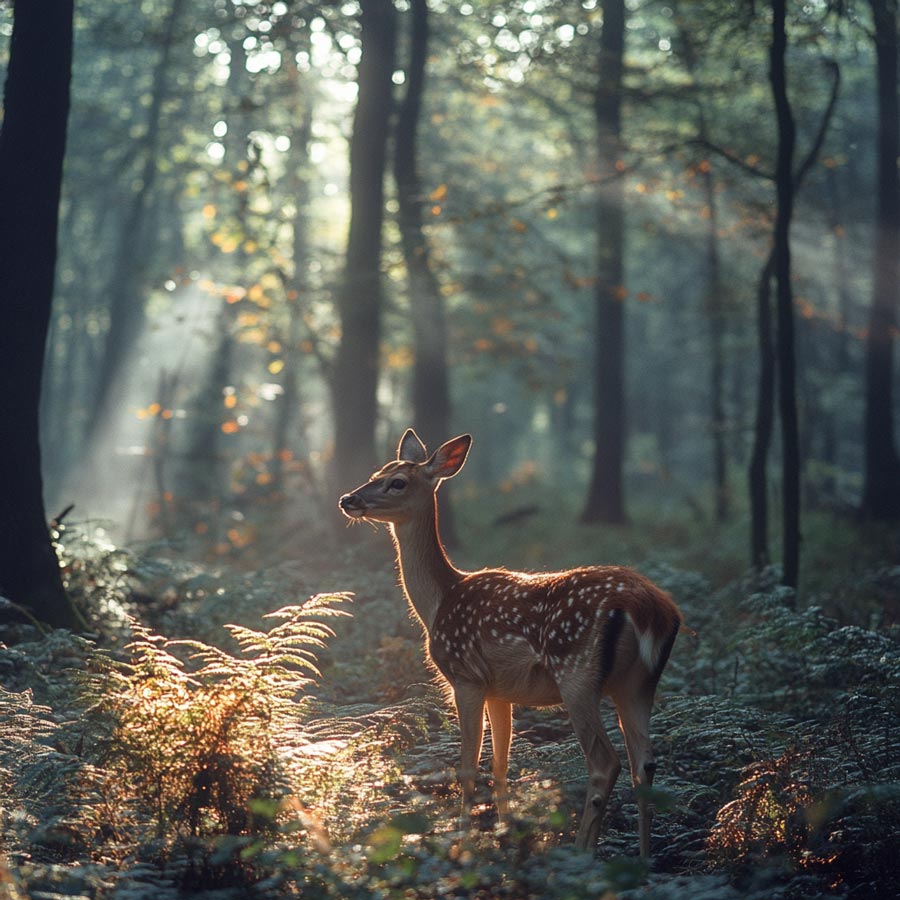
Ask yourself: What are you seeking from life? What deep desire, longing, or purpose quietly stirs within you, like a seed waiting to grow? Is it peace, love, understanding, or something else? Allow this question to settle into your heart, as softly as sunlight filtering through the trees.

If you could ask the universe one question, what would it be? Picture yourself wandering through a forest, each step revealing a path, each breath filling you with curiosity and wonder. As you walk, you carry this question with you, not as a burden but as a companion—guiding you.

Let your thoughts flow like a stream, without rushing. Perhaps you seek to understand your place in this world, or how to cultivate deeper joy, or maybe it’s the mystery of how to truly love and be loved. Whatever the question is, hold it gently, like a fragile leaf resting in your palm.

Nature Meditation
Reflect on the phrase: “From nothing, into nothing.” Just as the forest comes alive from seed to tree and eventually returns to the earth, life itself rises and falls in its own rhythm. What does this mean for you? Can you find peace in the ebb and flow, knowing that everything is part of this endless, beautiful cycle?

As you reflect on the forest’s cycle, consider the art of letting go. The trees do not cling to their leaves when it’s time for them to fall. They release, trusting that in letting go, they make space for new growth. In the same way, can you release your attachments—whether to moments, people, or expectations—and trust the natural flow of life? By letting go, you free yourself to grow and change, just as nature does.

Breathe in this sense of release, and breathe out anything you’re ready to let go of.

Nature Meditation
What does learning to fly mean for you? Perhaps it’s stepping into freedom, embracing change, or trusting your own strength to carry you. Feel what it would be like to spread your wings, leaving behind the safety of the branch to soar into the unknown. What does this flight represent for your life?

Now ask yourself: What is stopping you? Is it fear of falling, self-doubt, or holding on too tightly to what you know? Breathe in deeply, feeling the strength within you, and breathe out, releasing the fears or obstacles that hold you back. Trust that you have everything you need to fly.
Nature Meditation
If you could dream up a future for humanity, what would it look like? Imagine a world shaped by your deepest hopes—what values would guide us? How would people live with one another, with nature, with themselves?

Now, ask yourself: How would you go about achieving this vision? What steps, however small, can you take in your daily life to bring this dream closer? Is it through changing how you connect with others, choosing more mindful actions, or perhaps advocating for causes that matter to you? What is within your reach today that could begin to shape the world tomorrow?

Breathe in the possibility of this future. Breathe out, letting go of any overwhelm. Trust that even the smallest steps can ripple out, like a drop of rain feeding an entire forest. Stay with the feeling of possibility and purpose.
Hi, my name is Nitin and I am the founder of this Healing Forest website. In my free time I like to create uncommon stories from extraordinary places. You can see more of my work on Youtube or Instagram or Amazon. I hope these short nature meditations brought you some calm amidst the chaos of our world.

What Next
For those who wish to go deeper into nature meditation, there are hundreds of possibilities and nature offers some of the simplest, yet most effective options. Try our collection of nature meditations from around the world here: Nature Calm

Please leave a comment if you can, to add your thoughts to the conversation.
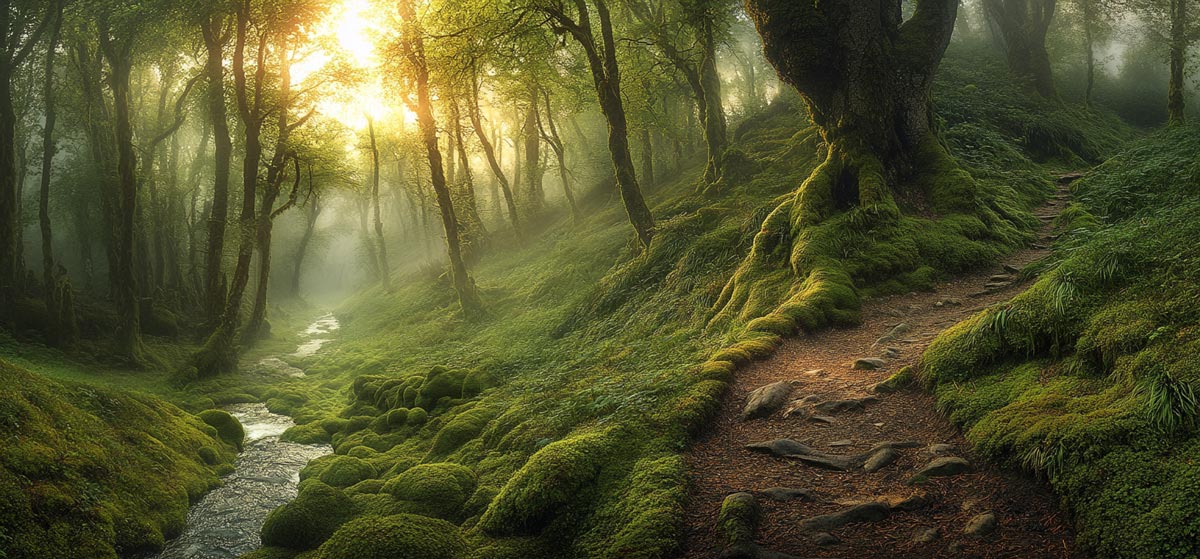
Europe is home to some of the most beautiful forests, each offering a unique experience. This month we have created a list of seven enchanting forests in Europe which are especially suited for forest bathing and a mindful connection with nature.

Forest bathing, or “Shinrin-yoku,” is the practice of connecting with nature to enhance our well-being in a way that transforms not just our mind and body but also our relationships. Read our introductory article to get a deeper insight into forest bathing.

1. Black Forest, Germany

The Black Forest, or Schwarzwald, is a vast expanse of dense woods, rolling hills, and idyllic villages. Its deep, dark canopy and intertwining trails make it perfect for a peaceful forest bath. As you walk through the forest, you can hear the gentle rustle of leaves, the chirping of birds, and the distant flow of streams. The forest is also known for its therapeutic springs and serene lakes, offering a full sensory experience.

Pic by Daniel Rauber
  • What’s Special: Dense canopy, charming villages, therapeutic springs.
  • Best Time to Visit: Late spring to early autumn (May to September) when the weather is mild and the forest is lush and green.
  • Forest Information Link

2. Hallerbos (Blue Forest), Belgium

Hallerbos, also known as the Blue Forest, is famous for its stunning bluebell bloom every spring. For a few weeks, the forest floor transforms into a sea of vibrant blue, creating a magical atmosphere perfect for a calming walk. The towering beech trees provide a lush canopy, while the gentle fragrance of bluebells fills the air, making it a unique and enchanting destination for forest bathing.

  • What’s Special: Carpet of bluebells in spring, vibrant and fragrant.
  • Best Time to Visit: Mid-April to early May, when the bluebells are in full bloom.
  • Forest Information Link

3. Forêt de Brocéliande, France

The Forêt de Brocéliande is steeped in mystery and legend, believed to be the mythical home of Merlin the Wizard from Arthurian legend. This forest offers a magical ambiance with its ancient trees, hidden ponds, and misty atmosphere. Walking through Brocéliande feels like stepping into a fairy tale, making it an ideal place for a meditative forest bath.

  • What’s Special: Arthurian legends, mystical ambiance, ancient trees.
  • Best Time to Visit: Autumn (September to November) when the forest is adorned with colorful foliage.
  • Forest Information Link

4. Plitvice Lakes National Park, Croatia

While famous for its cascading lakes and waterfalls, Plitvice Lakes National Park is also surrounded by lush forests that provide a perfect setting for forest bathing. The forest trails lead you through rich greenery, where you can enjoy the soothing sounds of flowing water and the refreshing scent of pine and beech trees.

  • What’s Special: Lush greenery, waterfalls, diverse flora.
  • Best Time to Visit: Spring (April to June) or autumn (September to October) for mild weather and fewer crowds.
  • Forest Information Link

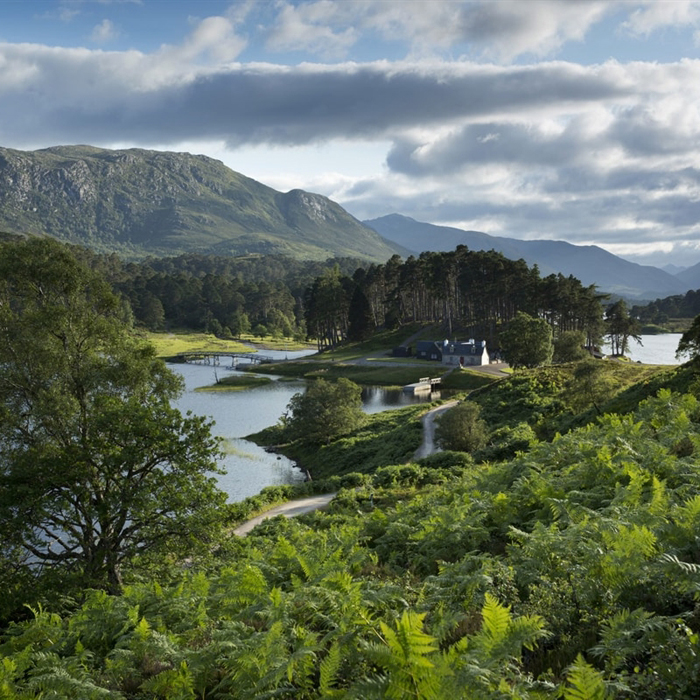
5. Ancient Caledonian Forest, Scotland

The Ancient Caledonian Forest is a remnant of the vast forest that once covered much of Scotland. It is home to rare wildlife and ancient Scots pine trees that are hundreds of years old. This forest offers a sense of solitude and timelessness, making it perfect for those looking to reconnect with nature and find peace among the trees.

Pic by Paul Tomkins
  • What’s Special: Ancient pine trees, rare wildlife, solitude.
  • Best Time to Visit: Late spring to early summer (May to July) when the forest is in full bloom and wildlife is most active.
  • Forest Information Link

6. Biogradska Gora, Montenegro

Biogradska Gora is one of Europe’s last remaining primeval forests, characterized by ancient trees, glacial lakes, and rich biodiversity. The untouched nature of this forest offers a serene and pristine environment for forest bathing. The air is crisp and clean, and the dense canopy provides a cool, shaded retreat, making it a perfect place to unwind and relax.

Pic by Uliana Sova
  • What’s Special: Primeval forest, glacial lakes, rich biodiversity.
  • Best Time to Visit: Summer (June to August) when the weather is warm and the forest is at its greenest.
  • Forest Information Link

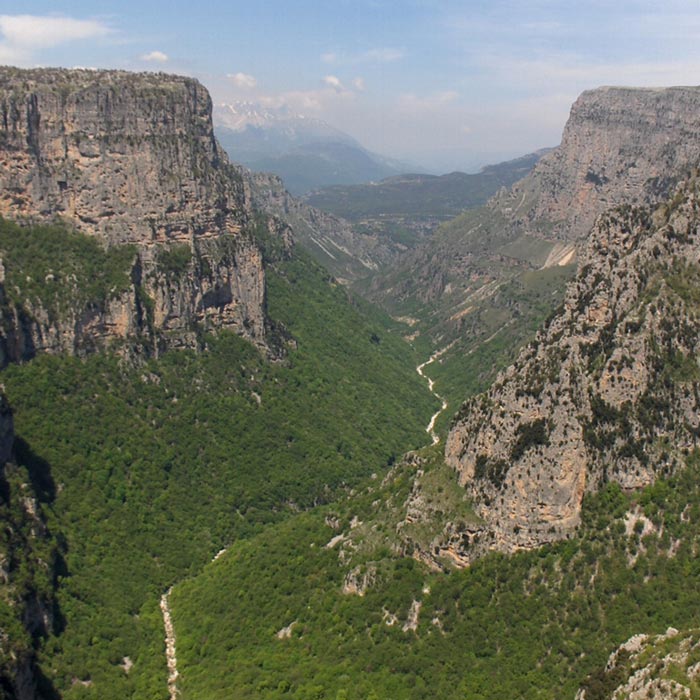
7. Vikos Gorge Forest, Greece

Located in the Pindus Mountains, the Vikos Gorge Forest is part of one of the world’s deepest gorges. The surrounding forest offers breathtaking views, rich vegetation, and a tranquil atmosphere, ideal for forest bathing. Walking through this forest provides a unique combination of rugged natural beauty and peaceful serenity, making it a memorable experience.

  • What’s Special: Deep gorge, stunning views, tranquil atmosphere.
  • Best Time to Visit: Spring (April to June) or autumn (September to October) for comfortable temperatures and vivid landscapes.
  • Forest Information Link

Bonus: Forest Bathing in Finland

A short 2 minute film from the forests of Finland that captures the essence of Forest Bathing.

There are hundreds of breathtaking forests spread across Europe – and each one offers something special. We only chose a few to get you inspired. If you know of other exceptionally beautiful forests, please let us know in the comments section.

Every month we share uplifting new ideas from nature. You can join our free newsletter to see older posts and get the latest one.

Also, try our collection of best forest bathing activities to make your world wonderful >> Nature Calm

In today’s fast-paced world, it’s easy to feel disconnected and alone. Our society is becoming more individualistic, and the strong community bonds that once held us together are weakening. This shift makes it crucial to find ways to reconnect, support each other, and build a sense of belonging. With so much negative news and overwhelming challenges, it’s also easy to feel demotivated. Now, more than ever, we need to find ways to inspire ourselves and those around us.

Engaging people and especially the youth in community projects and activities that promote collective well-being is essential. By doing so, we not only help them develop important life skills but also foster a sense of purpose and resilience.

The Circle of Courage offers a powerful framework to achieve this. Rooted in the values of Belonging, Mastery, Independence, and Generosity, it provides a path to strengthen both individuals and communities. This article will guide you through an activity-based learning experience using a nature walk, where each value is explored through reflection and shared experiences.

Circle of Courage: The Story

In a land rich with traditions and community spirit, the elders of Native American tribes gathered to discuss the wisdom of raising strong and resilient children. They believed that the strength of their people lay in the hearts of their youth. The wise elders noticed that children thrived when they felt connected, skilled, independent, and generous. They passed down these insights through stories and practices that wove together the 4 key values.

Years later, three dedicated researchers—Dr. Larry Brendtro, Dr. Steve Van Bockern, and Dr. Martin Brokenleg— rediscovered these ancient teachings. They saw how these timeless values could help modern youth who were struggling in a fast-changing world. Inspired, they created the Circle of Courage model, which blends these traditional insights with contemporary research on child development.

Circle of Courage Walks

We’ll start by meeting in a beautiful natural space. Before we begin our walks, it’s important to set our intentions: we are here to learn, grow, and support each other. During the session all participants will go on 4 solo walks of 10 minutes each. The idea is to spend time alone to think deeply about one of the four values and what it means to you. After each solo walk, we’ll come together in a circle to share what we learned and felt. By sharing we are able to transform individual learning into a collective learning. (Note: the sharing circle is most effective when done is small groups of 7 or less. Give 10 minutes for each sharing circle)

Walk 1: Belonging

In Native American and First Nations cultures, being part of a community was really important. Ella Deloria, a Lakota anthropologist, said it best: “Find a way to connect with everyone you know.” By treating others like family, they built strong bonds based on respect. Historians like Marty noticed that throughout history, tribes—not just individual families—kept their cultures alive. Even if parents weren’t around, the tribe always stepped in to help raise the next generation.

Instructions for the Solo Walk Focused on Belonging: Belonging is about feeling connected to others. It’s knowing that you are part of a group and that you matter. When we feel like we belong, we are happier and more confident.

As you walk, think about the times when you felt like you truly belonged. What made you feel that way? How did others show you that you were important to them? Look around and see how nature creates a sense of belonging—how trees, plants, and animals are all part of a larger system.

Reflection Questions for Group Sharing

  1. When have you felt a strong sense of belonging?
  2. What can you do to help others feel they belong?
  3. How does nature show us the importance of belonging?

“We are all different, which is great because we are all unique. Without diversity, life would be very boring.” — Catherine Pulsifer

Walk 2: Mastery

In traditional cultures, becoming skilled was guaranteed through opportunities to learn and practice. Children learned by watching and listening to those who were more experienced. Skilled individuals were respected as teachers rather than competitors. Everyone aimed to improve themselves, not to outdo others. It’s natural for people to want to be capable and solve problems. Overcoming challenges fuels this desire to succeed. Leading by example and taking responsibility are important values upheld in these cultures.

Instructions for the Solo Walk Focused on Mastery: Mastery is about learning and improving. It’s the satisfaction of getting better at something and knowing you’ve done your best.

Think about a skill or activity you enjoy and have worked hard to improve. How did you feel as you got better? As you walk, notice the effort nature puts into growth and improvement—how a small seed becomes a strong tree through time and effort.

Reflection Questions for Group Sharing

  1. What is something you are proud of mastering or would like to master?
  2. What steps are important for you to achieve mastery?
  3. How can you help others on their journey to mastery?

“Excellence is not a skill. It is an attitude.” — Ralph Marston

Walk 3: Embracing Independence

In Western culture, power often meant dominance, but in tribal traditions, it meant honoring everyone’s right to be independent. Unlike strict obedience, Native teachings focused on fostering respect and inner discipline. From a young age, children were encouraged to make decisions, solve problems, and take responsibility for their actions. Adults guided, supported, taught values, and provided feedback, yet children had plenty of chances to choose freely without pressure. This approach ensures that others can always rely on and trust you.

Instructions for the Solo Walk Focused on Independence: Independence is about being able to take care of yourself and make your own decisions. It’s about having the confidence to stand on your own and trust your abilities.

During your walk, think about a time when you made an important decision on your own. How did it feel to take control? Notice how nature shows independence—how each plant and animal plays a role in its environment while still standing on its own.

Reflection Questions for Group Sharing

  1. When have you felt most independent?
  2. How can you balance independence with being part of a community?
  3. What can you do to build more confidence in your independence?

“Independence is happiness.” — Susan B. Anthony

Walk 4: Practicing Generosity

In Native American cultures, the highest virtue was generosity. The main focus in raising Native American children was to teach them the importance of being generous and selfless. As a Lakota Elder put it, “You should be willing to give away your most prized possession without feeling anxious.” By helping others, young people demonstrate their own value: they make a positive impact on someone else’s life.

Instructions for the Solo Walk Focused on Generosity: Generosity is about giving to others without expecting anything in return. It’s about kindness and helping to make the world a better place.

Think about times when you’ve been generous or when others have been generous to you. How did those moments make you feel? Look for examples of generosity in nature—how the sun gives light, or how trees provide shade and shelter. Can you perform one act of generosity for nature during the walk? It could be as simple as clearing some litter, or perhaps watering a plant.

Reflection Questions for Group Sharing

  1. When have you experienced or shown generosity?
  2. How can you practice generosity in your daily life?
  3. What impact does generosity have on your community?

“No one has ever become poor by giving.” — Anne Frank

Circle of Courage: Conclusion

This model has since been used around the world, in schools, youth programs, and communities, to help young people find their place, develop their talents, stand strong, and share with others. The Circle of Courage not only nurtures individual growth but also strengthens the bonds that hold communities together, making it a beacon of hope and resilience in our increasingly fragmented society.

A nature walk is a great way to reflect on, learn and integrate these principles into our daily lives. By embracing Belonging, Mastery, Independence, and Generosity, we can build a better future for ourselves and those around us.

Further Reading and Resources