
Grief Is Love.

Grief is a way of holding on to love that we do not wish to renounce. The loss of something or someone we love can leave us feeling inconsolable. Even as we know that after the loss, the acute state of mourning will subside, something of the silent void will always remain. Akin to going on a pilgrimage, the journey of grieving is difficult and painful and what lies beyond cannot easily be fathomed 

In this article we explore stories and activities from nature that can help us transform our grief and loss into meaningful actions. You will find useful ideas to express your emotions, reflect on your experiences, regain a sense of control, and honour the memory of the loved one.

Knowing how to deal with loss is an essential ability. Each one of us will need it at some point. Loss is both a universal and a deeply personal experience. In its wake, it brings about emotional suffering that can leave us feeling overwhelmed with sadness, despair, guilt and even anger. The world, the self, time – all feel out of joint. So how does one heal?

This article is part of our 12 magical walks to learn highly useful life-skills from nature.
Nature Play>>

A Mushroom Story

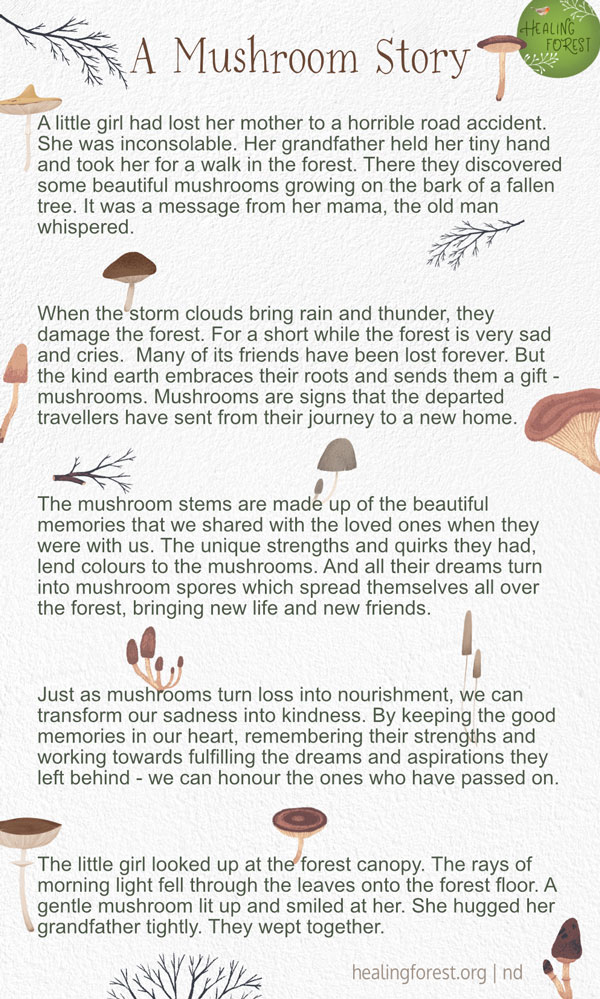
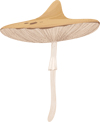
A little girl had lost her mother to a horrible road accident. She was inconsolable. Her grandfather held her tiny hand and took her for a walk in the forest. There they discovered some beautiful mushrooms growing on the bark of a fallen tree. It was a message from her mama, the old man whispered.

When the storm clouds bring rain and thunder, they damage the forest. For a short while the forest is very sad and cries.  Many of its friends have been lost forever. But the kind earth embraces their roots and sends the forest a gift – mushrooms. Mushrooms are signs that the departed travellers have sent from their journey to a new home.

The mushroom stems represent the beautiful memories that we shared with the loved ones when they were with us. The unique strengths and quirks they had, lend colours to the mushrooms. And their aspirations and dreams turn into mushroom spores which spread themselves all over the forest, bringing new life and new friends.

Just as mushrooms turn loss into nourishment, we can transform our sadness into kindness. By keeping the good memories in our heart, remembering their strengths and working towards fulfilling the dreams and aspirations they left behind – we can honour the ones who have passed on. 

The little girl looked up at the forest canopy. The rays of morning light fell through the leaves on to the forest floor. A gentle mushroom lit up and smiled at her. She hugged her grandfather tightly. They wept together.

* Download the mushroom story at the end of this article.

Turning Sadness Into Kindness

The stormy dark clouds of sadness can feel menacing. Yet, in nature we find that the advent of these clouds bears fresh showers that replenish the parched earth. When our sorrows threaten to wash over us, we can work towards making them into harbingers of kindness that brings the blossoms of life to others. 

Here are a few activities that help us transform grief and loss.

1. Mindful Mushroom Walk

When you enter the woods to search for mushrooms you have to be alert, silent, and calm.  By being mindful of your steps as you walk in the forest gently, you can turn this simple activity into an exercise in mindfulness.

While observing the breath is a very common mindfulness exercise, people who are going through a difficult phase in life find it very challenging because of troubling thoughts. Therefore, we should start with other senses first, especially when introducing mindfulness to beginners. Our visual sense is our strongest sense. Turning to nature to discover its many treasures fills us with deep calm.

NOTE: Be sure to buy a good field guide for mushrooms from your area or go with an expert. Some basic instructions for Mushroom Walks, as per the Modern Forager are given below.

1. Tread Lightly. Don’t trample all the little mushrooms and potential mushrooms in your hunting ground.
2. Make a positive identification using more than one source wherever possible. Do not eat mushrooms with any features that contradict the description. “When in doubt, just leave the mushroom.”
3. Mature mushrooms release spores into the air that are essentially mushroom seeds. You can respect the spores by leaving some of the mushrooms untouched.
4. Use a porous and an open-air container for your mushrooms as you walk through the woods. Don’t use plastic bags — which can ruin your harvest anyways; look for mesh bags, baskets, buckets with holes drilled in them,
5. Don’t over-pick. It is courteous and considerate to leave mushrooms behind for another picker.
6. Micro-trash is a big problem! Try to leave none and collect some if you see any.

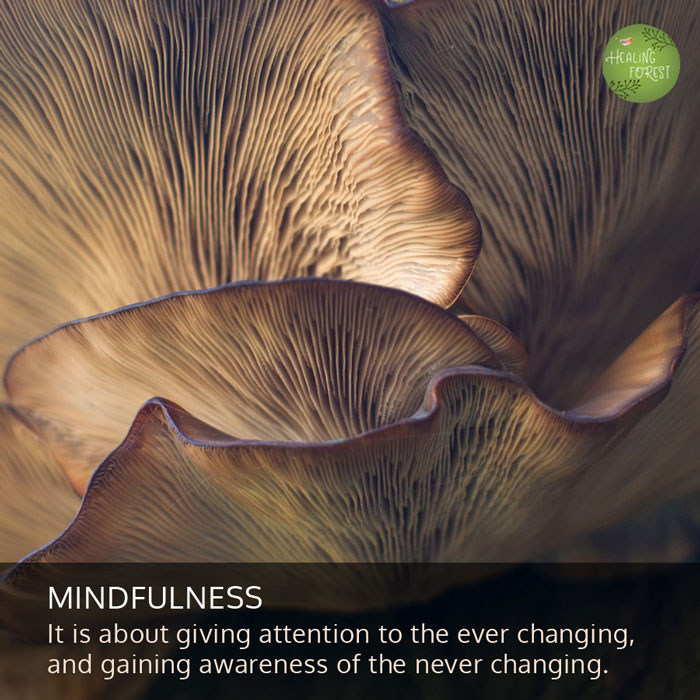
While mushrooms are typically associated with death and decay, they are in fact an integral part of renewal in the universal cycle of life. We recommend closing the mindfulness walk with a short mushroom circle meditation. Sitting in a circle of silence, the participants meditate upon the impermanence that permeates all things in nature – including our thoughts.

We have curated some more outdoor mindfulness activities for groups that you might find useful.

To live in this world 
you must be able
to do three things:
to love what is mortal;
to hold it
against your bones knowing
your own life depends on it;
and, when the time comes to let it go,
to let it go.

~ Mary Oliver, Blackwater Woods

2. Creative Writing In Nature

Creative writing can be a helpful way to deal with grief for several reasons. Writing allows individuals to express their emotions and thoughts in a safe and private way. It can be challenging to find the right words to say when experiencing grief, but writing provides an outlet to put emotions into words and process them.

Here are some creative writing prompts to try on your nature walk. Choose the ones you feel comfortable with.

  • Write a letter to the person you lost, expressing everything you wish you could say to them.
  • Write about a specific memory you have of the person you lost, describing it in detail and how it makes you feel.
  • Write a story or poem about the stages of grief you have gone through and how you have coped with each one.
  • Write a tribute to the person you lost, highlighting their qualities and how they impacted your life.
  • Write about a place that brings back memories of the person you lost, describing it in detail and how it makes you feel.
  • Write about how your perspective on life and death has changed since experiencing loss.

Writing about grief allows us to reflect on our experiences and understand our emotions better. It can be a powerful tool for gaining insight into oneself and finding meaning in the loss. Grief can make individuals feel powerless and out of control. Writing provides a sense of control as it allows individuals to express their emotions and feelings in their own way and time. It is also a beautiful way to honour the memory of loved ones.

3. Acts Of Kindness

As night slowly paves the way for dawn, converting grief into acts of service can be a meaningful way to turn a difficult experience into something positive. These could involve checking in with friends or family members in need, performing random acts of kindness, volunteering our time, or making a donation to a charity.

Another great alternative for acts of kindness is to work with plants, trees, and gardens. Gardening and working with plants can be a calming and grounding experience that encourages mindfulness and relaxation. This can be particularly helpful for individuals dealing with the stress and anxiety that often comes with grief.

Plants and trees can become teachers and symbols for the grief process. For example, the act of pruning dead or dying branches can represent the process of letting go, while planting new seeds can represent the hope for new growth and new beginnings. A great project to undertake is creating your own meditation garden. A meditation garden is a place where you can retreat from the stress of daily life and find peace and tranquility through meditation or other contemplative practices. Here’s a useful note on how to create your own meditation garden.

Countries like Korea have taken the concept a step further with a unique ‘National Tree Burial Forest’. It is an eco-friendly way to send off the loved ones. Learn more about Korea and its Forest Bathing practice here.

Self-compassion is the heartbeat of all human understanding. Practising self-compassion entails giving ourselves permission to feel our emotions and attend to ourselves through self-care practices. When we reach outwards, it also helps restore our sense of connectedness in the web of life

Sharing Grief

We all grieve in our own ways and in our own time. And often we have to support others in their journey. Therefore it is important to understand the way our mind deals with loss and pain.

In order to explain the process, the Swiss psychiatrist, Elisabeth Kubler-Ross, introduced the model of the five stages of grief in her 1969 book ‘On Death and Dying.’ The stages of grief, popularly described with the acronym D.A.B.D.A., are as follows:

  1. Denial: This stage can look like an inability to admit to the truth of what happened. The shock of the news can be so overwhelming that one might feel nothing or go numb, refusing to discuss the loss and isolating oneself from others who have accepted it. Denial aids in coping by allowing you to pace your feelings of grief and staggering its full impact on us. Once the denial and shock start to fade, feelings that you were suppressing begin to come to the surface and the healing process begins. 
  1. Anger: In this phase, you might look to someone to blame others for the cause of your grief and may redirect your anger to close friends and family. Questions like “Why me?” or “Life is not fair!” keep coming up, as you find it incomprehensible how this could happen to you. If you are a person strong in faith, you might begin to question your belief in God : ‘Where is God? Why did he not protect me?”  Anger is a natural step in healing. It has more energy than depression and can propel us into action, bridging you back to reality and to others. 
  1. Bargaining: In bargaining, you try to convince yourself you can avoid the grief by negotiating with a higher power. You can find yourself wracked with guilt as a series of ‘What if’ scenarios pass through your mind. 
  1. Depression: This is the stage in which the emptiness of the void that the loss has left us with is felt most acutely. The rupture or loss of a deep bond feels like a loss of a part of oneself. You might withdraw from life, feeling hopeless and despondent as the weight of sadness feels unbearable. You might not want to be around others and might even experience suicidal thoughts.
  1. Acceptance: In the final stage, you are able to acknowledge the loss, and begin the process of adjusting to the new reality. As your emotions begin to stabilise, the pain feels more bearable and the world begins to seem inhabitable again. 

These steps are not linear, and we often cycle back and forth through the stages. Grief comes in waves, and coming to terms with loss requires self-compassion and understanding. Holding space for the difficult emotions that arise in oneself instead of escaping them is a vital part of healing. Accepting support and help from others can help us move forward towards recovery. 

Loss is an inevitable part of the journey of life. In this journey, grief can usher in several invaluable lessons. It can teach us about the fragility of life. 

Grief reminds us of the importance of our close relationships, urging us not to take them for granted. It takes us to a deeper appreciation for spending quality time with our loved ones and creating memories that can be cherished forever. It can teach us gratitude for what we have. Grief can bring home to us the realisation of our own resilience and inner strength to overcome challenges. It can prompt us to reflect on the meaning of our life, and strengthen our faith, thus becoming a catalyst for a transformation. 

References and Contributors for this article: Deepti Sachdev, Poet & Psychologist | https://rootrisetherapyla.com/blog/2022/5-stages-of-grief | https://www.psycom.net/stages-of-grief |

Create ripples of positive change in your life through nature.
Nature Calm>>

Healing Forest is a volunteer run project. Our goal is to bring people and forests closer to each other through creativity and mindfulness. The aim is simple. Helping people heal. Helping forests heal.

Do share this post, so it reaches where it’s needed. | Link to download the mushroom story.
How do you find hidden treasures in life? Knowing where to look is important, but knowing how to look is even more so. Digital lifestyles are reducing our attention spans and our powers of observation have become limited to addictive screens.  As a result some of our life’s most valuable gifts go by unnoticed.

In this mindfulness exercise, we will improve our skills of observation and reflection through photography.  These skills are essential for understanding the world around us, making informed decisions and enhancing our creativity. More importantly they are crucial for developing empathy for others – one of the beautiful treasures we can offer to this world.

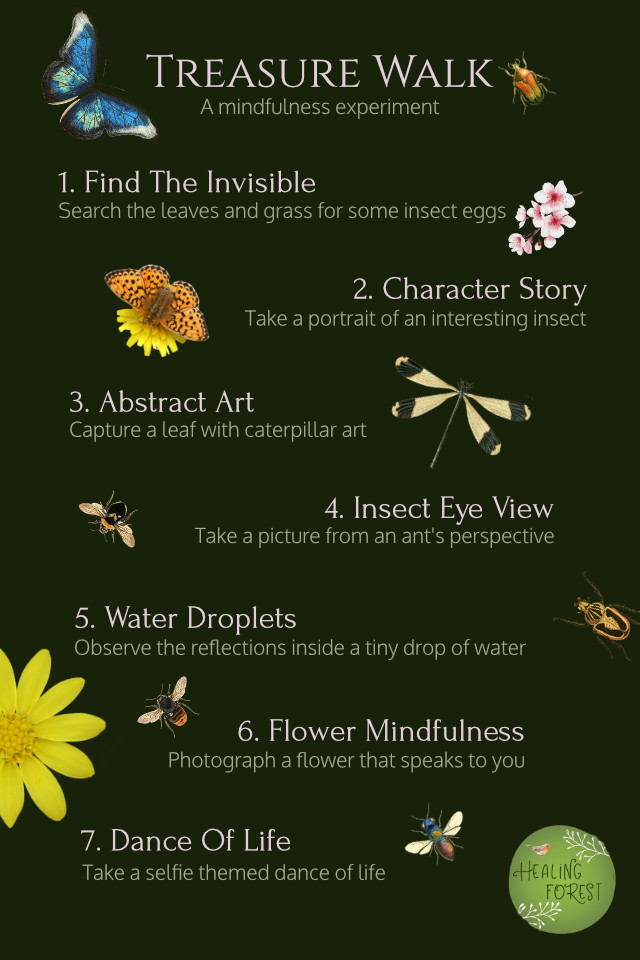
As an added bonus 3 of the images in this post hold links to some incredible gifts. Tapping on the right ones will transport you to magical lands. Wonder how many of them will you find?

Many people are alive but don’t touch the miracle of being alive.

~Thích Nhất Hạnh

Photography as a mindfulness exercise

There is a strong link between mindfulness and photography . Mindfulness is the practice of being fully present and engaged in the current moment, without judgment or distraction. The aim of mindful photography is to hold a moment in your mind that you can treasure forever.

In this forest bathing walk we will take the help of nature’s less seen gems to train your mind as well as your senses. You can do this walk alone or in a small group. The rules are very simple. Take only one photograph for each creative prompt. At the end of each exercise, groups can form a circle to share pictures and insights if any.

You can try this walk in any nature space close to you – even your garden. Just follow the basic principles of forest bathing: Be silent. Go slow. Think less. Feel more.

For a more detailed note on the Japanese concept read our Forest Bathing article or try the Nature Calm course.

Mindful Photography Exercises

1. Finding The Invisible
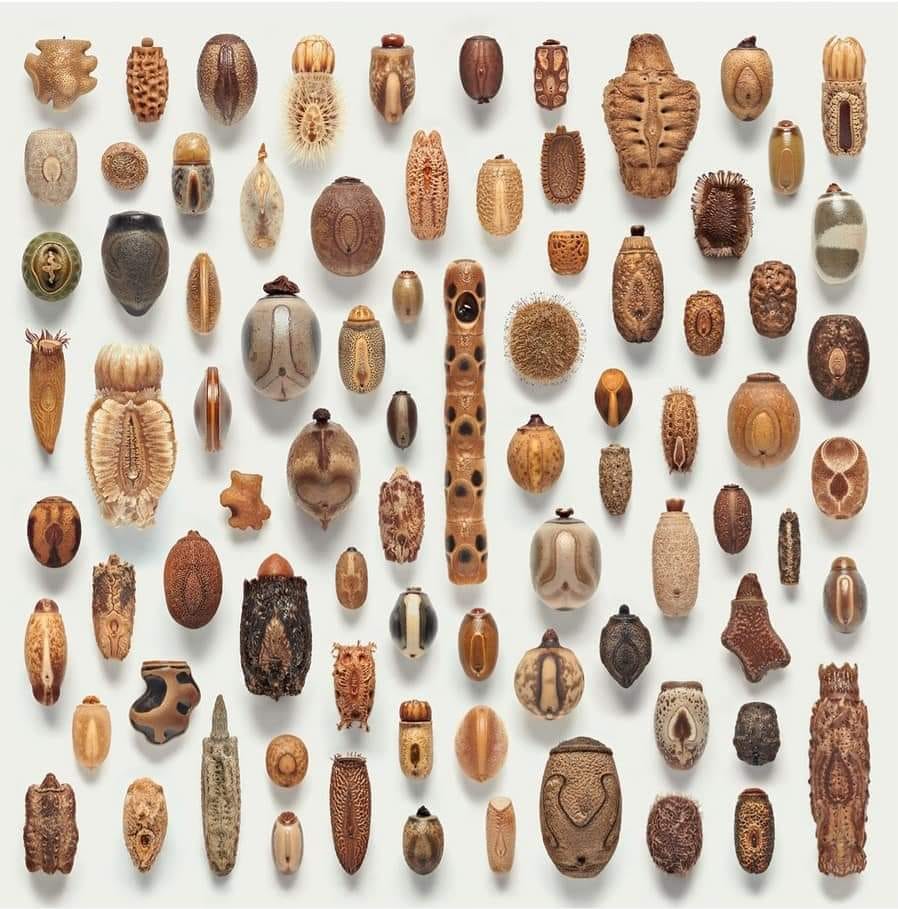
For the first task, find and photograph a cluster of insect eggs. Did you know that there are over one million known species of insects, which makes up over 80% of all known animal species on Earth. Many insects lay their eggs on the undersides of leaves or on stems of plants. These include species such as caterpillars, beetles, and grasshoppers. Some insects lay their eggs in the soil or on the ground, where they can be protected from predators. Examples include ants, beetles, and some species of flies.

Train your eye to look carefully. Be fully present and attentive when observing your surroundings. Focus on the tiny nooks of nature and you’ll be surprised at what you can find. Observing the beauty of these hidden treasures creates awe and wonder. It helps to anchor the mind in the present moment and be free.

Each species of stick insect produces an egg that is unique in shape and design.

2. Character Exploration
Find an insect with an interesting personality. You can look around a piece of bark or visit the flowers. Try taking a shot that show the subject in its environment. What is the mood of the insect you are photographing?

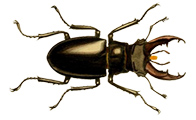
Insects have been around for over 350 million years, and they have adapted to survive in almost every habitat on Earth. The largest insect in the world is the Goliath Beetle, which can grow up to 11 centimeters long and weigh up to 100 grams. The smallest insect in the world is the fairyfly, which is only 0.139 millimeters long.

Mindfulness photography is not just about the external world. These exercises train you to be able to take an inner snapshot as well. To become more aware of your own moods and triggers that change them.

3. Abstract Art
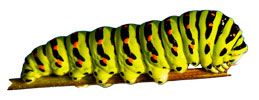
For this activity observe the leaves of plants and trees around you. Search for abstract pattern of holes left behind on leaves by foraging caterpillars. Some species of caterpillars can eat up to 27,000 times their own body weight in leaves during their larval stage. Some have even evolved to mimic the appearance of leaves, helping them to avoid detection by predators. See if you can spot some of these illusive artists or the nature art left behind by them.

The path to self-transformation begins with observation. Just as a caterpillar turns into a butterfly, mindfulness exercises bring about a journey of inner metamorphosis.

4. Insect Eye View
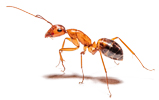
Take a picture from the perspective of an ant. What does the world look like when seen from a unique angle? Be curious. Be curious and ask questions to become a more mindful observer. Expanding our awareness beyond the self is a mindfulness exercise for enhancing empathy.

There are over 12,000 known species of ants, and they are found on every continent except Antarctica. Some species of ants can carry objects up to 50 times their own body weight. Mindful photography teaches us to find beauty in everyday moments. Moments that we might otherwise overlook. Focusing our attention on the small details fosters joy in the simple things of life.

5. Water Droplets
Create a picture with a water drop in it. Add a drop of water to a leaf or a flower, and experiment with different angles to capture the droplets in an interesting way. You can also try using a spray bottle to create your own droplets on a subject. And if you are doing this walk early in the morning, you’ll find some amazing possibilities with the dew drops.

For a beautiful photograph, we must pay close attention to the lighting, composition, and subject to create a visually appealing image. This requires us to be fully present and aware of our surroundings. Finding a big world reflected in a tiny drop of water is an interesting meditation on our own mind.

6. Flower Mindfulness
Capture the beauty of a flower that calls out to you. Pay attention to the finer details that make the flower unique. Flowers have a special language with which they communicate with their pollinators. If you wait patiently, you can even take a picture of the flower with its special friend.

It is estimated that one out of every 3 bites of food we eat is made possible by pollinators. Bees are one of the most important insects in the world, as they pollinate approximately 70% of the world’s top 100 crops. Just like the bee and the flower, there are many such invisible interconnections that make our world beautiful. Look carefully, can we try to find those important connections in our own life?

7. Dance of Life
If you could capture the dance of life in one frame what would it look like? Will you include yourself in the frame? In nature there are countless stories taking place simultaneously. Becoming aware of our own role in this intricate pattern can be a humbling experience. In the forest of our cosmos, each one of us is a tiny miracle dancing our way through life.

One of the most overlooked treasure of our lives is the joy of small moments that we spend with our loved ones. Mindful walks with nature offer a range of amazing benefits to improve not just the quality of life but also the quality of our relationships.

Knowing where to look for treasures is important.
Knowing how to look, even more so.

Download link of poster at the very end.

* If you liked this article, do check out our post on 7 amazing mindfulness exercises for groups.

Our Lost Treasures

More than 40% of insect species are declining and a third are endangered. The rate of extinction is eight times faster than that of mammals, birds and reptiles. The total mass of insects is falling by a precipitous 2.5% a year, according to the best data available, suggesting they could vanish within a century.

Things which are hidden from our attention are often neglected, forgotten or lost. We hope this mindfulness exercise provides you with new ways to increase your attention, observation and awareness. It is through these skills that we can make new connections, identify problems, and come up with useful solutions – not just for our own life, but also for our community and the larger world.

This walk is part of our collection of 12 Uplifting Walks. Simple ideas that show you how to make your world wonderful.

To explore amazing new walks, games, arts, meditations, forests – join our free monthly newsletter.

How many of the hidden treasures could you spot? And what did you learn? Please add your thoughts in the comments.

Healing Forest is a volunteer run project. Our goal is to bring people and forests closer to each other through creativity and mindfulness. The aim is simple. Helping people heal. Helping forests heal.

Do share this post, so it reaches where it’s needed. |Download Mindfulness Exercise poster link.
Mindful Art is a unique skill for all of us, not so that we can be artists, but because drawing is another way of thinking. Just like using words is a way to think out loud on paper, mindful art is simply a way to “think” in another form.

You don’t have to be an artist to create mindful art! Drawing is something all of us have used with a pen or pencil on paper to plan, show or imagine what we are thinking. Being “good” at art doesn’t really matter as long as ideas are being shared.

In this article we show you how drawing your thoughts can be a powerful tool for improving your thinking, creativity and communication. Through the creative process of mindful art, let us explore our inner selves, access unconscious thoughts, and gain a new perspective on life.

A Zen Story On Mindful Art

Once upon a time, a Zen master was asked by a student, “Master, what is the purpose of art?” The master replied, “Art is a mirror that reflects the beauty and truth of the universe. It is a way to touch the divine and to see the world with new eyes.” The student questioned, “But master, how can I create art that is true and beautiful?” The master answered patiently, “The true artist does not seek to create something beautiful, but rather to see beauty where others do not. The true artist does not seek to express themselves, but to disappear into the work, becoming one with the universe. The true artist must first empty their mind and become like a blank canvas. Only then can the universe paint itself upon you, and only then can you create something beautiful and true.”

This story illustrates the idea that true art is not something that can be forced or created through effort, but rather it is something that comes from a state of emptiness and receptivity. The true artist is one who is able to let go of their own ego and desires and allow the universe to express itself through them.

Mindful Art Activities

You can combine these mindful art ideas with a nature walk to amplify its benefits. All you need is a pencil and a notepad to scribble your ideas. Doing these activities in a group serves to create memorable experiences and helps in bringing people closer to each other.

Mindful Art: A Page Full Of Circles
Fill a page with circles. Circles that touch each other, but don’t intersect. Add as many circles as you can within the page. Fill in the gaps in between circles with more tiny circles. You can even fill the insides of a bigger circle with smaller circles.

It is impossible to draw a perfect circle. The aim is to accept your imperfect circles, but continue to improve the skill. This mindful art of drawing circles, helps us slow down our thoughts and serves as a warmup to move on to more creative tasks.

Mindful Art: Draw Your Mood
The prompt for this exercise is very simple. If you could visualise your mood what would it look like? You can do a version of this activity before the nature walk and then at the end of the nature walk. Compare the two drawings and observe what has changed and why?

Mindful Art: Shape Of All Things
In this mindful art activity, choose any object in nature. Observe its shape carefully for some time. Try to see the fundamental geometric shapes that make up the object. For example a mountain can be drawn into a triangle. A tree can be represented with a circle and a rectangle.

Mindful art by Picasso

Mindful Art: Mind Mapping
This mindful art activity involves writing down a word or phrase that represents a current thought or emotion, then writing down other words or phrases that come to mind in response. As you write the associated words connect them with lines. See what pattern of lines emerge at the end of the activity. This exercise can help individuals to explore their thoughts and emotions in a more verbal way.

Mindful Art: Silhouettes & Shadows
For this exercise pick any interesting leaf that you find on your walk. Trace out the outline of the leaf on a black piece of paper. Use your imagination to turn this simple trace into a magical forest creature or a monster that is haunting you. You can even fill the page with traces of many different leaves and create a party of magical beings on the page.

As your imagination grows, translate the activity into your nature walk. Begin to identify magical beings and creatures in shapes of trees and rocks that you encounter on your walk. Give them names based on their unique characteristics.

Mindful Art: Drawing The Invisible
The prompt for this activity is to draw the negative space between two objects. Negative space, in art is the empty space around and between the subject(s) of an image.

Generally when we look at things we focus on the object itself. But if we expand our observation we become aware of interesting and artistically relevant shapes that surround the objects to reveal completely new things.

Mindful Art: The Tree of Life
If you were to draw your entire life in the shape of a tree, what would the tree look like? In this mindful art activity, draw an entire tree on a page with branches as well as roots. You can label the roots with values which are important to you. In the branches write down words to depict significant moments of your life. And finally represent the important people in your life as forest creatures that have a relationship with your tree of life. This activity is a beautiful way of creating a snapshot of your life’s journey so far.

Mindful art can be a powerful tool for understanding and processing thoughts and emotions, whether it’s through the process of creating art or viewing it.

Art as a mirror of the universe is a reflection of the Zen concept of unity of all things. The idea that everything is interconnected. The mindful artist is able to tap into this interconnectedness and create art that reflects the beauty and truth of the universe.

Benefits of Mindful Art

  • Mindful art helps us slow down and relax our mind.
  • It makes us better observers of our outer and inner landscapes.
  • Mindful art is an interesting way to exercise our imagination.
  • Mindful art can be a bridge between the known and the unknown – helping us tap into our subconscious mind.
  • It gives is new insight into thoughts and emotions – our own as well as that of others.
  • Above all, it is creates joy and peace.

Art therapy, a form of psychotherapy, specifically uses the process of creating art to help individuals express themselves, overcome emotional challenges and develop self-awareness. It helps individuals to understand and process their emotions, thoughts, and experiences in a non-verbal way and can be beneficial for people of all ages, abilities, and backgrounds.

Art can also help individuals understand and process difficult experiences such as trauma, grief, and loss. It can also help in dealing with mental health issues such as anxiety, depression, and PTSD. Additionally, viewing art can also be a way of gaining insight into one’s thoughts and emotions. For example, looking at a piece of art that evokes a strong emotional response can help the viewer understand and process their feelings.

Mindful Art Inspiration

For aeons humans have turned to nature and art for creativity and community. The inspiration for the mindful activities in this post comes from the fascinating cave art found around the world. Here’s a glimpse of 10 amazing examples to take you back in time.

We hope these mindful art activities take you on a creative journey to bring peace and presence in your lives. What other activities can we use to create Mindful art? Please add your thoughts in the comments to grow our collective knowledge.

*Do share this post, so it reaches where it’s needed.
To get useful new ideas once a month you can join our free newsletter. Discover amazing walks, arts, games, meditations, forests from around the world. For more amazing activities that combine creativity and nature visit or Nature Play page.

Healing Forest is a volunteer driven project. Our goal is to bring people and forests closer to each other through creativity and mindfulness. The aim is simple. Helping people heal. Helping forests heal.