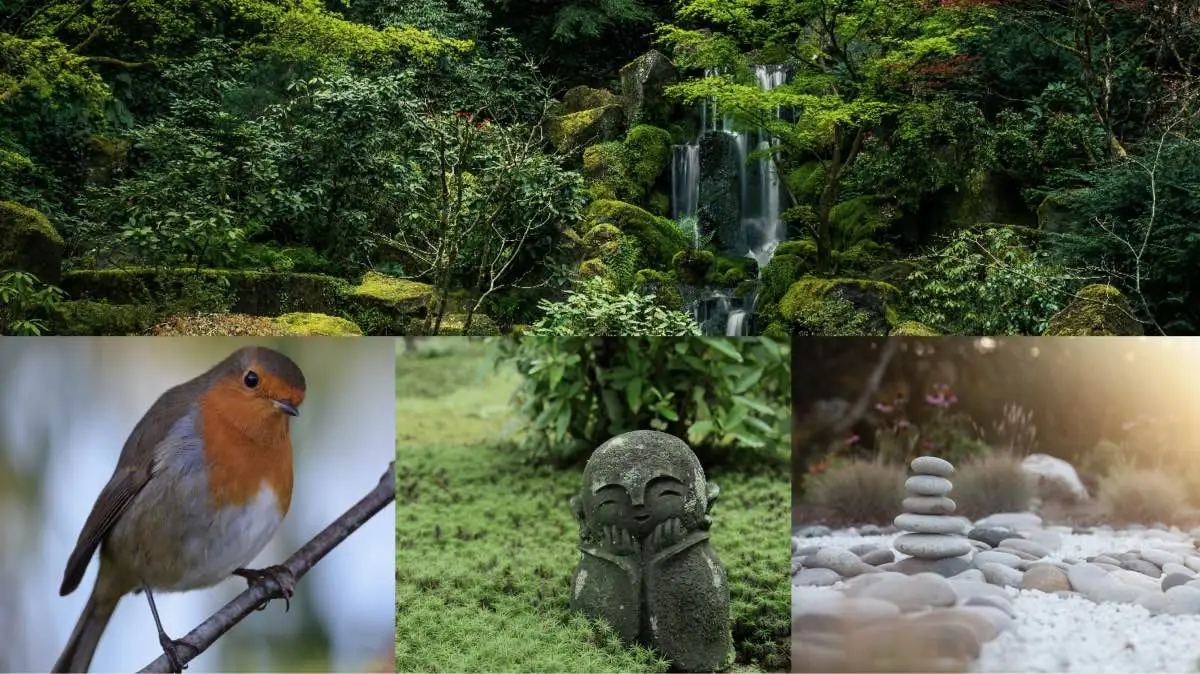
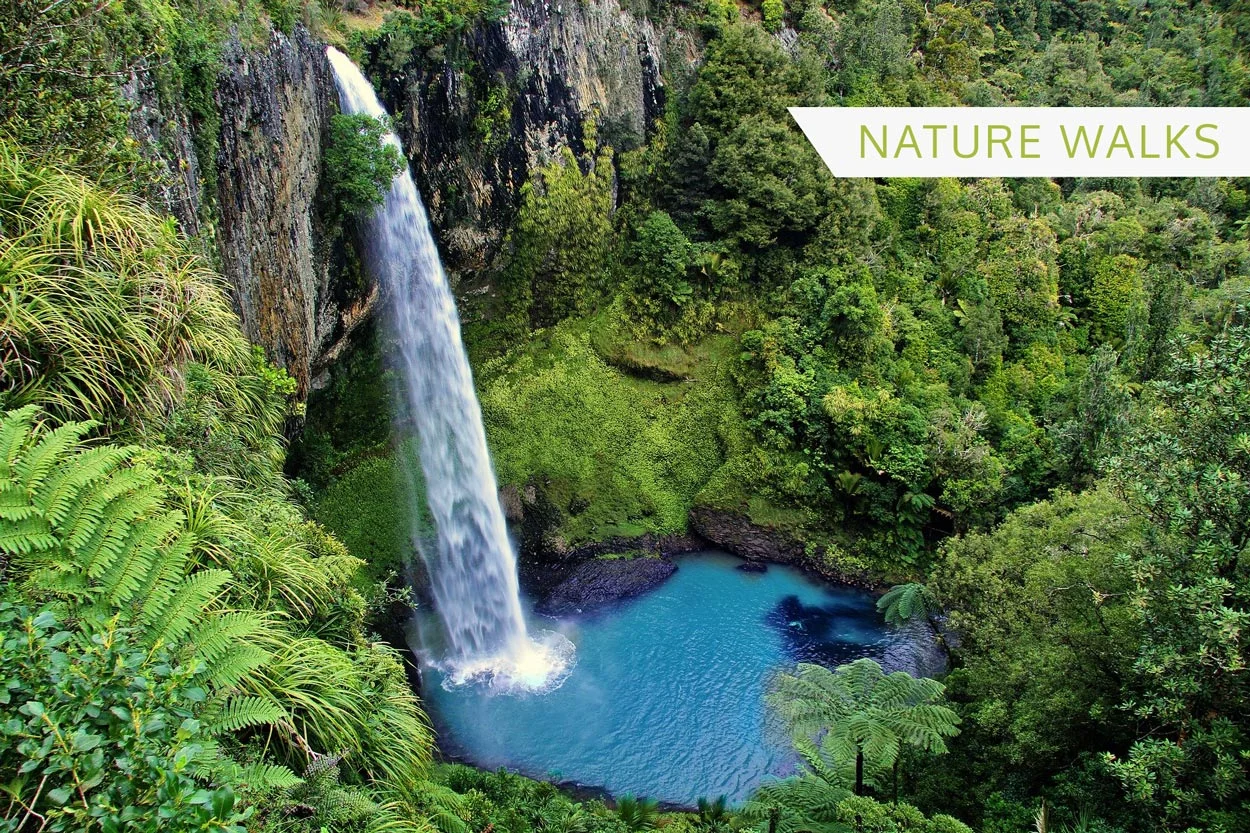
One of the things that makes humans unique is our ability to walk upright. It’s a big part of who we are. Moving around might seem simple, but it requires a refined use of our brain power. In this post we explore the connection between walking and our brains, and how we can transform our nature walks to create healthier minds.

These days, we seem to be walking less and less. With easy access to cars and public transport and our work shifting to desks and screens, there are less reasons to go outside. And very often the design of our congested cities does not give us easy access to good walking routes. This sedentary lifestyle takes a silent toll on our health over time.

Let us show you some exceptionally beautiful nature trails around the world and explore the complex science behind how humans walk, revealing a process that boosts our mood, creativity, and sociability. We hope these notes will inspire you to walk and wander more. *Don’t miss the short film at the end.

CREDITS: The health tips for this article have been taken from a wonderful book called ‘In Praise of Walking‘ (2019). It examines the science behind one of the basic skills that defines us as human beings. The author, Shane O’Mara is a Neuroscientist and Professor of Experimental Brain Research at Trinity College Dublin, Ireland.
CHINA

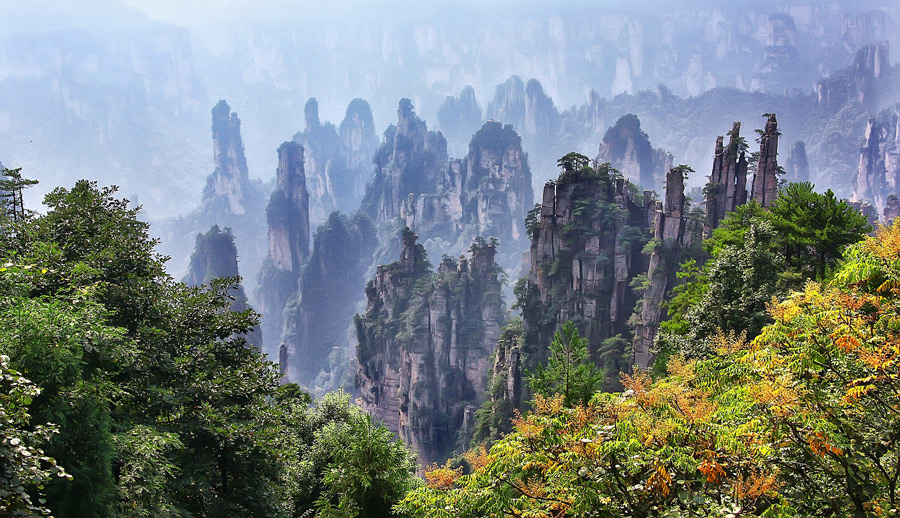
One of the most extraordinary nature walks on our planet is through the otherworldly Zhangjiajie National Forest Park. Its strange mountain spires topped with grass and trees have been an inspiration for Chinese landscape paintings through centuries. The spires — over 3,000 of them — are made of quartz and sandstone that has eroded over time, leaving crooked towers soaring into the sky. When the fog lingers along the tropical forest below, the rock towers look they’re wafting above it. The floating mountains in Avatar were inspired by these awe-inspiring formations.

The park is in Hunan province, far enough from China’s major metropolitan areas that it was unknown for a long time.To avoid the crowds, spend time hiking in the lower elevations and skip the cable car, elevator, and other areas where tourists concentrate. Your entrance fee also gives you access for four days, so you can explore some of the less-traveled areas of the park, such as the Yangjiajie Scenic Area where a steep two-hour hike leads to an amazing view.
Nature Walks China

Nature Walk Tip: Walk with your senses

Your brain has two modes: an active mode and a default mode. When your brain is in active mode, it’s focusing on a task, doing stuff in detail – counting something, for example. In default mode, your mind is free to wander, exploring and processing memories. That’s not as frivolous as it sounds; it’s vital for keeping your brain in order and your thinking sharp. Evidence suggests that creativity occurs when these two modes of thinking occur simultaneously. And walking is a great way to encourage the brain to do exactly that. Walking – or more specifically, spatial navigation – stimulates the part of the brain around the hippocampus, which is also the part of the brain that’s active in memory

Contrary to the traditional form of walking as an exercise, the Japanese form of mindful nature walks also known as forest bathing invites you to take a slow walk in nature. By focusing on your senses and soaking in the gifts nature, we can access a range of health benefits for our mind, body, and spirit. Numerous studies confirm forest bathing’s ability to ease high blood pressure, digestive challenges, anxiety, mild depression and insomnia. spirit. According to one study, future cases of depression could be lowered by around 12 percent if everyone spent just one hour a week doing physical activity.
For more info: What is Forest Bathing?

USA

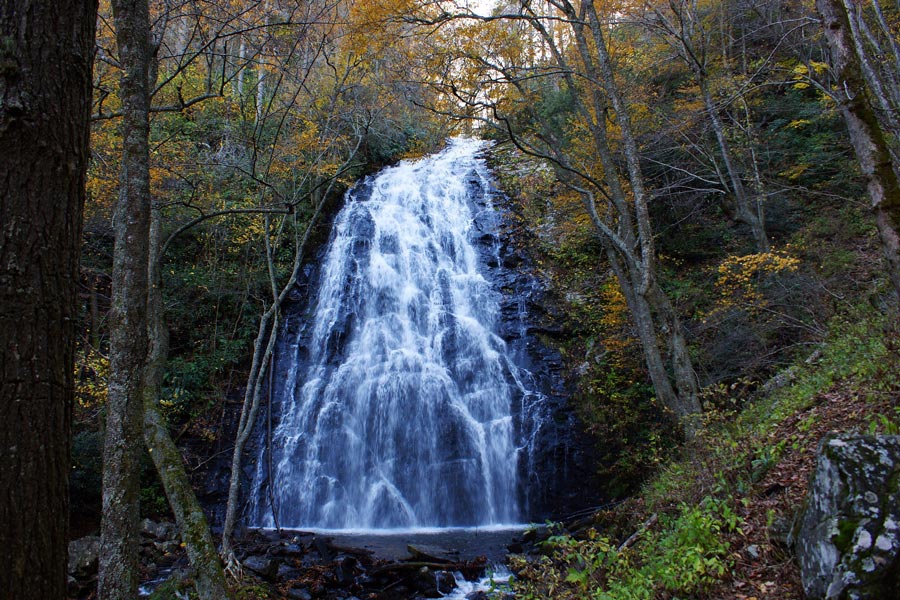
The Appalachian Trail is the longest hiking-only footpath in the world, ranging from Maine to Georgia. From the spiky, tree-clad mountains of the south to the wind-whipped mountain ranges of in the north, beauty is not the exception but the norm. A spectacular range of scenic nature spots, spread across the trail reveal themselves to keep the walker enchanted.

The Trail is not only as a project in land conservation, but as a way for all human beings to find solace, optimism, and rejuvenation during a time of “general upheaval,”. ~ Benton MacKaye

One can visit various parts of the trail for day hikes, and some go even farther, even to the point of attempting a thru-hike, in which they hike the entire length of the trail in one season. The most ambitious hikers do a “yo-yo” which involves hiking the whole trail from beginning to end and then back again. Obviously, this takes lots of time and stamina!
Fore more info visit: https://appalachiantrail.org/ | Beautiful sections of the nature walk.
Nature Walks America
Pic by Tony Glenn

Nature Walk Tip: Getting Lost

Neuroscientist John O’Keefe has made some pioneering discoveries regarding how the brain. He discovered that our brains contain place cells – they tell us where we are and they work most effectively when we walk. Further research has revealed even more fascinating types of cells in the brain that help us get around. Head-direction cells are essentially an inner compass, indicating our orientation. There are also cells that respond to nearby objects. All in all, the brain more or less has its own GPS network.

Once in a while try walking in an area that you have no idea about. Let your internal sense of direction guide you. Explore things that fill you with awe, wonder, and fascination. Let the signs of nature, the direction of shadows, the sounds on the wind, and the path of the sun guide you. Making walking a habit can preserve your memory. Researchers following up on 300 older adults after 13 years found that those who had walked six to nine miles a week lowered their risk of memory problems by 50 percent.
Research Source

ITALY

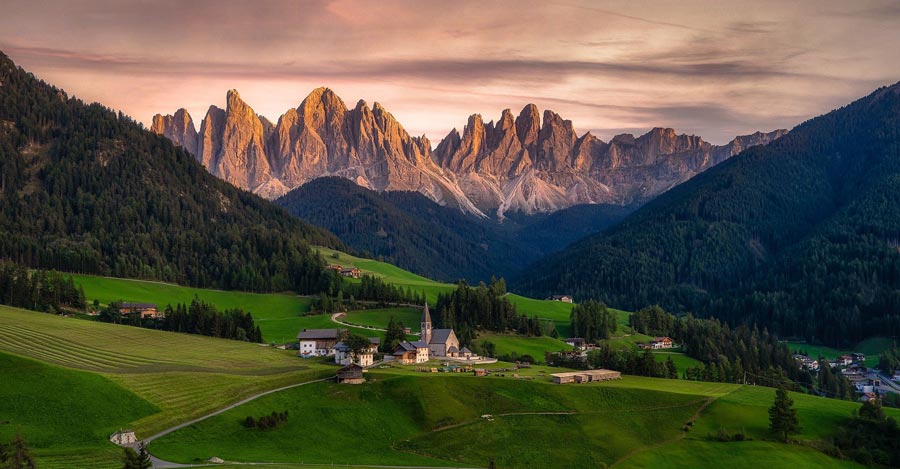
With their colossal limestone walls and gloriously green valleys, Italy’s Dolomites are home to some of the world’s most majestic scenery — and mountain huts called rifugios make it all the more accessible.

A monumental mountain range in northeastern Italy, the Dolomites have been declared a World Heritage Site since 2009. There are several Alta Via routes, but the AV1, with fewer exposed sections, is ideal for less experienced hikers. The rifugios or traveler’s huts are normally open from June to September.

On the walk you can wander through lush Alpine grazing lands and valley floors carpeted with pine and fir trees. Largely because of the beauty of the pale dolomitic limestone, panoramic vistas are a constant. Experience an exquisite glow that happens at sunrise and sunset, when the dolomitic limestone is bathed in gorgeous peachy-pink hues.
For details and a travel story visit this link.
Nature Walk Tip: Staying Healthy

Given our boxed-in, busy daily lives, it’s especially important to have a moment of calm as part of your daily routine. But, unfortunately, our cities don’t make it easy for us. Over half the global population lives in cities and urban areas – and that will probably rise to 80 percent by 2050.

Researchers sent a group of walkers into a forested area, and another walkers group into a city, for an hour. Afterward, the forest walkers had improved heart and lung function; the city walkers didn’t.

Walking in nature is known to boost our immune function. Walking can help protect you during cold and flu season. A study of over 1,000 men and women found that those who walked at least 20 minutes a day, at least 5 days a week, had 43% fewer sick days than those who exercised once a week or less. And if they did get sick, it was for a shorter duration, and their symptoms were milder.
Source: Harvard article on health benefits of walking.

PERU

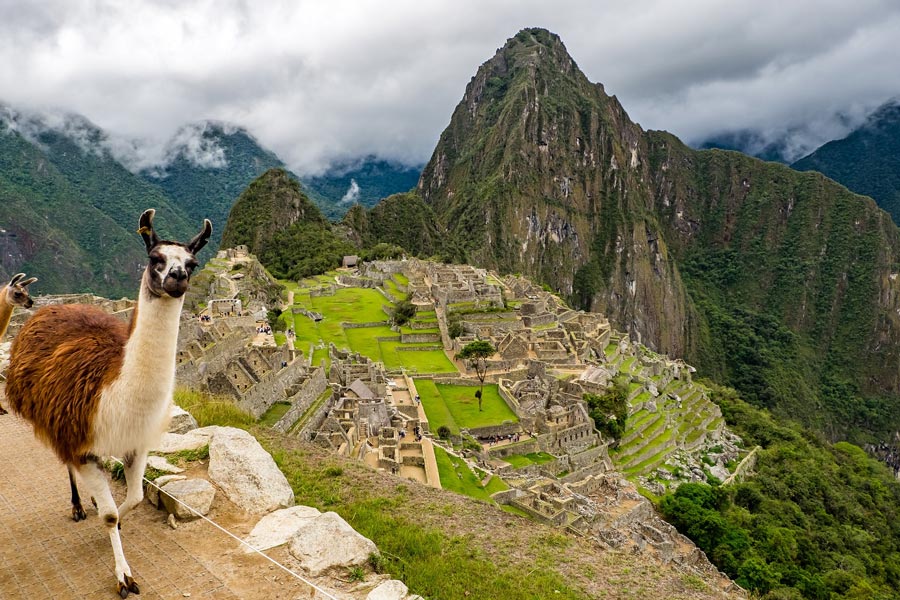
In a country known for exceptional trekking, one of the most iconic trails is the walk to Machu Picchu on the Inca Trail. There is the Salkentay route where you can rest in comfort each evening of the hike. But if you’re seeking an alternative route to the illustrious ruins, then perhaps the Choquequirao trek is more apt. Known as The Cradle of Gold, Choquequirao is a former Inca stronghold isolated in the cloud forests above the Apurimac River. It’s just as impressive as Machu Picchu but it’s only accessible by foot, eliminating the likelihood of encountering crowds.

These walks are a journey back in time. A walk among the cloud filled forests makes the memories of our present day hassles fade away into the distance. And when you arrive at the ruins set amidst the magical mountains, we receive the gift of briefly living the lives of ancient civilisations through our imagination.
Nature Walks Peru
Pic by Mailan Maik

Nature Walk Tip: Finding Answers

You’ve probably heard people say you should “sleep on” a difficult question – but why not also try “walking on” it? Next time you have a challenging problem to solve at work, give it a go.

Biomimicry is a scientific practice that learns from and mimics the strategies used by species alive today. It offers an empathetic, interconnected understanding of how life works and ultimately where we fit in. There are many examples of exceptional ideas that have come from observing nature. From the flight of planes, the bullet train, or the humble velcro. On a more philosophical note, walking in nature can help us find answers, because we are a part of nature too. The patterns and problems of our inner world are often mysteriously reflected in the art of nature outside.

NEW ZEALAND

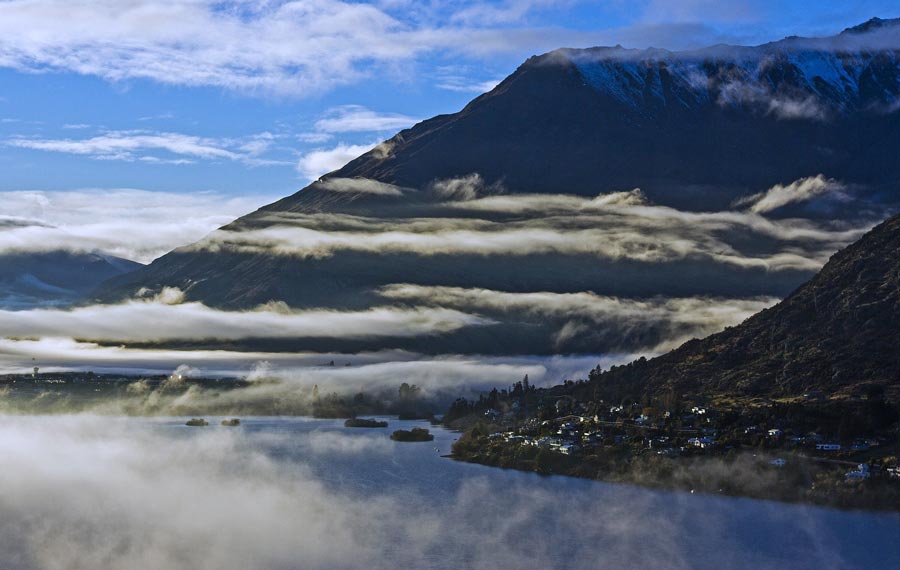
Welcome to a walker’s paradise, where a network of trails winds past rugged coastlines, through farmland, river valleys and towering forest, to dramatic mountain ranges.

Scattered across the country, each within easy access of cities and towns, the tracks are well-kept and popular with both locals and visitors. Each route is different and offers a one-with-nature experience you can’t get anywhere else.

Walking and hiking throughout New Zealand is the best way to see beautiful landscapes and explore vast wilderness areas. Each Great Walk has been selected for unique combinations of cultural significance, exceptional scenery, and accessibility. Over the Great Walks season between October and April, huts along the tracks are equipped with flushing toilets, cooking gas, and other comforts that aren’t typically seen in DOC huts. As these walks are popular, will need to book these huts in advance.
For more info visit: https://www.newzealand.com/in/walking-and-hiking/
Nature Walks New-Zealand
Pic by Marina Cath

Nature Walk Tip: Making Friends

One study found that elderly people who walked for around 150 minutes each week were more socially active; they also had higher levels of well-being compared to elderly people who walked less. Walking is also a crucial step in young children’s social development – once they can walk, they both play and vocalize a lot more. Adults who walked for 40 minutes three times a week slowed age-related declines in brain function and improved their performance on cognitive tasks.

However, the most significant friendship we create is the one with nature itself. Those who know how to silence the mind to match the silence of nature, find a rare and invaluable gift in life. A space of unconditional acceptance and the freedom to know our true selves.

Nature Walk Sheep

Nature Walk Film

Watching this heart-warming short film by Gnarly Bay. Journey with them as they walk through Chile and Patagonia to find an important life message. Do watch in full-screen and with headphones if possible.

NATURE WALK SUMMARY

There are many ways one can benefit from standing up, leaving the house, and taking a stroll in Nature. By walking more we can boost our physical as well as mental health. It also helps us become more creative and social. The wonderful thing is that we don’t have to journey to the far corners of the world to experience its healing effects. Discovering the wild and wonderful in our own neighbourhood is the seed that flowers into our well-being. And our connectedness creates a lifetime of learning, wisdom, and growth.

Feel free to add your favourite nature trail recommendations in the comments below. What gifts and lessons have you received from your walks?

Healing Forest is a project that aims to bring people and forests closer to each other through inspiring stories, films, and articles . Our aim is simple. Helping people heal. Helping forests heal

REQUEST: Do share this post with those who might find it useful | *And check out our Nature Calm course for more ideas.
What does forest bathing have to do with a remedy for loneliness and low self-esteem? Let us go on a forest bathing trip in South Korea to find some clues. Through this article we hope to inspire you to bring some of these ideas into your own nature walks and forest bathing routines.

Forest Bathing is the art of immersing yourself in nature to rejuvenate your mind, body, energy and to activate nature’s healing benefits. For those unfamiliar with the concept here’s our article on Forest Bathing from Japan.

Living in a city creates many hidden challenges for our health. South Korea has developed innovative systems to counter these harmful effects. Many of these Forest Therapy concepts remain relatively less known due to a variety of cultural and language barriers. We will introduce you to some of the enriching ideas and share how you can benefit from them.

Life in Korean Cities

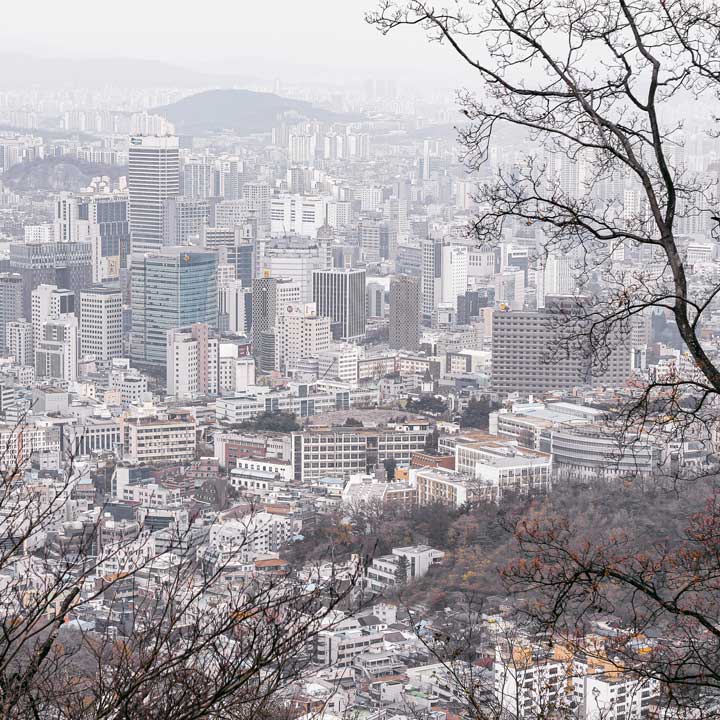
About 85% of South Koreans live in urban areas. The country has seen rapid urbanisation and advancement in technology. It has one of the world’s highest Internet speeds and is at the cutting edge of the latest broadband revolution.
Florence Williams, author of Nature Fix states: Perhaps no one has embraced the healing effect of nature with more enthusiasm than the South Koreans. Many suffer from work stress, digital addiction, and intense academic pressures. More than 70 percent say their jobs, which require notoriously long hours, make them depressed, according to a survey by electronics giant Samsung. Yet this economically powerful nation has a long history of worshipping nature spirits. The ancient proverb “Shin to bul ee—Body and soil are one” is still popular.

A big social trend seen in South Korea is the rapid decline in number of marriages as well as birth rates. According to Statistics Korea in 2017 nearly one third of all households were single person households and almost 90 percent of them are exposed to a feeling of loneliness.

Culturally, South Korean pop culture has become enormously popular all over the world, but what is less known is the high aspiration levels created by the Media frenzy. Completely surrounded by subliminal messaging and advertising, many people get caught in a self defeating trap. The quest for living the dream life can take a toll on anyone’s self-esteem. *Today, South Korea is widely considered as the “plastic surgery capital” of the world, boasting the highest number of cosmetic procedures per capita worldwide.

Watch a glimpse of the life in Seoul, the capital of South Korea and notice a few of the social nuances mentioned above, in this beautiful video by Brandon Li.

Forest Bathing in Korea

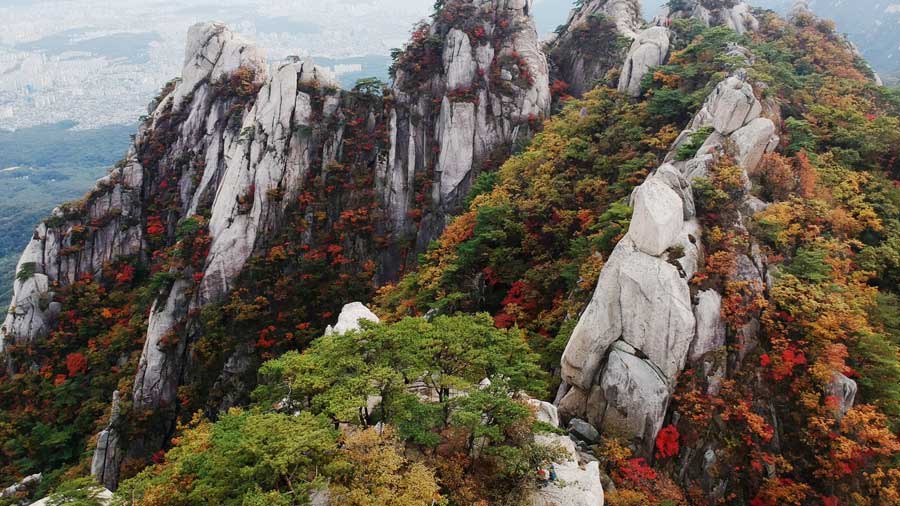
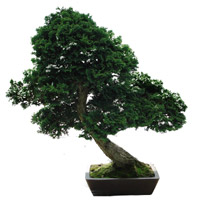
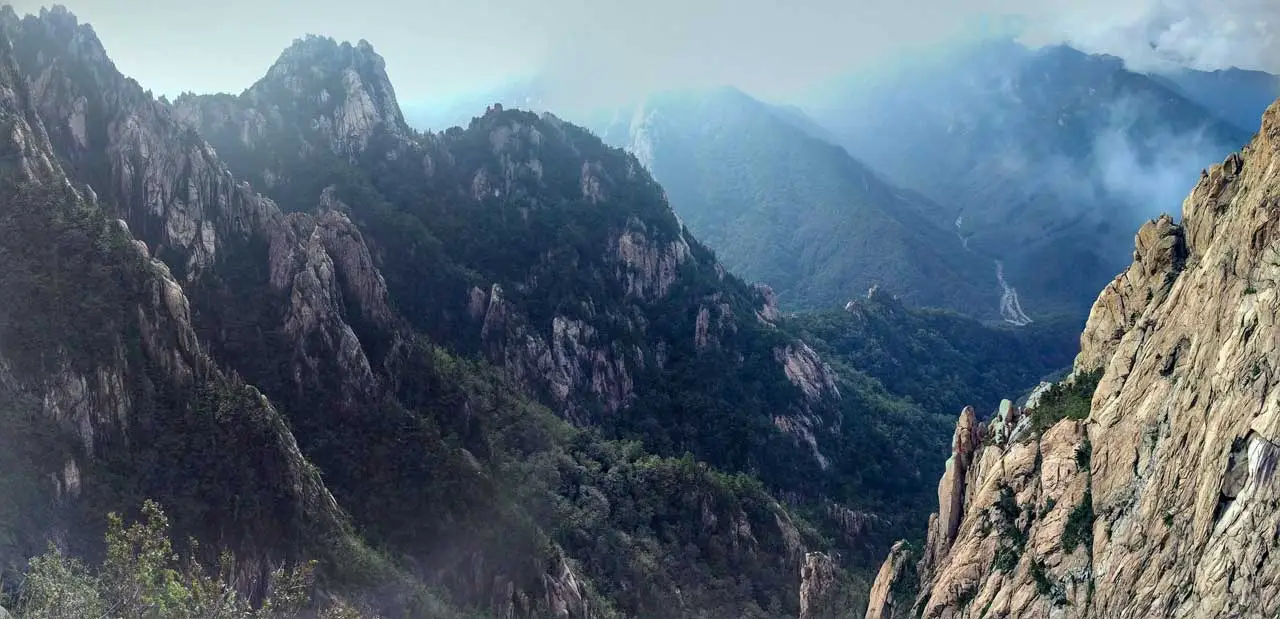
Running along the length of Korea are the timeless Baekdu-Daegan mountains. Covered in lush forests filled with aromatic Hinoki trees, they provide a comforting escape from the rush of the city lives. For millennia these mountains have stood as sentinels, calmly watching the flow of time and the journey of humans.

They influence the weather, the ecology, and the water systems, which support agriculture and feed the entire nation. The wise elders in ancient times named them energy spine mountains. They believed that Baekdu-daegan continuously fed essential life-energy throughout the land of Korea. Its unimpeded clear flow was considered necessary for the birth and growth of heroic and virtuous citizens, and thus for the health, strength and prosperity of the Korean Nation.

These enchanting mountains hold a vast network of hiking trails that are also great for forest bathing and forest therapy. The intriguing, interesting, beautiful part of these trails is the way they weave through and connect Korea’s nature, culture, rural life, and food.

Korea’s Healing Forests

Today these mountains and forests are the inspiration for the ambitious National Forest Plan. Its goal is “to realize a green welfare state, where the entire nation enjoys well-being.”

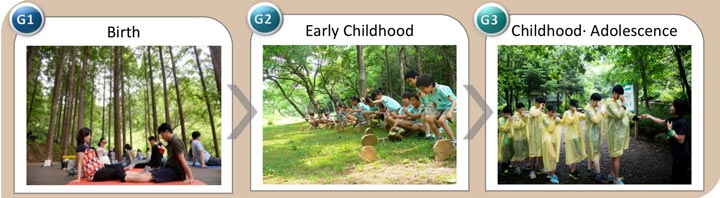
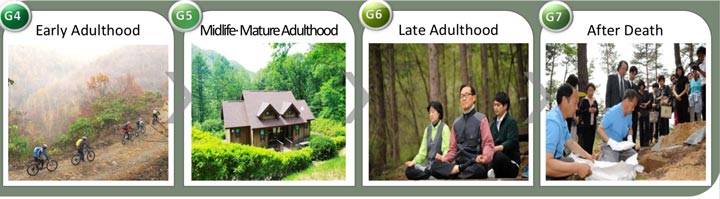
Over years of research the Koreans were able to scientifically establish the multiple healing benefits of nature. What’s commendable is how they were able to put this knowledge into creating systems and spaces for forest bathing and forest therapy. To reach a vast spectrum of people, the forest welfare program was divided into 7 distinct stages based on the human life cycle.

In this section we give you a glimpse of the different sections and highlight the benefits of forest bathing for our lives.

Forest Bathing Benefits Across Ages

Birth
One of the biggest benefits of forest bathing is the relief it can provide from anxiety, panic, and worry. Having the lowest fertility rate in the world, the South Koreans hold the expecting mothers-to-be in high regard. By creating special pre-natal classes and forest meditation sessions in nature, they not only help the parents ease their anxieties and worries but also establish nature as a space where families can bond with each other. 

Childhood
Across many of the forests of Korea you will find ‘Children’s forest playground’.  Open spaces in nature where children can interact and play safely in the ambience of the forest. Taking this a step further is the establishing of Forest Kindergarten with trained faculty who can guide children in the beautiful art of learning with nature.

Time in the forest also led the children to report feeling happier, less anxious and more optimistic about their futures, according to a study by Prof. Dr. Park Bum-Jin. Many Koreans have been so intensively urban for so long that they can feel out of place in the woods. “Children and the younger generation don’t really have experience in nature; so many of them think of the forest as dirty or scary. If we don’t change their mind-set now, there will be no chance.” he says.

Adolescence
Nature offers equilibrium between technology and human interaction. It creates avenues for healthier outflow of teen anxiety, energy and aggression. An interesting experiment was the “Happy Train” which delivers school bullies to a national forest for two days so they can learn to be nicer. Why does it work, you ask? It’s because no one teaches us humility and respect better than nature.

By incorporating regular programs under the theme ‘Education in the Forest’ many schools are helping their students understand the natural world and its magical creatures. Given the craze for video games in South Korea, there are also some digital detox programs for preteens. The aim is to spark awe, wonder, and fascination with the beauty of the natural world. In the confines of nature, the mind can truly open up and unlock the doors of creativity.

Early Adulthood
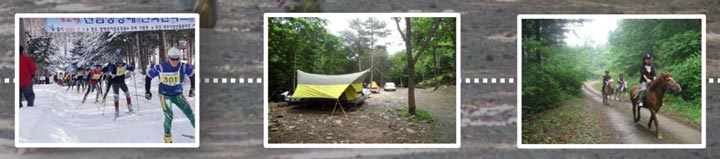
All across the country there are a network of forest hiking trails within easy reach from the urban centers. Bukhansan National Park near Seoul, the capital, attracts millions of visitors every year.

These hikes offer a break from the noise, pollution, and crowds of the city but also allow the hikers to raise their moods as well as energy levels through a range of activities. Testing one’s strength and endurance on a hiking trail is a great way to build resilience.

Nature makes us realize that unlike the promises of a plastic surgeon, there are no cosmetic quick fixes for the challenges of life. 

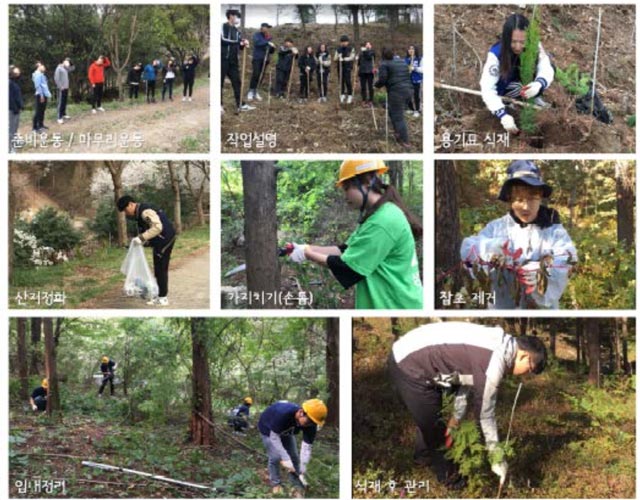
Green Gym is another activity which is increasing in popularity these days. Green Gym was developed by The Conservation Volunteers (TCV) and Dr. William Bird from UK. Green Gym is a wonderful concept about improving the local green environment through light physical activities such as tree planting, pruning, and vines removal. It brings people together to connect with nature as well as with each other.

The benefit-cost analysis of Green Gym shows that 1 pound of investment creates 4.02 pounds of social value. Green Gym activities emphasise not only the improvement of green spaces in the community but also on strengthening social communication and connections among the local residents.

Midlife
Given how effective forest bathing is against the ill effects of stress and burnout, it is no wonder that many people are turning to nature for their breaks and holidays.

With two-thirds of Korea made up of forests, it is easy to escape from city life and revert back to the laws of nature, seeking out a new life by tasting the peaceful serenity of the great outdoors.

Korea has 37 state-run national recreational forests scattered across the nation. Many of them are designated by the government to create recreational facilities where citizens can fully appreciate all that the woods have to offer.

In a typical recreational forest, like the Jangseong Healing Forest, hundreds of visitors come through every month, including three to four groups per day geared to some kind of healing, from cancer patients to kids with allergies to prenatal groups and everything in between. Depending on the program, participants may do activities like nature bathing, guided forest meditation, woodcrafts and tea ceremonies. But the heart of it all is walking in the Hinoki forest.

The aroma released by these trees to ward of microbes and pathogens has an added benefit for humans. Breathing in these compounds known as Phytoncides increases the count of Natural Killer – NK cells in our blood which is our body’s defence against cancers and tumor cells.

Seniors – Late Adulthood
Creating access to nature for its senior citizens is one of the most important goals of any society. Spending time in nature works wonders for their mental health as well as physical immunity. With more time on their hands, simple activities or walks in nature allow the elders to avoid loneliness and depressive thoughts.

South Korea is creating a network of healing forests across the country. In addition, the Forest Agency is building an ambitious $100 million forest healing complex, complete with addiction treatment center, ‘barefoot garden’, herb garden, suspension bridge, and 50 kilometers of trails.

After Death
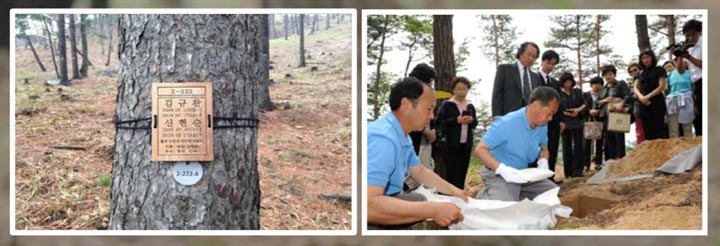
In the traditional Korean philosophy of a holistic world-view and cycles of life and death, a unique ‘National Tree Burial Forest’ has been created. It is an eco-friendly way to send off the loved ones.

The ashes and remains of the body provide life to a seed that will be nurtured to grow into a tree. Over time, these trees of pine, oak, wild cherry and many other local species will become part of a healing forest. Providing a space for future generations to immerse in forest baths and contemplate their own journeys in the circle of life.

Tree Burial Forest
Tree Burial Forest

What’s commendable is the vision that S.Korea has about integrating nature into their lifestyles. Chungbuk University offers a “forest healing” degree program, and job prospects for graduates are good. It’s a cradle-to-grave operation: Programs include everything from Forest Welfare Experts, Forest Interpreters, Kindergarten Instructors, Forest Trail instructors, Forest Healing instructors and much more. The intention is to implement multiple forest therapy programs so that they can maximise the healing effects of nature, across their entire society.

References:
*Prof. Dr. Bum-Jin Park, Director – Lab of Forest Environment and Human Health, Chungnam National University, South Korea.
** Ted article by Florence Williams

Forest Bathing Insights

A large part of our behaviour is shaped by our environment. It is influenced by the spaces where our social interactions take place. Over time, repeated behaviour transforms into habits, which build up our personality. This is the way our inner nature works.

In many ways, the hectic, high-pressure lifestyles in South Korea remind us of the direction in which societies across most parts of the world are moving. If we were to reflect on the lessons learnt, we realize the true value of incorporating nature into our day to day routine.

The forests help us break free from the anxieties of our overstimulated minds. They recharge our energy to face the challenges of the gruelling city lives. They grant us the wisdom of accepting our imperfections and finding fulfilment in the small gifts of life that nature has to offer.

Returning to nature is a great way to boost not only our mental and physical health but also our social health and self-esteem.

Stay wild. Stay connected.

Request: Please share this article to inspire more people to connect with nature.

You can visit our homepage to know more about our Healing Forest project. We share the best ideas and practices from around the world. To receive a free monthly newsletter with new articles in your inbox, please subscribe to our blog.

How to create your own meditation garden and learn a variety of engaging garden meditations. Make an island of calm that you can return to, whenever you need.

Our city lives are slowly swallowing up our nature spaces and nature time. Even our interactions with other people are largely shifting to electronic screens. There is an increasing gap between our inner need for a true connection  and our actual reality. Especially in these times of isolation and uncertainty we can observe growing signs of loneliness, anxiety, and depression in our society.

So what’s a simple and effective way to restore our connection with life  and imbibe the healing benefits of nature. With our homes becoming our sanctuary, we can all bring a slice of calm, beauty, and joy into our lives through meditation gardens

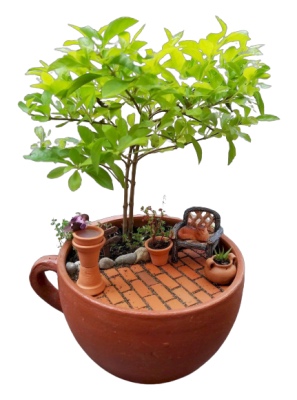
A true meditation garden is not about the space you have on ground, rather it is about creating the relation between your mind and your garden.

Small Meditation Garden

WHAT IS A MEDITATION GARDEN?

A meditation garden is an island of tranquility which allows you to connect with nature and with yourself. Living in a sea of turbulence, it offers you a space to plant seeds of peace, hope, wonder, and joy within you. With a few simple nature elements you can transform any garden into a meditation garden or create a new one from an inviting earth.

The heart of a meditation garden, beyond its visual appeal and the calming aesthetics is the thought, practice, and care which goes into connecting with your garden.

In this post we cover:

  • Beautiful ideas to create your own meditation garden.
  • Meditation garden elements that can enhance your experience.
  • Philosophy behind their use.
  • Inspiration and examples of meditation gardens.
  • Some simple but powerful garden meditations. 
  • Origin of meditation gardens.
  • Benefits of garden meditations.
Meditation Garden Elements

MEDITATION IN THE GARDEN

Event though different cultures and countries adopt different approaches, the basic idea remains the same – to create a sense of peace and serenity. Working with your garden to bring out these emotions is a deep meditation in itself. There are many nature elements that can become a part of your meditation in the garden. The real art comes in creating balance and harmony between the different elements. Elements which convey the essence of nature and serve as a gateway to calm and clarity. The design elements should be simple, natural, and low maintenance.

Here is our list of recommendations, but feel free to add your thoughts and suggestions in the comments section below.

Meditation Garden Rocks

ROCKS
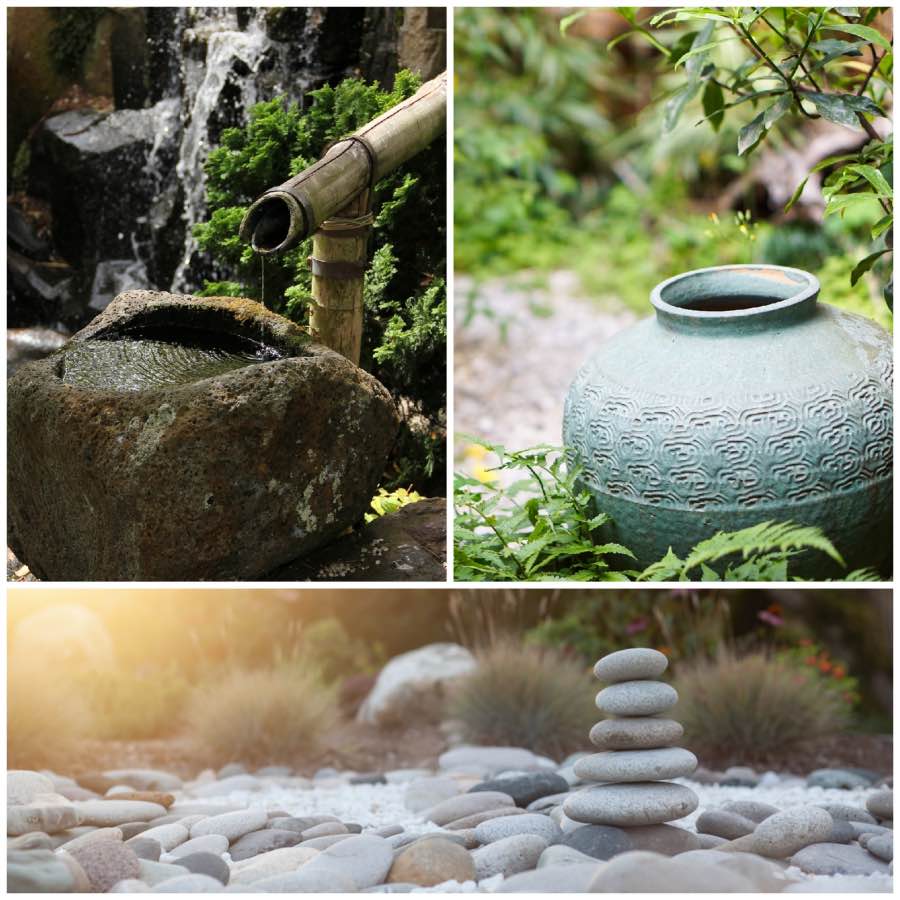
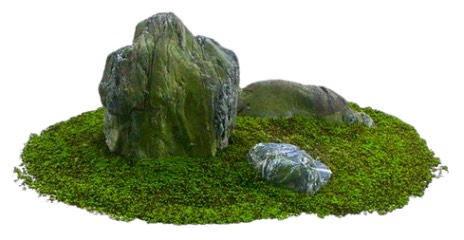
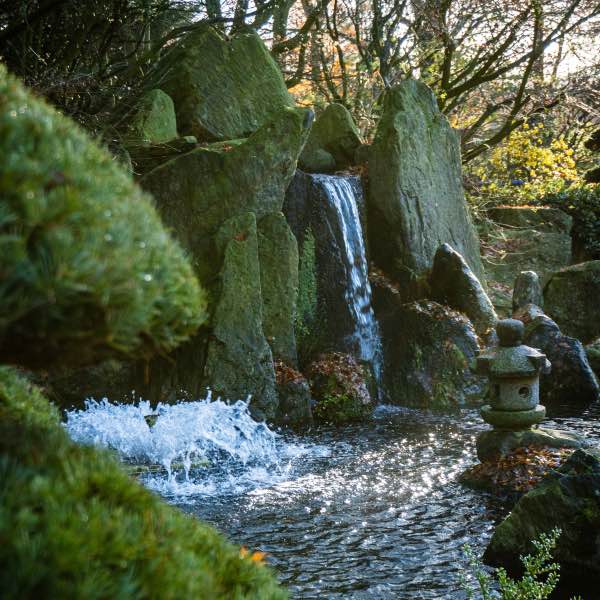
Rocks are storytellers of time. Sitting quietly in their corner, with stories tucked away in their folds and shapes. Those who have the patience to sit with them can journey in time and space.  Their selection, size, shape and placement in relation to each other is very important. The rocks can give you an appearance of islands, valleys, and mountains – transporting you to different worlds.

WATER
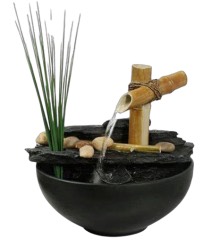
Adding water adds movement, stillness, and reflection to your garden. The sight and sound of flowing water is intrinsically soothing and meditative. An ecologically conscious choice to save water is to use a tiny fountain that you can turn on, as and when required. A simpler and friendlier option to incorporate the water element is to have a vessel with clear water in it. Even a small vessel can hold the entire sky in it.

Meditation Garden Fountain

LAND
The lifeblood of your garden is the soil and earth it rests on. Interactions with the earth have a deep healing effect. Antidepressant microbes in soil result in the production of higher levels of serotonin in our body and lift our moods. Walking barefoot and working with the soil is a great meditation in itself. Bonus Tip: Having a composting unit, that turns your leaf litter into compost is a great addition to any garden. In nature nothing goes waste, and the process of transformation from waste to life-giving compost, is nourishing for the garden and filled with beautiful life-lessons for you. When life gives you crap – compost it.

LIFE
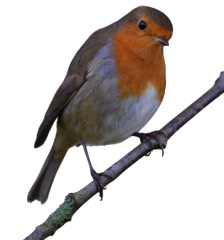
The plants that you choose to be a part of your garden create the character of your space. Combining plants that grow to different heights and form layers creates a beautiful image of a tiny forest. It leads to an optimal use of space and is beneficial for the plants themselves. Other important factors to consider are color, texture, fragrance, and form. Native plants are the best choice for your garden. They are low in maintenance and will attract a lot of native birds, butterflies, and bees.

Zen Garden Birds

PATHS
Creating contours and curves in your garden has a relaxing effect on your mind. It is a sharp contrast to the straight lines of our houses, cars, and offices. You can consider adding meandering paths and labyrinths for slow mindful walks.

YOU
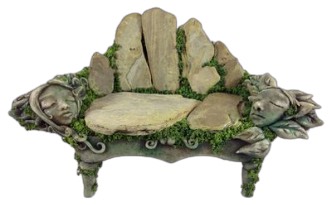
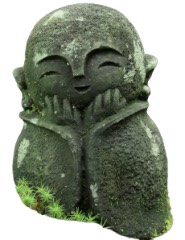
The secret ingredient of any meditation garden is you. Creating a small bench or a place to sit and contemplate in peace, forms an essential cornerstone of the garden. You can also place certain objects or statues that bring you peace of mind.  Another addition could be baritone wind chimes or meditation bells for gentle sound.

All these elements are a starting point for your creativity. Space and balance are very important, as is motion and tranquility. Add in lots of flow and elements that can help you focus in the right state of mind. Start small and let the garden evolve, first in your mind and then on the ground.

Meditation garden bench


MEDITATION GARDEN IDEAS

Given below is a slideshow of some ideas and design inspirations for meditation gardens from different corners of the world. It is just a reference, to observe the use of different elements. Click on the arrows to scroll through. Notice the emotion in each.

Image Credits: Liam Read. Karen Oeu. Ewan Hutchinson. Jeff Finley. Fezbot. David Wirzba. Hideki Nishiyama. Note Thanun. Cover image: Cody Weaver. | Unsplash

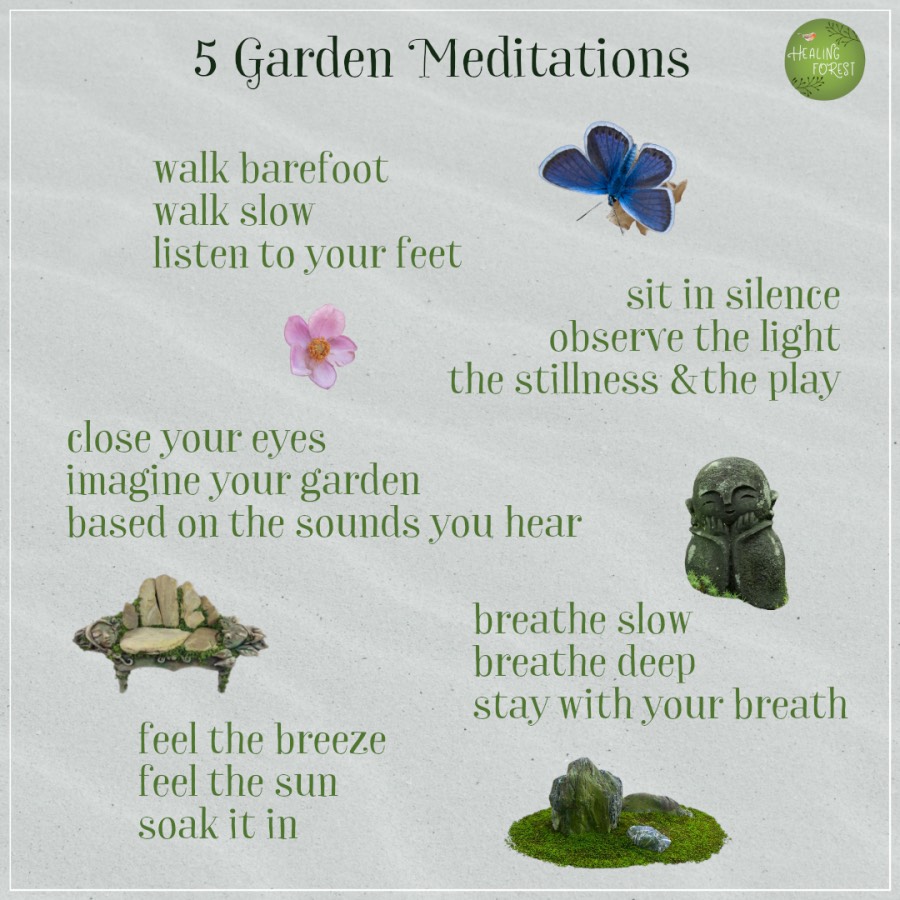
5 GARDEN MEDITATIONS

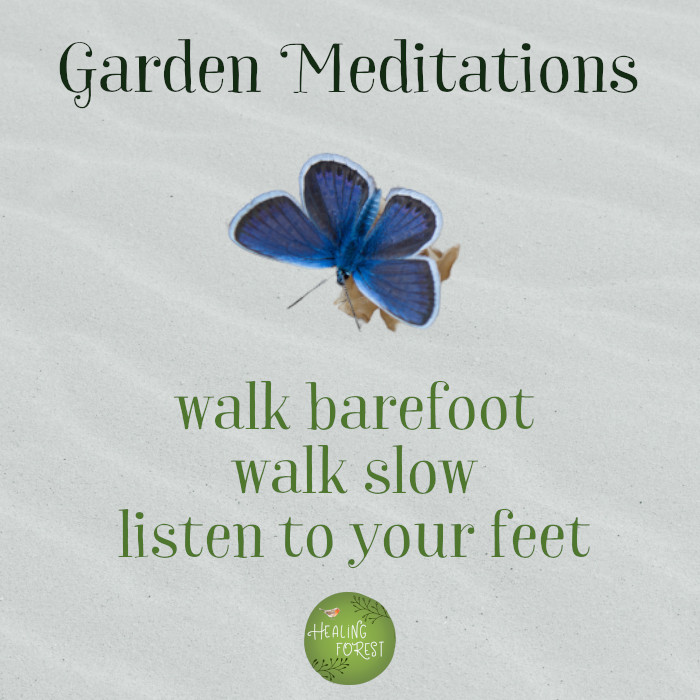
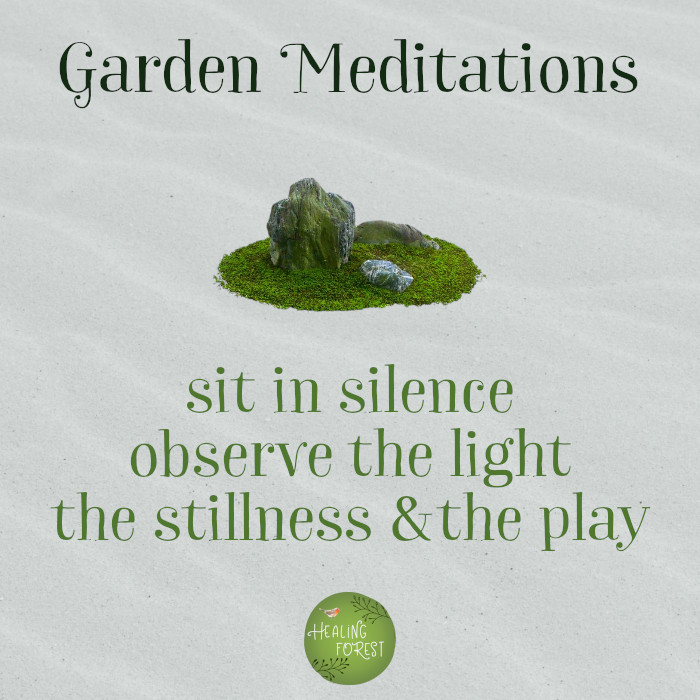
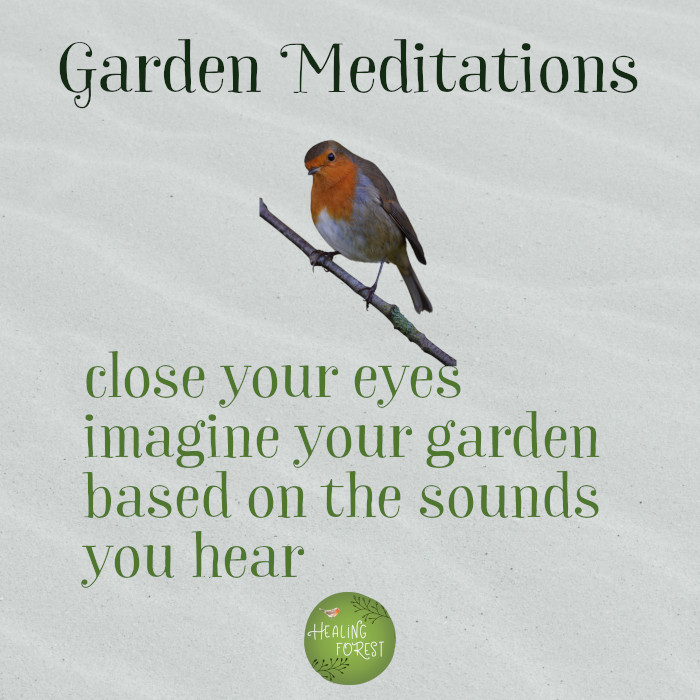
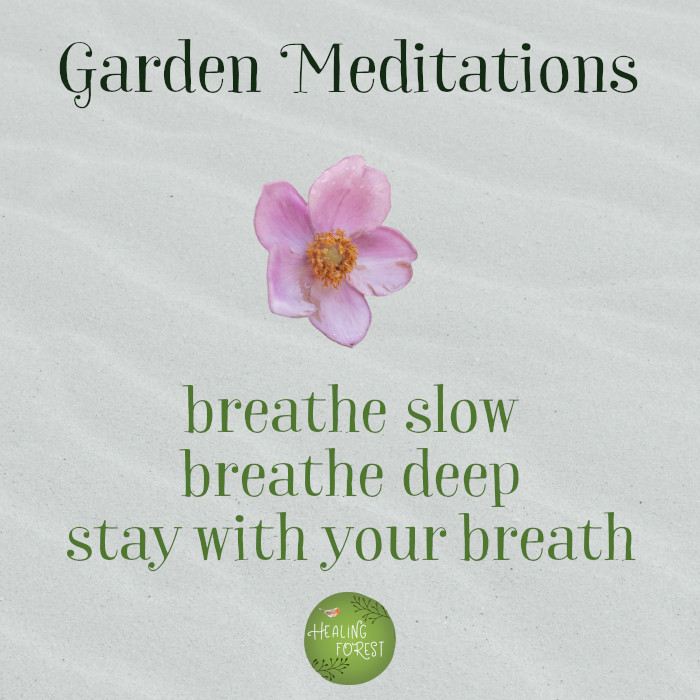
Having a meditation garden and not knowing how to meditate with it is like having a car and not knowing how to drive. While someone else can drive the car for us, but only we can meditate for ourselves. Given below are some simple garden meditations. You can find many more throughout our website. (find your calm here)

The first stumbling block for beginners is trying to set a goal or desired outcome for your meditation. Instead, the meditation becomes far more effective if we learn to simply enjoy the process. One can think of garden meditations as spending time with a close friend. Without any effort. Without any pretense.

  • 5 Garden Meditations

A free download link of these 5 garden meditations is given at the end of this post. Also, for those of you who’d like to dive deeper into the mind, check our Forest Meditation collection.

Each one of us will have our own unique way of meditating in the garden. But the precious insights we find, will connect us to something that’s universal.

“There is random love in the universe. Some of it is unconditional. Some of it is for you.”

Auburn Sandstorm


MEDITATION GARDENS ORIGIN

Historians estimate that the first gardens came to life about 10,000 B.C. – along overgrown river banks and the wet foothills of monsoon regions in India and Asia. By cordoning off places for personal use, these gardens were primarily “forest gardens”. They were used as a source for food and a protection barrier. Much later, with the emergence of the first civilizations, wealthy influential leaders in societies began to create gardens purely for aesthetic purposes.

Spiritual gardens emerged in Japan in the 8th century CE. The arrangement consisted mainly of of rocks. In the Zen tradition, the gardens served to remind practitioners that life can be elemental, simple. The first Zen gardens were called “zazen-seki”, “meditation rocks” because of their simplicity. The essence was to radiate silence, calm, and tranquility to anyone contemplating them.

In the current day, meditation gardens are present all over the world. The famous public ones being found all the way from Kyoto (Japan) to Glasgow (Scotland) and San Francisco (USA). But public meditation gardens are more of tourist attractions. To get the most authentic experience of a meditation garden you have to create one. The process of creating your own meditation garden, is the real meditation.

Meditation Garden

GARDEN MEDITATION BENEFITS

Within our hyperactive lives, spending even a few contemplative moments can lead to a wide range of benefits. Gardens across history and geography – over different periods of time and different cultures tell us that humans have always found aid and assistance through their gardens.

Meditation gardens are an effective way to clear your head, get grounded, and gain strength in this hyperactive, chaotic modern world. They can even help physically by lowering blood pressure, strengthening the immune system, improving general brain function, and lessening pain & inflammation.

Scientists have found that spending two hours a week in nature is linked to better health and well-being. The National Health Service in United Kingdom has prescribed time in nature and community gardening projects as part of “green prescriptions”. In Shetland for example, islanders with depression and anxiety may be given “nature prescriptions”, with doctors there recommending walks and activities that allow people to connect with the outdoors. (Source)


“Gardens are our teachers. There is a gardener in all of us, especially when tragedy is at our doorstep.”

Robert Fox
Meditation Garden Statue

In Nature things change with time. So will your garden, as will you. We hope these changes become a part of your learning journey and sow seeds of positive transformation across your life.

Do you have a meditation garden tip for us? Add it in the comments for all the other readers. To know more about the Healing Forest project, you can visit our homepage. Subscribe to our monthly newsletter and get new ideas and articles in your inbox once a month: Subscribe link.

Download 5 garden meditation posters. We hope you liked this post. Please do share it in your circles with those who may find it of help.