

WINTER HAS ARRIVED: As the world prepares for a new shift in power and the climate crisis advances at an alarming rate, a lot of people are bracing for tough times ahead. In nature, winter has always been a part of the cycles of seasons. It brings with it many unique gifts and lessons. Wintering is the art of surviving these tough times and thriving inspite of the challenges thrown at us. In this article you’ll learn some wonderful tips from nature and its myriad beings. Tips to transform these tough times into a season of personal growth.
“What lies behind you and what lies in front of you, pales in comparison to what lies inside of you.”
~ Ralph Waldo Emerson
Mindfulness Practices and Ideas from Nature: Winter can be a hard season, not just in the world outside but in our hearts too. Yet, nature has so much to teach us about getting through tough times. From bears that rest through the cold, to squirrels that plan ahead, and even beavers dreaming of spring, every creature has its wisdom. In this article, we’ll share their stories and the lessons they offer—how to rest, play, connect, and keep hope alive. With simple tips and gentle practices, you’ll find ways to turn life’s winters into something softer and brighter. Come, let’s walk through this together.
*Don’t forget to collect your winter gift at the very end of this post.
7. Wintering: Ideas from Squirrels
Squirrels are nature’s ultimate planners. They spend months burying nuts and seeds in countless hiding spots, using their sharp memory and spatial skills to retrieve them when food is scarce in winter. Fun fact: squirrels don’t always remember every spot, leading to accidental tree planting when forgotten seeds sprout in the soil! This habit not only ensures their survival but also contributes to the environment. Their knack for preparation makes them resilient through even the harshest seasons.
INSIGHT: For humans, resilience comes from storing not food, but wisdom and inner strength. Journaling is a powerful way to “squirrel away” your thoughts, lessons, and reflections. Writing down your experiences and emotions helps you process them and builds a personal reservoir of wisdom to draw from during tough times. Research by the University of Texas at Austin shows that expressive writing can improve mood disorders, lower stress, and enhance overall well-being (source). Like a squirrel preparing for winter, journaling helps you prepare mentally and emotionally for challenges ahead.
Mindfulness Practice Idea: Journaling for Resilience
- Gratitude Notes: Write down three things you’re grateful for. They can be as simple as a good meal, a kind word, or a moment of peace. Gratitude shifts your focus toward positivity and abundance.
- Reflective Prompt: Try journaling with prompts like, “What did I learn from today?” or “What challenges am I overcoming?” This practice deepens self-awareness and helps you recognize your growth.
By nurturing your inner world through reflection and journaling, you build a mental storehouse of wisdom—ready to sustain you when life’s challenges arise.

6. Wintering: Ideas from Deer
Deer are social creatures that rely on their herd for safety and support, especially during winter. Herds provide protection from predators, as more eyes and ears mean a greater chance of spotting danger early. They also share warmth by huddling together and guide one another to food sources in tough conditions. Interestingly, deer herds are often matriarchal, led by experienced females who ensure the group’s survival through collective wisdom and cooperation.
INSIGHT: For humans, community serves a similar purpose—it offers support, protection, and a sense of belonging. Studies show that strong social connections can improve mental health, reduce stress, and even extend life expectancy. According to a report by Harvard, people with close-knit relationships are 50% more likely to live longer (source). In times of struggle, leaning on your community can provide the emotional warmth and practical help needed to navigate tough times. Whether it’s family, friends, or local groups, collective strength fosters resilience.
Mindfulness Practice Idea: Building Your Community
- Circle of Outreach: Take a moment to reach out to someone in your circle and express gratitude. A heartfelt message or a simple “thank you” strengthens bonds and uplifts both you and the other person.
- Joining Circles: Look for opportunities to connect with like-minded people, whether it’s joining a hobby group, volunteering, or even attending community events. These shared experiences foster a deeper sense of belonging.
Like deer in a herd, we thrive when we come together, pooling our strengths and resources to face life’s winters with courage and warmth.

5. Wintering: Ideas from Birds
Every year, millions of birds embark on epic migrations, traveling thousands of miles to find warmer climates and abundant food. The Arctic tern holds the world record, flying an astonishing 44,000 miles round trip between the Arctic and Antarctic. Birds use celestial cues, Earth’s magnetic field, and even the position of the sun to navigate these incredible distances. Migration isn’t just a journey—it’s a testament to adaptability and survival, as birds go where they must to thrive, no matter how far.
INSIGHT: For humans, movement—whether physical or mental—can be a powerful tool for coping with tough times. Changing your environment, even temporarily, can provide a fresh perspective and reset your emotional state. A study published in Nature Neuroscience revealed that physical activity, like walking or cycling, boosts the brain’s production of endorphins and supports emotional resilience (source). Whether it’s traveling to a new place or simply taking a long walk in your neighbourhood – preferably in nature, movement can help break mental stagnation and foster growth.
Mindfulness Practice Idea: A Journey Within
If physical travel isn’t an option, try an inner journey with this visualization exercise:
- Imagine a Path: Close your eyes and picture yourself walking on a path in nature. It could be a forest trail, a beach, or a mountain path. With each step, feel the ground beneath you, hear the sounds around you, and breathe in the fresh air.
- Set Intentions: As you walk along this imaginary path, think about what you’d like to leave behind and what you’d like to discover ahead. Let the imagery guide you toward clarity and peace.
Movement, whether physical or mental, reminds us that life, like migration, is a series of steps toward survival and renewal.
“When you come out of the storm, you won’t be the same person who walked in. That’s what the storm is all about.”
~ Haruki Murukami

4. Wintering: Ideas from an Arctic Fox
The Arctic fox is a master of adaptation, growing a dense, fluffy coat to survive the freezing temperatures of the tundra. This winter fur, which can be nearly twice as thick as its summer coat, provides exceptional insulation, keeping the fox warm even in temperatures as low as -70°F. Its white winter coat also serves as camouflage against the snow, offering protection from predators. Interestingly, the Arctic fox’s fur changes color with the seasons, shifting to brown or gray in summer to blend with the environment.
INSIGHT: For humans, building inner resilience is like growing thicker fur—it protects us from negativity and external challenges. This “emotional insulation” comes from learning to detach from toxic influences and nurturing a positive inner dialogue. According to the American Psychological Association, cultivating resilience involves maintaining strong self-belief and practicing mindfulness to manage stress (source). By focusing on personal growth, setting healthy boundaries, and filtering out negativity, we can create a mental environment where we thrive, no matter the external conditions.
Mindfulness Practice Idea: Building Your Emotional Armor
- Filter Negative Thoughts: Imagine your mind as a sieve, allowing positive, helpful thoughts to pass through while catching and discarding unhelpful or negative ones. Try some ‘Mindfulness in Nature‘ activities from our site to befriend your mind.
- Strengthen Boundaries: Practice saying “no” to situations or people that drain your energy. Use simple phrases like, “I need some time to focus on myself,” or “I’m unable to help with that right now.” Protecting your energy is essential to maintaining your well-being.
Like the Arctic fox in winter, we can adapt to life’s storms by growing our own emotional “fur,” shielding ourselves with resilience and inner strength.

3. Wintering: Ideas from Rabbits
Rabbits are nature’s playful acrobats, known for their energetic hops, leaps, and dashes. They don’t just move to escape predators; they also play as a way to bond, explore, and stay alert. Have you ever seen a rabbit perform a “binky”? It’s a joyful leap where they twist in mid-air, often accompanied by a kick of the legs. This exuberance helps them build agility and strength while keeping their spirits high, even in challenging environments.
INSIGHT: For humans, staying active and embracing playfulness is equally vital for mental and physical health. Exercise not only strengthens the body but also boosts endorphins, lifting your mood and reducing stress. Research from the Mayo Clinic highlights that regular physical activity can help alleviate anxiety and depression (source). Playfulness, too, is a proven way to increase creativity and resilience. Engaging in light-hearted activities—whether dancing, playing a sport, or even laughing with friends—can recharge your spirit and improve your ability to cope with life’s challenges.
Mindfulness Practice Idea: Infusing Play into Your Day
- Movement with Joy: Try a playful form of exercise like dancing to your favorite music or skipping rope. Focus on how it feels, not how it looks—let your body move freely and enjoy the moment.
- Rekindle Childhood Fun: Spend 10 minutes doing something that used to bring you joy as a child, like doodling, playing with a pet, or even trying a game. Let this be a reminder that play isn’t just for kids—it’s for everyone.
Just like rabbits, we can navigate life’s challenges with a spring in our step and joy in our hearts, staying active to build strength and resilience. For parents and families we recommend our collection of 10 magical walks to learn life’s most useful skills.

2. Wintering: Ideas from Bears
Did you know that bears can sleep for months without eating, drinking, or even using the bathroom? During hibernation, their heart rate drops from about 50 beats per minute to as low as 8 beats per minute, and their body temperature slightly decreases. This metabolic magic allows them to conserve energy through the cold months when food is scarce. Astonishingly, despite their long winter sleep, bears emerge in spring with minimal muscle loss—nature’s own way of maintaining strength during prolonged rest.
INSIGHT: For humans, rest and sleep are just as vital, though we might not need months of it all at once! Sleep is essential for repairing tissues, strengthening the immune system, and processing emotions. Adults need 7-9 hours of sleep each night for optimal health. Chronic sleep deprivation, on the other hand, can increase the risk of heart disease, diabetes, and depression (CDC). Just like bears retreat to their dens to survive the harshest months, we can use rest as a tool to recover from life’s challenges and emerge stronger when the storm has passed.
Mindfulness Practice Idea: A Step Toward Better Sleep
To improve your sleep, try this simple mindfulness exercise before bed:
- Body Scan Meditation: Lie down in a comfortable position and close your eyes. Starting from your toes, bring your attention to each part of your body, moving upward slowly. Notice any tension or discomfort, and imagine it melting away with each breath.
- Breath Awareness: Focus on your breathing. Inhale deeply for a count of four, hold your breath for a count of four, and exhale for a count of six. Repeat this for a few minutes to calm your mind and signal your body that it’s time to rest.
Creating a pre-sleep routine that avoids screens and encourages relaxation, like reading or listening to soft music, can also make a big difference. According to a study by the National Sleep Foundation, those who maintain a consistent bedtime routine are more likely to enjoy restful sleep.
“Sometimes, when you’re in a dark place, you think you’ve been buried, but actually, you’ve been planted.”
~ Christine Cane

1. Wintering: Ideas from Beavers
Beavers are nature’s engineers, tirelessly building dams and lodges even in the coldest months. But did you know they also plan for the future in a unique way? Beavers mate in January and February so that their kits (young) are born in the spring, when conditions are ideal for them to grow and learn. By the time the weather warms, the kits are ready to watch and imitate their parents, quickly mastering the skills needed to build and thrive. This forward-thinking approach ensures that their families are always prepared for what’s ahead.
INSIGHT: Don’t get the wrong idea – we are not recommending that you start mating 😊. For humans, optimism is like the beaver’s preparation for spring—it’s about holding onto hope during tough times and taking steps to create a brighter future. Studies show that optimism is linked to better physical health, increased longevity, and greater resilience in the face of adversity (source). Dreaming of better days ahead and working toward them, even in small ways, can help us navigate challenges. Whether it’s setting goals, learning a new skill, or simply envisioning the life we want, optimism fuels our ability to persevere.
Mindfulness Practice Idea: Preparing for Your Spring
- Visualize Your Goals: Spend a few moments each day imagining the life you want to build. Picture it vividly, focusing on the details and emotions. Let this vision inspire small, actionable steps toward your goals.
- Celebrate Progress: Keep a “spring journal” where you record small wins and milestones, no matter how minor. This helps you stay motivated and reminds you that every effort is a step closer to brighter days.
Like the beaver dreaming of spring and building toward it, we can embrace optimism and take steady steps to create a future filled with hope and renewal.

Mindfulness Practices, Ideas from Nature
Winter, in all its forms, is a season of quiet strength and hidden growth. From the hibernating bear to the playful rabbit, from the resilient Arctic fox to the ever-hopeful beaver, nature shows us how to endure and even thrive through life’s coldest days. By resting, preparing, connecting, and dreaming, we too can build our inner resilience and find warmth even in the harshest times. Remember, spring always follows winter, and within us lies the strength to welcome it.
Tough Times Don’t Last
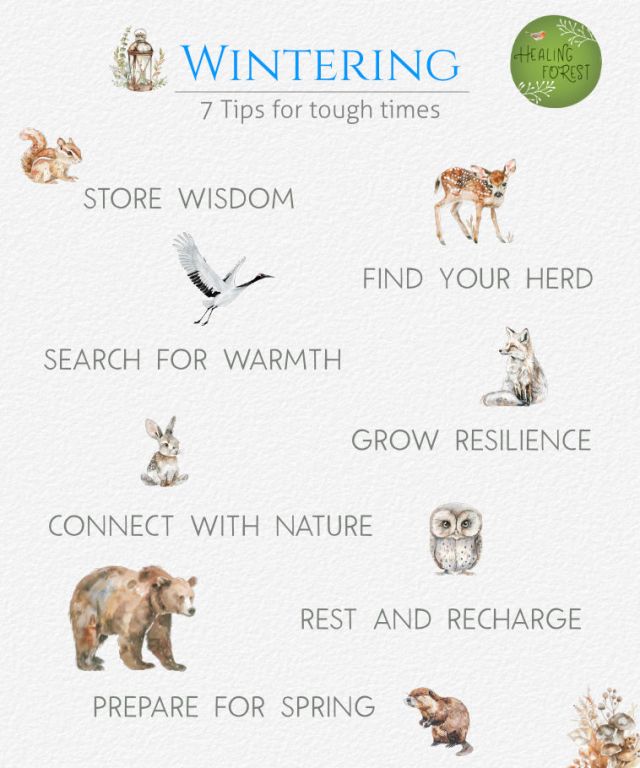
* HEALING FOREST: Every month we share one inspiring article from nature. Join our free newsletter to get our monthly email and see older posts. Download the wintering poster as a gift from nature.

Could you please share this post, so it spreads a little warmth where its needed.

Life’s Greatest Gifts
Isn’t our life’s greatest gift having a healthy mind, a peaceful body, and a circle of nourishing friends?
Try our collection of 150+ amazing activities to uplift your mind, body and relationships.



 Healing Forest
LOVED this one so much – so many actionable things to do and ways to learn from non-human animals and nature. I so appreciate the mindful/meditative and creative connections you make in each of your articles. This was so needed right now!
LikeLike
Love these tips! A timely reminder during the snowstorm I am currently dealing with! Nature is so wise.
LikeLiked by 1 person