In life, we rarely get the luxury of choosing everyone we work or live with. Whether it’s colleagues in an office, neighbours in a community project, or even the wonderfully mismatched members of our own families, we constantly find ourselves navigating different personalities, expectations, and ways of doing things. Strong teams (at home or at work) are shaped through patience, shared moments, and a willingness to understand one another. And sometimes, the simplest experiences can teach us the most about how to do that together.

In this article, we take Nature’s help to try some creative team building activities. Unlike the traditional methods, the trees don’t ask us to participate in trust falls, and the birds don’t hand out personality quizzes; instead, the forest invites us to slow down, breathe, and actually notice one another. We’ll also add a sense of play, armed with nothing more than imagination and a good stick. Suddenly the whole idea of building a great team becomes not only possible, but surprisingly joyful.

Before any grand task or clever challenge, invite the group to take a quiet walk and choose a single twig that somehow feels like it represents them. It doesn’t need to be the straightest, strongest, or prettiest—just one that calls to them in some small, familiar way.

When everyone gathers again, have the group sit in a circle. One by one, each person holds up their twig and shares why they chose it. This simple act becomes a quiet doorway into understanding. People reveal tiny stories about themselves. Just honest glimpses that help the group see one another with a little more warmth and curiosity. It’s a soft, playful beginning that reminds everyone: before we become a team, we are human beings meeting each other for the first time.

With everyone still holding their chosen twig, invite each person to imagine it becoming something entirely new: a flute, a wand, a flying broom, a tiny fishing rod, anything at all. One at a time, participants act out their twig’s new identity without naming it, while the rest of the group tries to guess what it has become.

It’s a light, joyful exercise that sparks creativity and loosens the atmosphere. People laugh, relax, and slip easily into play. In these small moments of imagination, you can feel the group beginning to soften toward one another, reminding us that shared fun is often the quickest path to connection.

Metaphorically, it is also nice to reflect how each one of us takes on different roles in life based on our skills, but at the heart of it we all are alike, just like the twigs.

Invite everyone to place their twigs in the center, one at a time, without speaking. Each new twig should gently respond to the one before it. Add a line, a curve, or a small gesture that lets the artwork grow naturally. No planning, no pointing, no whispers. Just quiet attention and the slow unfolding of something shared.

When the final twig is placed, take a step back together. Ask the group what they see. A river? A bird? A doorway? The beauty is that no one knows until the circle decides. This simple, wordless collaboration builds trust and shows how creativity can emerge peacefully, even when no one is leading.

Scatter the group in small teams through the area to gather twigs of different lengths: thin ones, sturdy ones, a few odd, knobbly characters. Then challenge them to build a pyramid that grows wider as it rises, instead of narrowing at the top. It sounds simple until everyone realizes that upside-down ideas don’t behave quite the way we expect.

Working together, the teams experiment, adjust, and try again. Pieces fall; new ideas rise. There’s quiet focus, shared laughter, and the steady rhythm of many hands building one playful structure. By the time the wobbly creation finally stands, the group has already learned the real lesson: creating a stable structure requires the support of each other.

Create teams of 4 and make two pairs in each team. The two pairs stand at opposite ends of a pitch facing each other. Give the starting pair a single twig. The task is simple but wonderfully tricky: the two partners must balance the twig between their index fingers as they walk together toward the far end of the field. No gripping, no pinching, just gentle pressure and shared steadiness.

Once they reach the end, they carefully pass the balancing twig to the next pair, who then continue the relay. They can only use the index fingers to pass the twig. The whole group moves in a slow, wobbling chain of concentration and quiet laughter. The activity shows how two people can move as one when they pay attention to each other and support the other to hold their part of the balance. It’s a small lesson in harmony.

For the final activity, gather the group around a heavier object. It could be a small log, a flat stone, anything solid enough to feel like a shared challenge. Each team collects a handful of twigs and must work together to lift or shift the object using only those twigs, without letting their hands touch it directly.

At first it looks impossible. The twigs wobble, people overcorrect, someone laughs too hard and everything drops. But slowly, the team finds a steady rhythm. They adjust their angles, and begin to move with a shared sense of purpose.

When the object finally rises (even if only a few inches) it feels like a tiny triumph born of cooperation. In that moment, you can see how a small group of people, using nothing more than twigs and patience, can achieve something they couldn’t do alone. And that, in its humble way, is the heart of team building.

Close the session with 10 minutes of solo time in nature. Participants take a few minutes to reflect on the key learnings from this team building session. Post the nature time everyone stands in a circle to share their insights, so that individual learning can become the collective’s learning.

In the end, it’s rather wonderful how much a simple twig can teach us. Here we are, complicated modern humans with phones that can photograph the moon, and yet a small stick on a forest floor still manages to deliver life lessons with more grace than most self-help books.

Out in nature, the world becomes delightfully uncomplicated. Our minds unwind, our bodies remember how to breathe properly, and even the grumpiest among us begins to look a little less like a clenched fist. And when we carry that calmer, lighter spirit back to our teams o families, we discover that good teamwork doesn’t always require grand strategies. Sometimes it just starts with stepping outside, paying attention, and letting a humble twig show us how to get along.
Healing Forest

Healing Forest is creating a calmer, healthier, kinder world by reconnecting people with nature.

Find more interesting walks and activities here:
Nature Calm: 150+ ways to a calm life.
Nature Play : 10 walks for life’s best skills.

Our free newsletter sends new ideas to your inbox at the start of every month.

When your mind is in a zoo, here’s a song to set you free. Our chaotic cities imprison us in cages disguised as cubicles, classrooms, cars, and captive screens. The web was meant to open the world for us, but even our phones have locked our attention into a small box. Is there a better way to live our life?

Only when you realize you are in a cage can you learn how to escape. Here’s a song to set you free. Keep this song with you as a memory. Whenever you hear it, you’ll remember. It’s time to free yourself.

Living in a city can be rough. If your head or heart is feeling trapped, you can always come home to the forest. There are many amazing gifts waiting for you to discover. Start your adventure with this article on the Japanese art of creating health and happiness with nature: FOREST BATHING

Also try our set of 10 magical walks to learn life’s most useful skills: Nature Play

Music connects cultures, but can it connect different worlds? I have used AI to create a music band with one animal from each continent (the penguins are still deciding.) The songs by Healing Forest band remind us to come back to the natural world, even if it is for a short while. We need nature in our lives.

Our forests need us too. Please download the song video and share it far and wide. Add this video to your social media presence and make a small difference. Feel free to use it as you please. (*A link back to our site would be deeply appreciated.)

WHY IS THIS USEFUL: Social media is filled with junk content, but when you create something meaningful they ask you to pay to promote it. This video was made to enable like-minded friends like you to add a little nature call into the digital world. Use it to remind people that there’s a wilder, freer world waiting just outside the cage.

~ Lyrics by
ND | healingforest.org

Lion song, was shot in Singapore. The name Singapore originates from the Malay word “Singapura” which translates as Lion City. The official mascot for Singapore is the Merlion, a mythical creature with the head of a lion and the body of a fish. Singapore is a beautiful, eco conscious place and is also known as the garden city. *This song is a reflection on the state of our human race and not an indicator of any particular country.

The birds and animals in the video are from Mandai Zoo and S.E.A Aquarium in Singapore. It features some extremely rare and endangered species. Some of the notable ones are: white cheeked gibbon, nicobar pigeon, and sea dragon. How many others can you spot?

The band members, and the hero our Lion song – Merlin (son of Merlion) were generated using Midjourney, KlingAI, and Runway ML. We used Suno to generate the song tune and it was put together using Davinci Resolve. Ai is enabling us to give a voice to these amazing wild creatures. Helping us tell uniques stories that can bring people back to nature.

Our small ‘Healing Forest’ band is getting ready to release more songs in the coming months. Leave a comment to let us know which topic you’d like us to make our next song on.

To find inspiring new nature stories, films, and activities you can check out our free monthly newsletter>>

The art of loving is a mystery that each one of us must solve for ourselves. As we wait for spring—the season of love—here’s an article to receive some wisdom on the art of loving from nature. We’ll also learn a few actionable steps for creating love, spreading love, and healing love where it’s broken.

If love had a classroom, nature would be the best teacher. From the jungles to the oceans, creatures great and small have been practicing the art of love long before humans even figured out how to text “Did you eat?” as a sign of affection. Birds dance, penguins propose with pebbles, and even fireflies light up the night in the name of love. While we humans complicate things with unread messages and overanalyzed emojis, nature keeps it simple: love is action, care, and a little bit of fun. So, let’s take some notes from our wild friends and learn how to bring more love into our world—one feather, pebble, or dance move at a time.

In a world that feels like it is become more angry, and intolerant, we need these small notes to remind us that in nature, love is all around us.

In the icy landscapes of Antarctica, where blizzards howl and the cold could freeze your morning coffee mid-air, penguins have mastered the art of romance. Instead of fancy dates or love letters, a male penguin expresses his devotion by presenting his beloved with a smooth, perfect pebble. If she accepts, they become partners for life. Simple, isn’t it? No grand speeches, no fireworks—just a tiny stone, full of meaning.

INSIGHT: Now, before you rush off to find a pebble for your significant other, consider the lesson here: love thrives in small, thoughtful gestures. A handwritten note, a cup of tea made just right, or even sending a meme at the perfect moment—these are the pebbles of human love. Forget the diamonds; sometimes, the right stone is enough.

ACTIONS: Focus on meaningful gestures over grand displays. Sometimes, a simple “thinking of you” can mean more than an expensive gift. Leave a small, thoughtful surprise for someone you love—a note, a favorite snack, or even a well-timed compliment.

On warm summer nights, fireflies put on a magical light show, each tiny glow a signal of love. Males flash their lights in a rhythmic dance, hoping to catch the attention of a special someone. If a female likes what she sees, she flashes back—love at first blink!

INSIGHT: Love isn’t about being the loudest or the biggest—it’s about shining in your own way. In human relationships, the most attractive thing isn’t wealth or perfection, but authenticity. When you let your true self glow, the right people will notice.

ACTIONS: Do something that lights you up—pursue a passion, laugh wholeheartedly, and radiate joy. Appreciate someone’s natural glow. A heartfelt compliment can brighten someone’s day.

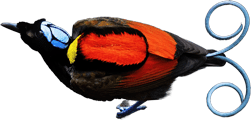
Deep in the rainforests of Papua New Guinea, love isn’t whispered—it’s danced. Male birds of paradise, dressed in feathers that would put fashion designers to shame, perform elaborate dance routines to impress their mates. They fluff, twirl, and shimmy with all the flair of a Broadway star, hoping to win a lady’s heart. If the performance is good enough, love is in the air. If not… well, better luck next season.

INSIGHT: Love isn’t just about duty and routine—it’s about playfulness, joy, and expression. Sometimes, humans get so caught up in the seriousness of life that they forget to have fun. Adding a little dance (literal or metaphorical) to relationships keeps things fresh and exciting.

ACTIONS: Play your favorite song and have a silly dance-off with your loved one. No judgments, only laughter. Surprise your partner with a fun, unexpected gesture—be it a joke, a spontaneous hug, or an impromptu date.

*For those of you who love the outdoors, give our Nature Play activities a try and see what surprises come your way.

Otters are known for their adorable habit of holding hands while they sleep, so they don’t drift apart. In the unpredictable currents of life, they literally cling to each other, ensuring that no one floats away alone.

INSIGHT: Love is about staying connected, even when life gets busy or uncertain. A small act of reassurance—checking in, holding hands, or simply being present—can anchor a relationship.

ACTIONS: Reach out to someone you care about. In relationships, create small rituals that keep you connected—weekly calls, date nights, or the best option – walks in nature.

Dolphins are social, playful, and deeply connected to their pods. They call each other by unique whistles (basically names!) and maintain close friendships through constant communication. Whether through clicks, chirps, or body language, they make sure their loved ones feel seen and heard.

INSIGHT: Love isn’t just felt—it’s expressed through communication. Whether through words, gestures, or just listening, expressing care openly strengthens bonds.

ACTIONS: Tell someone you love them—not just on special occasions, but in everyday moments. Be an active listener. Instead of waiting to talk, truly hear what the other person is saying.

Despite their wild reputation, wolves are all about family and loyalty. They mate for life, raise their pups together, and care for their pack like a tight-knit team. In a wolf pack, everyone has a role—supporting, protecting, and sticking together through thick and thin.

INSIGHT: Love thrives on loyalty, teamwork, and showing up for each other. It’s not just about romance—it’s about having each other’s back, whether in friendship, family, or relationships.

ACTIONS: Show loyalty in small ways—keep your promises, be there when it matters, and listen with care. Strengthen your “pack.” Schedule quality time with loved ones, even if it’s just a simple meal together.

In the underwater world, seahorses have rewritten the rulebook on parenting. The males, not the females, carry the babies—literally. A seahorse dad nurtures his young in his pouch until they’re ready to swim on their own, proving that love is about shared responsibility, not assigned roles.

INSIGHT: Real love isn’t about who “should” do what—it’s about helping each other without keeping score. Whether in parenting, relationships, or friendships, supporting each other makes love stronger.

ACTIONS: Share the load. Offer to help with tasks, whether it’s cooking, planning, or just lending a hand. Appreciate acts of care—whether you’re giving or receiving, acknowledge the effort.

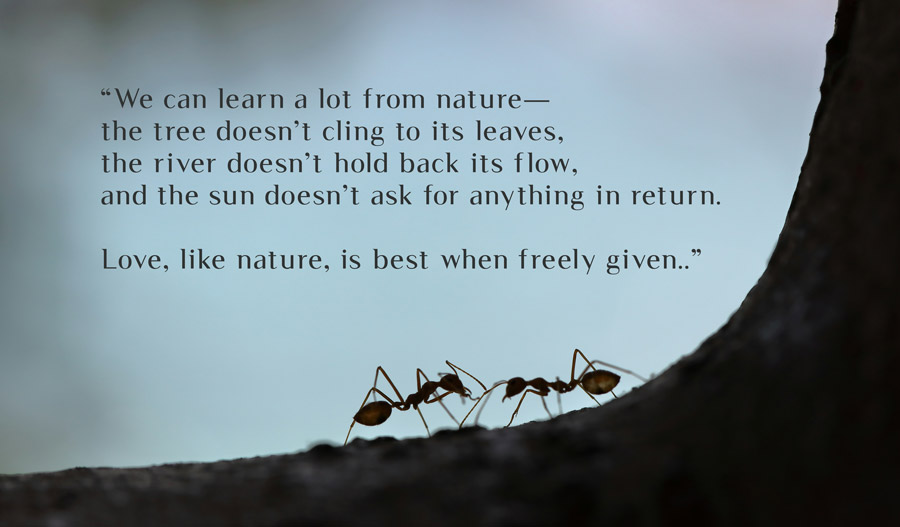
Ants may be small, but their dedication to helping each other is massive. If an ant finds food, it doesn’t keep it to itself—it calls for backup. If an ant is injured, others come to carry it home. Their love language? Acts of service.

INSIGHT: Love is not just a feeling; it’s something you do. Whether through kindness, support, or small acts of help, showing up for others makes a world of difference.

ACTIONS: Do a small act of kindness today—help a colleague, carry someone’s groceries, or offer a favor with no expectation in return. Recognize the love behind actions. Someone supporting you or fixing something for you? That’s love, too.

Pic by Maksim Shutov | Quote by Thich Nhat Hanh

Most us have to learn the art of loving the hard way – by making lots of mistakes. Many of us are still learning. It’s because for each of us the journey is unique, and the lessons are often not so easy to come by. Every day, the internet overflows with content that divides, provokes, and stirs up negativity. But love, much like nature, grows when shared.

If you found this post useful, please share it with people in your lives. If you are reading this article because someone sent it to you, know that you were in their thoughts. Lastly, if you can, do leave a comment to share what’s been your biggest learning on love?

To continue your journey of learning from nature, we recommend this article on mindfulness activities for groups, or check out our forest bathing guide. Connecting with nature is the best way to connect with yourself, as well as those you are close to.

Every month we share one inspiring article from nature. Join our free newsletter to get our monthly email and see older posts.

For more gifts, explore our collection of 150+ amazing activities to uplift your mind, body, and relationships. Nature Calm >>