If you could change one thing to transform your life what would it be? What if it was your own mind? Learning to train your mind starts with learning to regulate your emotions. It’s because they affect your thoughts, your choices and also the people you attract into your lives.

Our emotions design our experience of life.

Managing our emotions and moods is one of the most difficult but essential skills in life. Those who can achieve it know the secret of leading richer lives with greater success, harmony and more fulfilling relationships.

*During the pandemic, a lot of people are going through a sea of emotions. In these testing times, maintaining our mental balance is as important as protecting our physical health. Through this article we share some helpful tips. If you find them useful, please share them forward. And feel free to add your thoughts and ideas in the comments to grow our collective knowledge.

Just like the virus, our moods are also contagious. Let’s learn spread some calm and hope.
WHAT IS EMOTIONAL REGULATION?

Emotional regulation is the ability to handle both the highs and lows of emotions. Generally speaking, the extremes of any emotion can have an adverse effect on us. Therefore, we need to become aware of our emotional environment. And because our emotions are constantly changing, we can learn to transform them, change their intensity and also choose how we react to them.

Going through the circus of life we often encounter situations and people that completely throw our mood off. Anger, sadness, anxiety and other bad moods are like uninvited guests. By taking up our head space, they take away our freedom and pull us down. Understanding how emotions work can show us how to train the mind and transform those bad moods even if you can’t avoid them.

The emotional center of our brain – the limbic system, is an open loop system. An open-loop system depends on external sources to manage itself. In simpler terms, we rely a lot on our environment and connections with other people to determine our moods. We have evolved in this way because it increases our chances of survival. It helps humans form relationships, protect and care for their loved ones and also find environments that were safe to live in and thrive in.

Even though the open loop is so much a part of our lives, we usually don’t notice the process. So how can we use this to our advantage? The link between our inner nature and outer nature gives us a wonderful tool to shape our emotions.

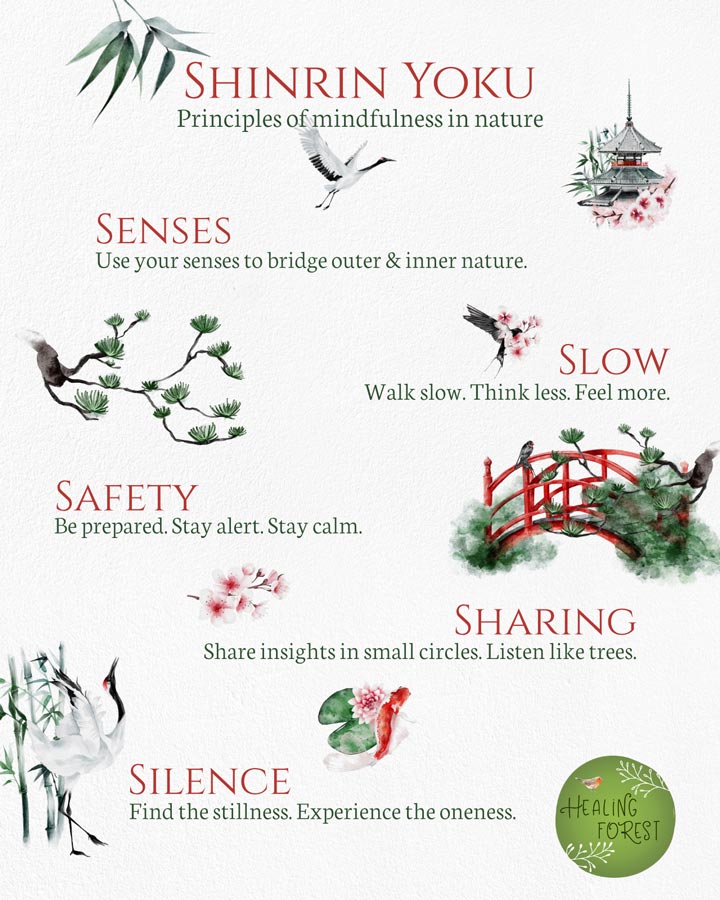
The format that we cover in this post is based on the Japanese concept of Shinrin-yoku or Forest Bathing. It is a well researched and highly effective practice and has a host of other benefits besides helping you regulate your emotions.
* Forest Bathing Introduction | Forest Therapy in Japan
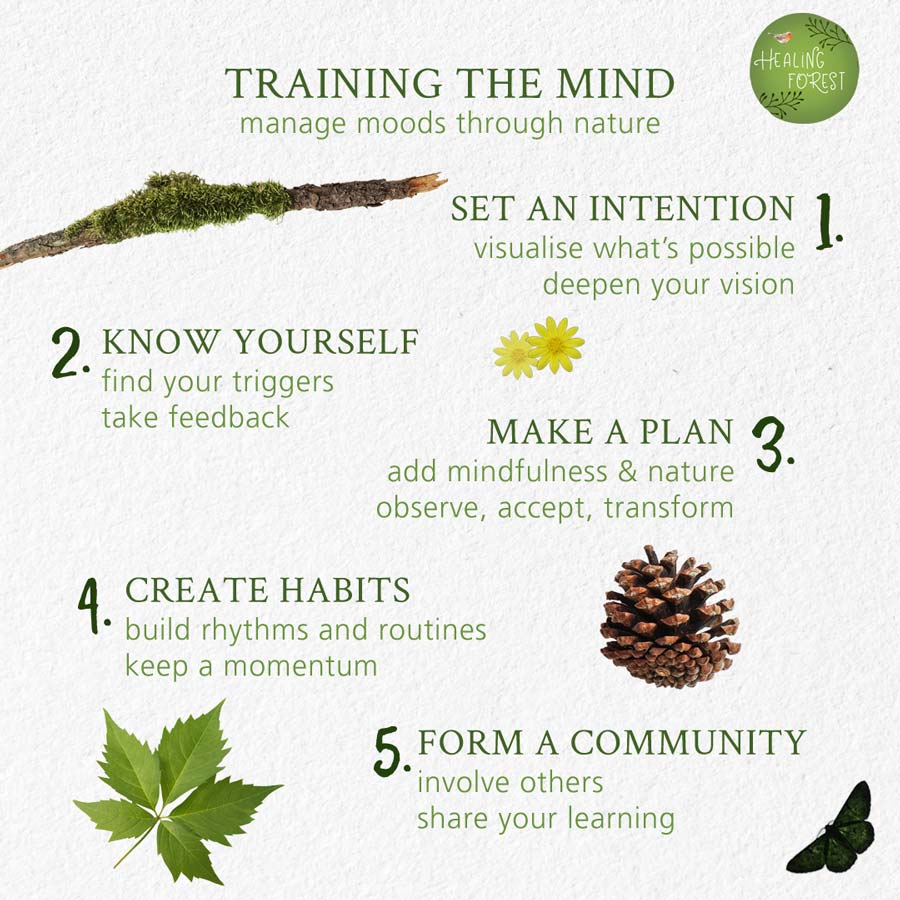
HOW TO CONTROL YOUR EMOTIONS?

There are many ways to train the mind to control your emotions, but with nature it’s easier. It’s because, our mind has evolved in nature. In this post we will cover 5 stages of learning to control your emotions. The stages help you progress steadily and create a longer lasting effect.

Emotional skills are part of our genetic code, and each one of us has a certain mood that we are more prone to. However, experience also plays a big role in how our personality develops. The more we act a certain way—be it happy, depressed, or cranky—the more the behaviour becomes ingrained in our brain circuitry, and the more we will continue to feel and act that way.

1. The Forest – Knowing what’s possible

Go for a nature walk. Focus on your strongest sense and find something in nature that brings you deep calm. Stay with that emotion as long as you can. Later when you are at home, sit in a quiet space and try to recreate the same emotion by visualising your moment in nature. Practicing this exercise helps us recreate emotions we can fall back on when the need arises.

The basic practice of learning to regulate our emotions begins with observing, accepting and transforming. Many behaviour change programs include Mindfulness as part of the process. By adding nature to mindfulness we can make it far more engaging and effective.

Emotions are absorbed in the body in about six seconds. Each burst of emotion chemicals, from the time it’s produced in the hypothalamus to the time it’s completely broken down and absorbed, lasts about six seconds. If we’re feeling something for longer than six seconds, we are – at some level – choosing to recreate and refuel those feelings. Recognizing what emotion we are feeling, evaluating its purpose, and deciding whether to recreate it, is what emotional intelligence is all about. (source)

2. The Storms – Knowing yourself

Knowing what triggers you will help you in being better prepared. Make a list of people, situations and environments that affect you negatively. Also knowing how you affect others will show you areas that need improvement. Talk to family, friends and colleagues. Take feedback.

Our moods are like the weather – they can create a climate of trust, creativity and growth, or they can spread dark clouds of stress, fear and anxiety. Practice becoming aware of the links between what’s happening around you and what’s happening inside you.
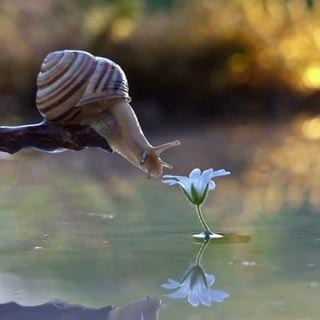
A good mood leads to a good day.

According to scientists, there are 8 primary emotions: joy, sadness, fear, surprise, anger, disgust, acceptance, anticipation. Other important emotions, like ‘love’ are a complex combination of some of these primary emotions. These permutation and combinations give our mind its emotional richness. In nature we work with the emotions of awe and wonder to create joy, serenity, love and even compassion.

3. The Path – Creating an action plan

The effects of nature work in a dose curve. The more time you spend in nature, the better it is for you. Depending on your need and situation, you can design an action plan for lifting your mood when you are down.

Identify special places in nature you have access to. Find landscapes, elements, and activities in nature that you enjoy. It could be sitting next to a stream, lying on the grass, reading under a tree or walking barefoot. Know what works for you and build a plan for training your mind. The deeper your nature experience is, the stronger its effect.

When you are in nature, focus on all your senses. Soak in the sights, sounds and smells. Taste the freshness and feel the textures. Our senses work at a subconscious level. They also help in bringing your awareness to the present moment. Negative thoughts are easier to quell when we bring our attention to a pleasing sensation.

When you are in nature shift from thinking to sensing, and from sensing to simply being.

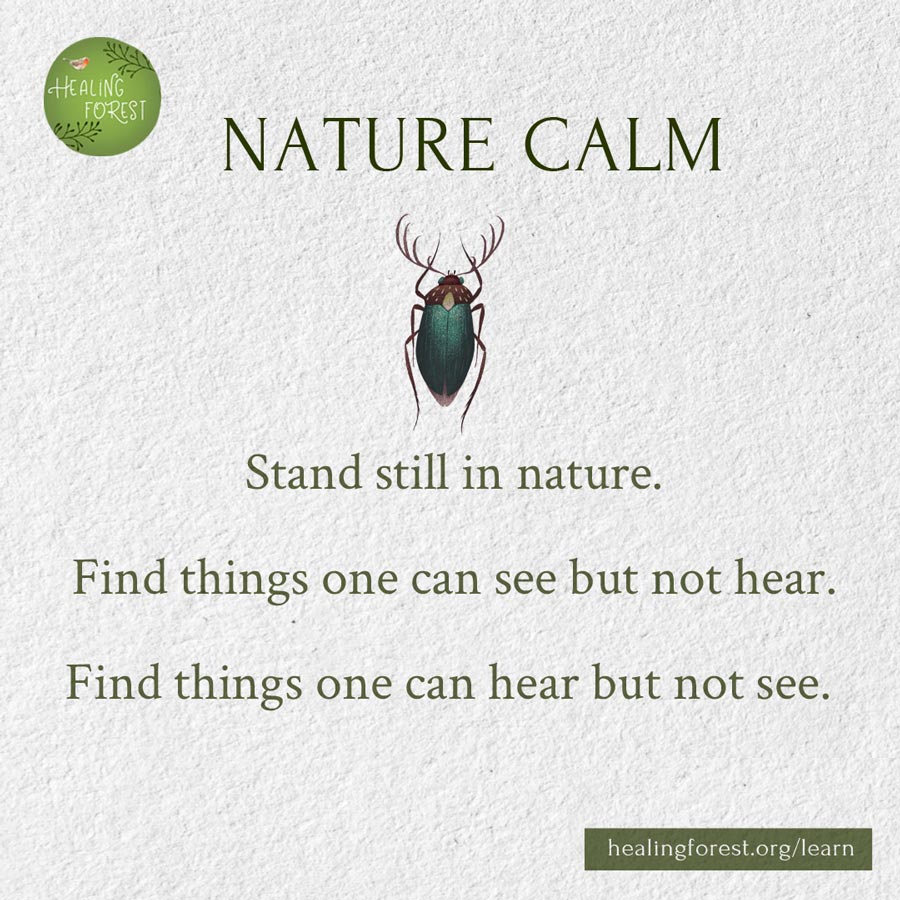
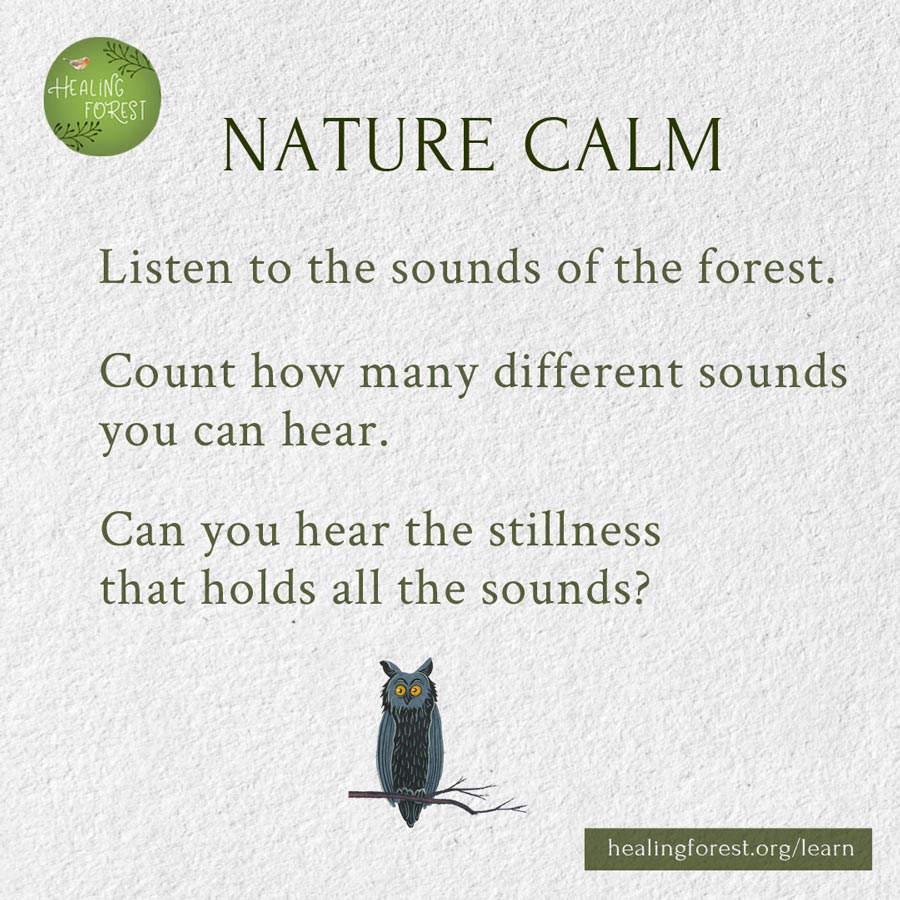
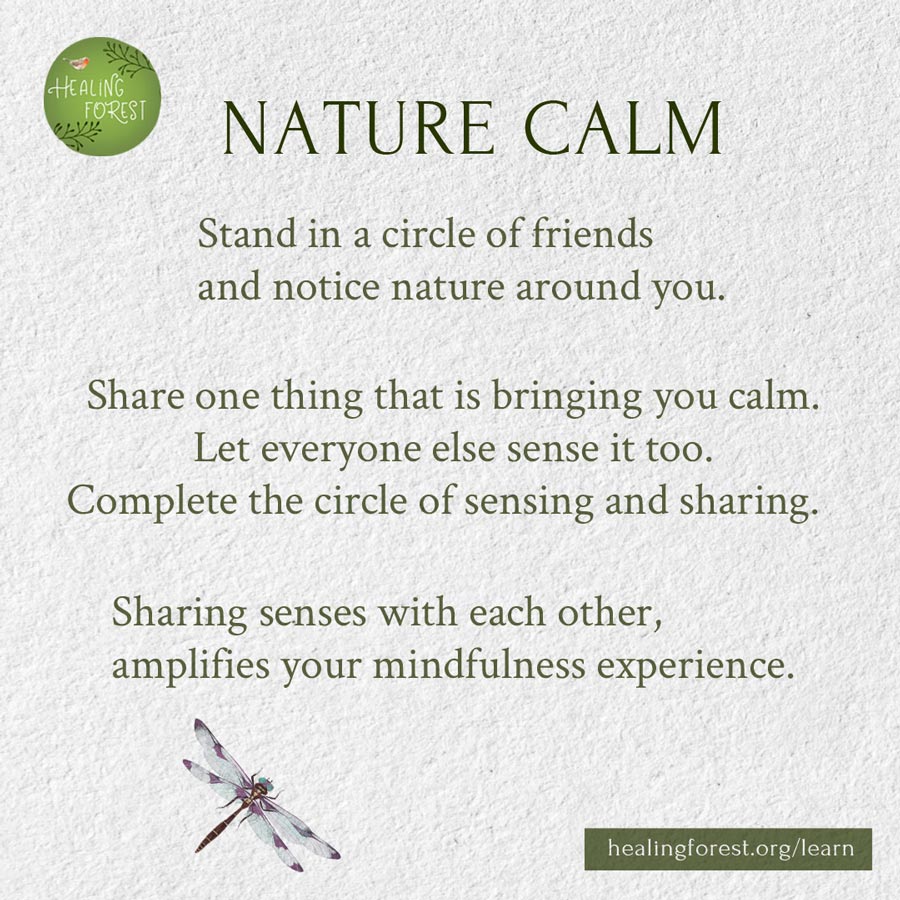
*For some beautiful ideas, try our Nature Calm course, with a collection of over 100 creative and mindful activities to find your calm.

4. The Cycles – Keeping momentum

Nature works in rhythm… birdsong in the morning, phases of the moon, and cycle of seasons. Interestingly, so does our mind. Create a habit of adding nature into your life. Whether it is the daily ritual spent with your plants and pets, a weekly nature walk, an annual vacation in the forest. Build a rhythm into your life. It keeps you in a good mood and maintains your momentum.

Even if you can’t access nature, simple acts of watching clouds fly by, listening to bird song, feeling the breeze on your skin and many other small ideas can keep you connected to nature.

Creating a momentum helps you break deep rooted emotional patterns which may be difficult to get rid of.

5. The Friends – Creating a community

Our moods affect our relationships deeply. Therefore, community is the most important aspect of your mind training. Remember, our moods are linked to the moods of people in our lives.

Go for a silent nature walk with those you wish to build a deeper connect with. Let nature do all the talking. Close bonds can form between people who allow each other their own space and yet share a beautiful experience together.

Everyone knows the importance of emotional intelligence in life. Most successful people, teams and families have a high level of emotional intelligence. What people don’t realise is that the foundation of this intelligence comes from the ability to regulate emotions. Emotions in ourselves as well as others.

THE EMOTIONS

Our emotions are deeply linked to hormone levels, cardiovascular functions, sleep rhythms, and even immune functions in the body. And strong emotions can even alter these in the body of another. It’s a phenomenon called mood contagion.

Research in intensive care units has shown, for example, that the comforting presence of another person not only lowers the patient’s blood pressure but also slows the secretion of fatty acids that block arteries. Another study found that three or more incidents of intense stress within a year (for example, serious financial trouble, being fired, or a divorce) triples the death rate in socially isolated middle-aged men, but it has no impact on the death rate of men with many close relationships. (Source)

So you see, our emotional health is linked to our mental health, physical health as well as social health.

Changing your mood changes your experience of life.
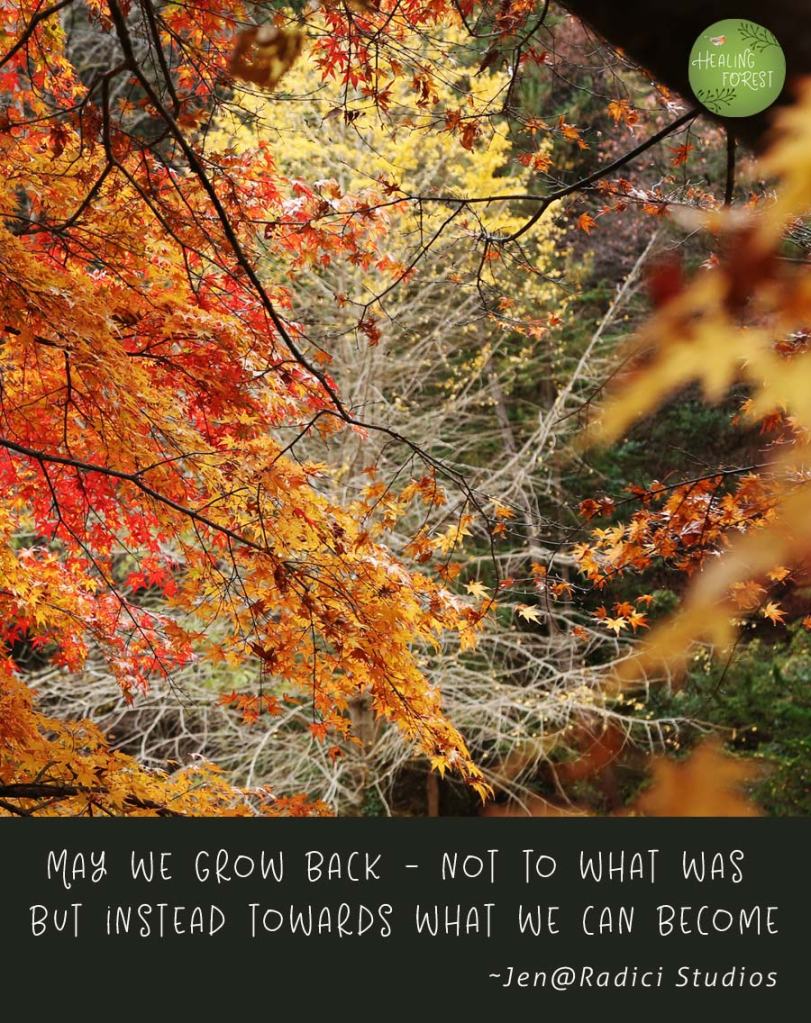
Creating a deep connection with nature is like growing roots that will keep us stable and anchored in stormy situations. And during calmer times, they will nourish the very essence of our being, helping us enrich other people’s lives with our presence.

May the forest calm always be with you.

We live in a complex world, facing challenges big and small each day. The twists and turns of life affect us in many ways. Therefore, learning to take control of our own wellbeing is an important skill. Discover how to find peace, purpose and good health with the help of nature. We share the best ideas and practices from around the world. Please subscribe to our blog for a monthly newsletter with new ideas.

Do share this post with people who might find it helpful.
The state of our mind, designs the state of our life. Forest Bathing is the gentle art of turning to nature to recharge your mind, revitalise your body, and come home to yourself. In this simple forest bathing guide you’ll discover: what is forest bathing, how to forest bathe, and where to practice it.

You’ll also learn about a wide variety of forest bathing benefits for your mind, body, relationships. Fascinating insights from Japan as a society show us why forest bathing has become specially relevant in these turbulent times and how we can apply it to improve our lives.

*At the end of this article you’ll find free forest bathing activities to download as well as a link to our best nature connection activities from around the world.

Forest Bathing

Forest Bathing

Forest bathing is the practice of immersing yourself in nature in a mindful way, using your senses to derive a whole range of benefits for your physical, mental, emotional, and social health. It is also known as Shinrin-yoku. ‘Shinrin’ means forest and ‘Yoku’ stands for bathing. The idea took birth in Japan in the 1980’s and proved to be a very effective tool to overcome the ill effects of a hectic life and stressful work environment.

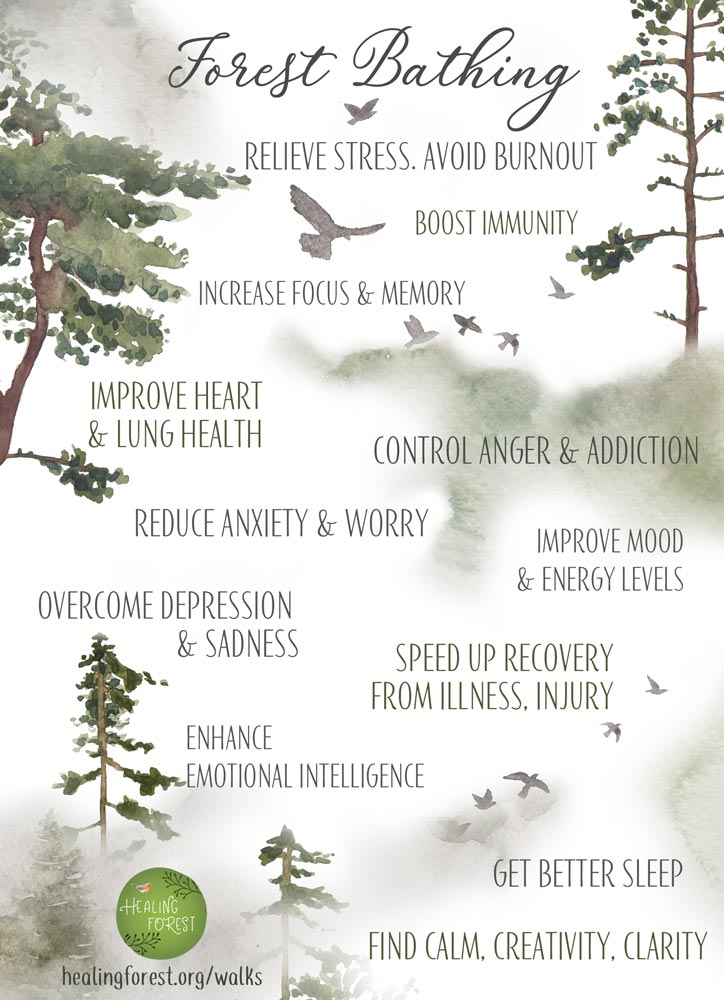
Forest Bathing allows the stressed portions of your brain to relax. Positive hormones are released in the body. You feel less sad, angry and anxious. It helps to avoid stress and burnout, and aids in fighting depression and anxiety. A forest bath is known to boost immunity and leads to lesser days of illness as well as faster recovery from injury or surgery. Nature has a positive effect on our mind as well as body. It improves heart and lung health, and is known to increases focus, concentration and memory.

Certain trees like conifers also emit oils and compounds to safeguard themselves from microbes and pathogens. These molecules known as Phytoncides are good for our immunity too. Breathing in the forest air boosts the level of natural killer (NK) cells in our blood. NK cells are used in our body to fight infections, cancers and tumors. So spending time with these tree is a special form of tree bathing.

An intangible outcome of forest bathing is enhancement of emotional intelligence and self confidence which leads to improved relationships and better social health. Something that we know intuitively is now getting scientific proof and validation through research.

What is Forest Bathing | Shinrin Yoku

Forest Bathing and Japan: Japan is among the most developed nations of the world, and yet this progress and development is not bereft of challenges. The island nation has one of the most demanding work environments. In fact, they have even coined a specific term for death by overwork (Karoshi). The performance pressure from jobs is so high, that there’s very little time left for a personal life. The marriage rates in Japan have fallen drastically in the last 30 years.

The urban cities of Japan have a hyper digital culture and a peculiar obsession with technology. In the age of internet many Japanese people are spending more time online and having fewer social interactions. It is leading to higher incidents of anxiety and stress. Depression and loneliness are also on the rise. The country is also prone to devastating earthquakes and tsunamis, such that the Japanese have had to face a disproportionate amount of trauma. In Japan, neuropsychiatric disorders are estimated to contribute to 24.6% of the overall burden of disease (WHO, 2008)

Forest bathing activities
Forest Bathing Activity: Sense opening

Fortunately, over 70% of Japan is still covered in forests. The Japanese Ministry of Agriculture, Forestry and Fisheries came up with the idea of shinrin yoku in the early eighties. Shinrin yoku or forest bathing created different activities for enjoying the forest atmosphere in order to reap its health benefits. Due to the relentless Japanese work culture, the stress levels of Japanese employees was already running rampant then and the forestry department saw a wonderful possibility. And so forest bathing was born.

How To Forest Bathing

How To Forest Bathe

You can practise forest bathing in any safe nature space. The main principles are to go in silence and go slow. Use your senses to find things in nature that bring you peace and happiness. Through nature connection activities and sense exercises, you can alter your mood and energy levels resulting in a host of benefits. Recommended time for forest bathing is at-least 2 hours a week.

Meditation is difficult when you try, easy when you don’t.

Forest Bathing Meditations

Attention: Beginners and young children start with simple forest bathing activities which focus on objects in nature to hold our attention and slow us down. By directing and controlling our attention we are training to control the direction of our thoughts and feelings.

Awareness: Once we are able to reach a calmer state of mind, we can grow our awareness. In the depths of the forest, one can sense the cycle of transformations that all life goes through. Things that we were. Things that we are yet to become. Just like a seed in the ground. Growing our awareness is growing our connection to all life.

Answers: Our mind gets a much deserved rest so that it can apply itself with renewed energy and come up with surprisingly creative solutions. It begins to ask the right questions rather than simply seeking answers. The forest provides the light to spark new insights and learning which can give us a deeper understanding of life.

Forest Bathing

Let us guide you into the art of Forest Bathing and show you how to forest bathe in any nature space close to you.

How To Forest Bathe
Forest Bathing: Shinrin Yoku

Forest Bathing Meditation: The simple act of sitting and focusing on your breath can be quite difficult if you are not in the proper frame of mind. A large number of people give up meditation due to a frustrating experience in their initial attempts.

However, forest bathing makes it easy to reach a peaceful state of mind. By paying attention to our senses and moving in the forest mindfully, we not only get all the benefits of meditation for our mind, but also boost our immunity and create good health for our body. And the beautiful bonus is the friendships these activities help us cultivate. It’s because in forest bathing we are guided by the greatest teacher of all – Nature.

Forest Bathing Near Me

Not everyone has an access to a forest in their backyard. In fact most people who live and work in cities will have to travel a fair amount to get close to the woods. But nature is all around us. You can consider forest bathing and the sense based exercises in any urban park near you.

While traditionally, monks in India, China and Japan, traversed long distances to meditate in nature, in the recent decades the idea of headspace creation has become known as restoration in psychology. The Attention Restoration Theory and its closely connected Stress Recovery Theory state that our recovery from stress starts within minutes of entering a green space.

For people who are unable to go out into the urban parks, or are restricted due to disability, the sense based nature therapy activities can be carried out even in the confines of the their house. Just bring elements of nature indoors. You can use your creativity to build the nature connection even in a closed enclosure.

Here are links to some interesting activities which you can try on your own:

* Mindfulness In nature offers you a wide range of activities that will transform your world in wonderful ways. For those of you who wish to dive deeper into the art of forest bathing, please visit our Nature Calm course>>.

Forest Bathing Benefits

It is important to understand the different benefits that forest bathing brings to our lives. Knowing these facets will help you apply the activities to your life in a more efficient way. Forest Bathing benefits can be grouped into 3 major areas: the mind, the body, and our relationships. Here is a simple explanation for each:

Forest Bathing benefits for the mind:

  • Learn to overcome anger, anxiety and sadness.
  • Higher self esteem and confidence.
  • Improved ability to handle fear, self doubt and impatience.
  • Avoid stress and burnout.
  • Manage moods and switch off unwanted thoughts.
  • Strengthen will-power to control cravings, give up addictions.
  • Find peace and happiness in the present moment.
  • Enhance creativity and problem solving
  • Build empathy. Improve relationships.
  • Find answers for important questions and decisions.
Forest Bathing Benefits

Forest Bathing benefits for the body: As discussed earlier, Forest Bathing has a positive impact on one’s immunity levels. Also the body’s sleep cycle improves and we are able to get better rest. Heart, lungs, muscles – they all benefit from the outdoor activity. Movement in nature is a wonderful antidote to lifestyle diseases that come with sedentary lives. It is a great way to recharge and renew your energy levels. The benefits of a 2 hour walk can last through the week.

Forest Bathing benefits for our relationships: Forest bathing has shown positive results across age-groups – from children to the elderly. It’s extremely helpful for parents as well as working professionals. As a company welfare program, forest bathing can be used for employee recreation, new employee training, and mental health management. Forest bathing when done with family of friends, yields deep connections and meaningful bonds. It is a beautiful way to grow love – for self, others, and nature.

The Science: In forest bathing we use the senses to train the nervous system which is intricately linked to our endocrine system and the immune system. When the physical body has started to calm down – blood pressure stabilises, stress hormones in our blood decrease, muscle tension decreases – the mental health benefits also kick in. We start thinking more clearly, our feelings of vitality increase and our mood starts to lift. The time needed in nature has been narrowed down to just 20 minutes a day in order to manage our mental health.

Forest Bathing Activity
forest bathing activity: Silence and Sound

Forest Bathing – Why?

Our mental health is a very precious gift. For most people, the real value of our mind only becomes clear when things fall apart. Once a person becomes affected by any mental health issue, the road to recovery can take a lot of time, effort and money. Finding the right help and guidance is not easy and on top of that there is still a lot of social stigma attached to mental disorders.

Forest bathing offers a time tested approach. A large portion of the human evolution has taken place in nature. Nature connection is intrinsic to our behaviour, and is inscribed into our genetic code. It’s only during the last 200 years or so, that we have reduced our interaction with the outdoors. Going back to nature can bring us to a heightened state of sensory awareness and a feeling of alert calm. It is akin to a feeling of returning home and gives spontaneous rise to peace and happiness.

Forest Bathing works best as a form of prevention and a way to retain a healthy mind and body. It is not a replacement for medical advice or counselling for those who are seriously ill.

The rise of forest bathing in Japan teaches us that material wealth and economic progress are not enough to create a healthy, happy life. To find balance and harmony, we must focus on our inner selves first. And the whole journey starts with the mind. After all, the state of our mind, designs the state of our life.

Healing Forest

Transform your mind, body, relationships with our collection of 150+ amazing activities.

A great resource filled with invaluable ideas from Japan and other parts of the world.

Check out our Nature Calm course.

We hope you found this forest bathing guide meaningful. For more useful articles join our free monthly newsletter.

Forest Bathing exercises
forest bathing activity – Sense Circle

REQUEST: Please share this post so it reaches those who might benefit from it. We are a small group of friends trying to find new ways to reconnect people with nature. The aim is simple. Helping people heal. Helping forests heal.

Download a few forest bathing activities and meditations at this link. | *In case you post any of our forest bathing resources, a link back to this page would be deeply appreciated.